Progesterone is important in the early stages of pregnancy. It helps prepare and maintain the lining of the uterus It helps support the pregnancy in its early stages. Because of this role, people with a pregnancy loss may question whether low progesterone was the cause.
The relationship between low progesterone miscarriage and early pregnancy loss can be complex. Low levels of progesterone can sometimes be associated with miscarriage, but a low result does not automatically mean that the loss of the pregnancy was due to a progesterone deficiency.
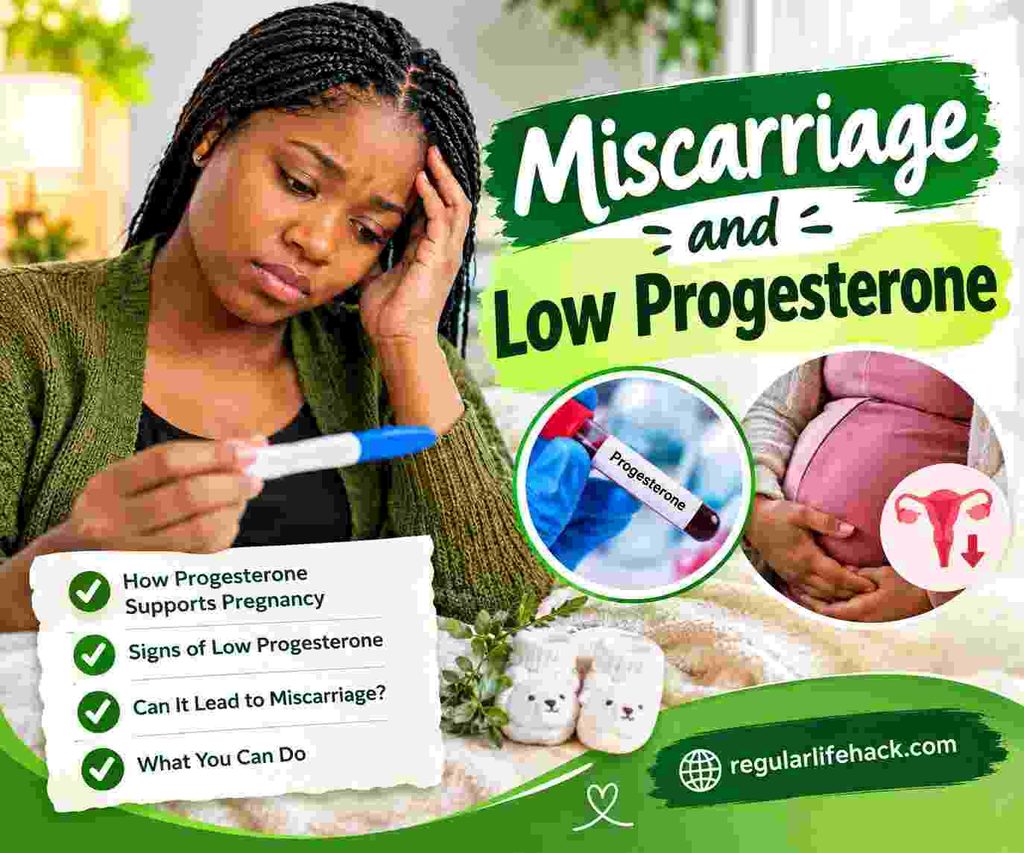
What Is Progesterone?
Progesterone is produced by the ovaries, mainly after ovulation. In early pregnancy it helps to keep the lining of the uterus in place so that the pregnancy can keep developing.
Progesterone is produced mainly by the placenta as pregnancy advances.
Is Low Progesterone Causing a Miscarriage?
Some early pregnancy losses can be due to low progesterone levels. But progesterone levels can naturally fluctuate during pregnancy, and a single blood test might not tell the whole story.
Sometimes lower hormone levels come from a pregnancy that is not developing normally. So, it can be hard to know if low progesterone played a role in the miscarriage or if it happened because the pregnancy was already failing.
Chromosome abnormalities are a common cause of early miscarriage. Progesterone treatment will not correct genetic problems.
Signs of Low Progesterone
There are no specific symptoms that can confirm low progesterone with certainty. Many early problems in pregnancy, like vaginal bleeding or cramping, can be caused by many different things.
These symptoms may be an indication of low progesterone, but if you experience any of these symptoms during pregnancy, it is important to talk to a healthcare professional rather than assume that low progesterone is the cause.
How do you test for progesterone?
In evaluating early pregnancy, a healthcare professional might use blood tests, ultrasound exams, medical history and other assessments.
Progesterone testing may be an option in some situations but the significance of a result depends on the stage of pregnancy and other clinical findings. ## Can Progesterone Treatment Be Beneficial?
In some cases, some women may be advised to take progesterone supplements. Evidence suggests that progesterone treatment may be beneficial for some women with early pregnancy bleeding and a history of previous miscarriages.
But progesterone is not right or necessary for everyone. It should be used during pregnancy only if clearly needed and under the supervision of a health care professional.
Never begin, discontinue or alter hormone therapy without medical consultation.
Can Low Progesterone Be Prevented?
There is no sure way to prevent miscarriage or low progesterone. A lot of miscarriages occur due to issues with the growing pregnancy that can’t be fixed.
Maintaining prenatal care, managing pre-existing conditions, taking recommended supplements and following professional medical advice can help promote overall pregnancy health.
Recommended Reading
Miscarriage Due to Chromosomal Abnormalities
EVANGELISM & FOLLOW-UP MADE EASY
Top Ten Lessons From The Life of David
When should I see a doctor?
If you have vaginal bleeding, prolonged cramping or any other symptoms during your pregnancy that worry you, seek medical advice from a healthcare professional.
If you have severe pain, very heavy bleeding, faintness, significant dizziness, fever or feel really unwell, get urgent medical help.
Conclusion
Low progesterone miscarriage and early pregnancy loss is complicated. Low progesterone may be linked to miscarriage in some cases, but it is not always the underlying cause.
If you have concerns about your progesterone levels or have had a miscarriage, talk to a healthcare professional. They can evaluate your individual situation and decide whether testing or treatment is appropriate.