Human chorionic gonadotropin (hCG) is a hormone that is produced in pregnancy. hCG levels don’t always return to normal immediately after a miscarriage. Understanding hCG after miscarriage can help explain why pregnancy tests may stay positive for a time after a pregnancy loss.
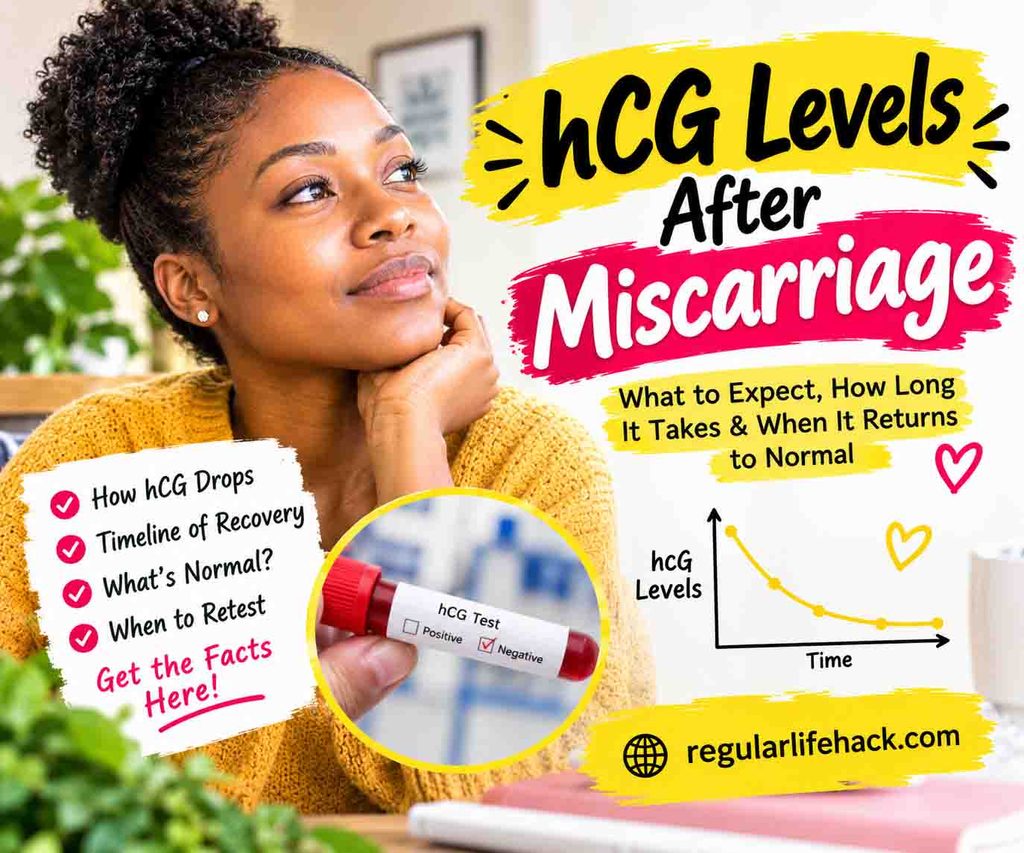
What Happens to hCG After a Miscarriage?
Generally, after a miscarriage, hCG levels start to go down because the pregnancy is not continuing. But the hormone can stay in the blood or urine for days or weeks.
How fast hCG levels drop is different for everyone. How long hCG stays in your body can depend on a few factors, including your hCG levels before the miscarriage, how far along you were in your pregnancy and whether there is any tissue from the pregnancy left in your uterus.
There is no precise time frame for all. In some cases, hCG levels can return to non-pregnant levels within a few weeks and in others it may take longer.
Even when hCG is still present, a home pregnancy test can still be positive. Thus, a positive test shortly after a miscarriage does not necessarily indicate that you are pregnant again.
How Is hCG Monitored?
Blood tests forhCG after a miscarriage may be recommended by a health care provider. A numeric hCG value is obtained by blood testing and can be followed over time.
In some cases an ultrasound may also be recommended to see if the uterus has cleared and recovery is going as expected.
Monitoring is required depending on the type of miscarriage, symptoms, treatment received, and individual medical history.
What does it mean if hCG is not falling?
If hCG levels don’t fall as expected, or remain elevated, further medical evaluation may be necessary.
Possible causes include pregnancy tissue left in the uterus, a new pregnancy, or, rarely, another medical condition. Your healthcare professional can decide what should be done next.
If you have a positive pregnancy test that is persistent you should not assume there is something wrong.
Is it possible to ovulate before hCG is completely negative?
Ovulation can sometimes happen before the hCG is gone completely. This means that it might be possible to conceive again quite soon after a miscarriage.
If you’re trying to avoid pregnancy, talk to a health care professional about birth control. If you plan to get pregnant again, ask when you can start trying based on your own recovery.
Recommended Reading
Can PCOS Increase Miscarriage Risk?
PRAYER WARFARE IN SOUL-WINNING
Seven Principles of Kingdom Leadership
When to See a Medical Professional
Seek medical attention if you experience heavy bleeding, severe or worsening abdominal or pelvic pain, fever, fainting, dizziness, or abnormal vaginal discharge.
If pregnancy tests remain positive for longer than expected, or if you are concerned about your recovery, you should also seek medical advice.
Emotional recovery is important too
After a miscarriage, healing involves more than just physical recovery. Sometimes seeing a positive pregnancy test or continuing to test hCG can be a trigger for difficult emotions.
Allow yourself the time to process the experience and seek the support of trusted others or a medical professional, if necessary.
hCG after miscarriage usually declines gradually as the body recovers, though the timeline varies among individuals. Pregnancy tests can stay positive for a period because hCG does not disappear right away.
Speak with a healthcare provider if your hCG levels stay high or if you have symptoms or concerns about your recovery. Proper follow-up can help determine whether your recovery is on track.