A miscarriage can be an emotional and physical experience and many wonder how long it takes for the body to complete this without medication or a medical procedure. The duration of a natural miscarriage can be very different, depending on the stage of the pregnancy and the response of the woman’s body.
What is a Spontaneous Miscarriage?
Expectant management is a natural miscarriage. This is when the body finishes the miscarriage on its own, without medication or surgery.
You can talk this method over with a health care professional when there are no signs of an emergency and the person is medically stable.
Understanding that “natural” does not mean no medical care is needed is important. Health professionals may still recommend monitoring to make sure the miscarriage has completed safely.
How long does a natural miscarriage last?
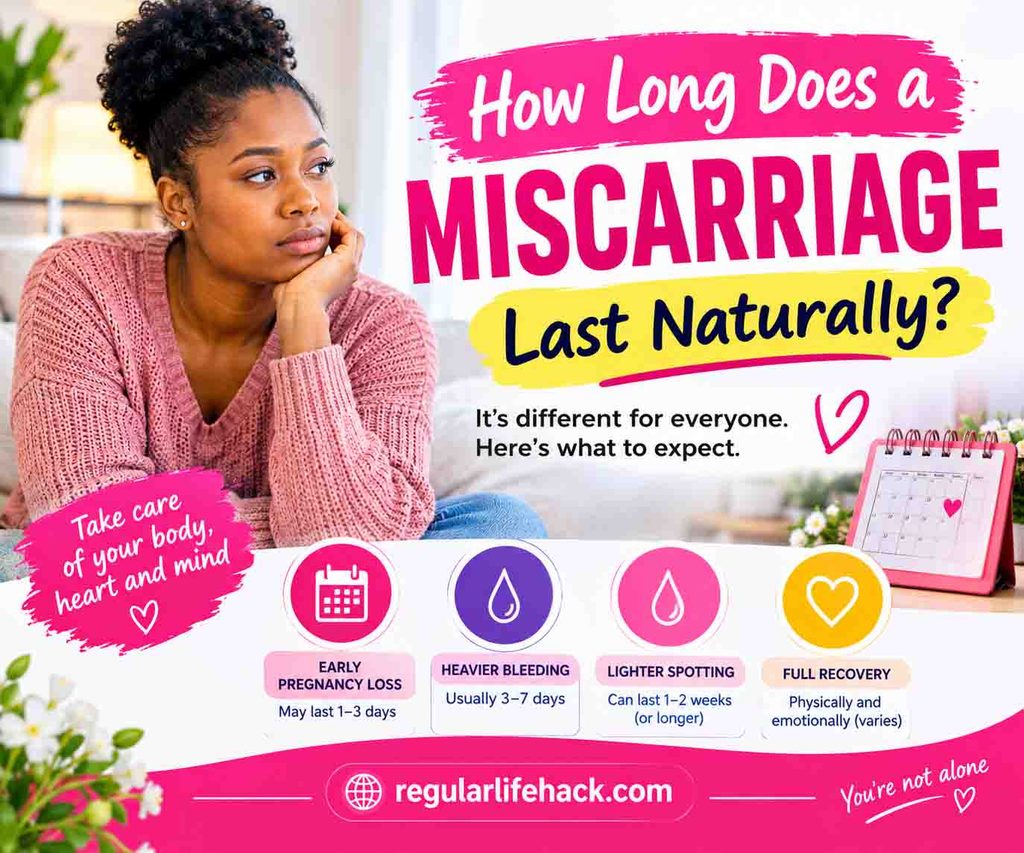
A natural miscarriage does not have a time frame. The physical process can begin with vaginal bleeding and cramping and can take days or in some instances several weeks to complete.
Usually the bleeding is heavier at the beginning of the process and then becomes lighter. The body heals and light spotting can continue for some time.
Timing may differ depending on the stage of pregnancy, hormone levels and whether all of the pregnancy tissue passes naturally.
What happens in the process?
A natural miscarriage may include:
- Vaginal bleeding or discharge
- Abdominal or pelvic cramping
- Passing blood clots or tissue from the pregnancy
- Lessening bleeding over time
- Restoring the person’s menstrual cycle to normal
Everyone’s experience is different. For some people, the symptoms may be relatively short; for others, recovery may take longer.
How Can You Tell If a Miscarriage Is Complete?
Symptoms alone do not always confirm that a miscarriage has completed. Where appropriate, a healthcare professional may use an ultrasound, examination or blood tests.
Follow-up is especially important if there is continued bleeding, symptoms do not improve, or there is concern about retained products of conception.
When Is Natural Management Not Appropriate?
A healthcare professional may suggest urgent treatment instead of waiting if there are complications or signs of infection, heavy blood loss, severe pain, or another condition needing immediate attention.
Do not try to speed up or terminate a miscarriage on your own by using herbs, medications, physical methods, or other unproven methods.
Recommended Reading
Signs Your Body Is Healing After Miscarriage
EVANGELISM & FOLLOW-UP MADE EASY: REACHING THE LOST TODAY
Divine Favour: The Difference Between Labour and Favour
When to Seek Emergency Medical Care?
If you have any of these serious side effects, get medical help right away:
- Extremely heavy bleeding
- Severe or increasing abdominal or pelvic pain
- Fainting or severe light-headedness
- Chills or fever
- Feeling really sick
- Unusual or bad-smelling vaginal discharge
These symptoms may indicate a complication and should be evaluated promptly.
Recovery After a Natural Miscarriage
The body may also need more time to heal after the miscarriage is complete. In the recovery period you may experience fatigue, mild cramping and spotting.
Rest as needed, drink lots of fluids, eat healthy foods and adhere to any follow-up advice from your healthcare professional.
Emotional recovery is important too. You may feel sad, grief, worried or confused. Talking with someone you trust can help.
Conclusion
The length of a natural miscarriage varies from person to person. This can take up to several days or more and physical recovery can take place after the miscarriage itself is complete.
If you’re considering expectant management, speak with a healthcare professional first. Close medical monitoring might help to confirm that the miscarriage is complete and identify any complications for treatment.