Miscarriage is a physically and emotionally taxing experience. Sometimes, a healthcare professional may suggest a D&C after miscarriage to clear any pregnancy tissue left behind in the uterus. Knowing what the procedure involves, why it may be advised and what recovery might look like can help you understand what to expect.
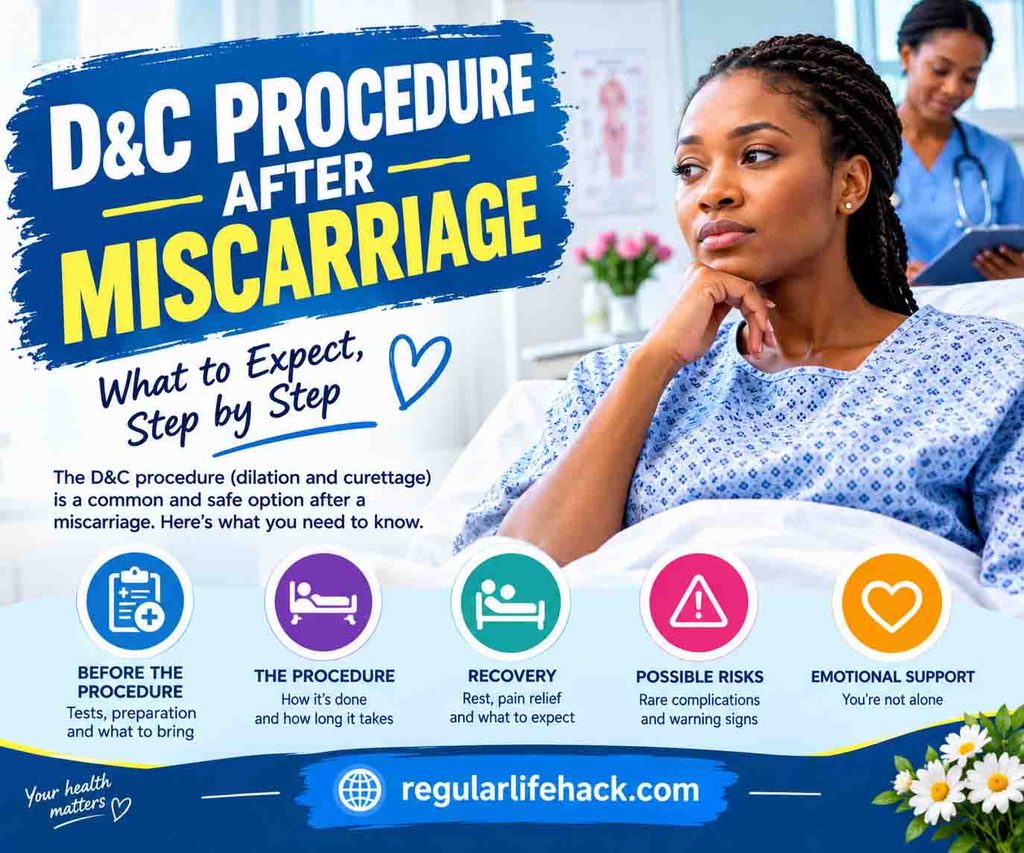
What Is a D and C?
D&C means dilation and curettage. This is a medical procedure in which the cervix is held open gently and tissue is taken from inside the womb.
A D and C may be done after a miscarriage if some of the tissue from the pregnancy has not passed, or it needs to be removed quickly for medical reasons.
Why Do You Need a D&C After Miscarriage?
A healthcare professional may recommend a D&C after miscarriage for several reasons such as:
- Pregnancy tissue left in the uterus
- Bleeding is heavy or won’t stop
- There are signs of infection
- The miscarriage has not taken place naturally
- Failure of medication or expectant management
There is one more medical reason to remove the remaining tissue.
You don’t need to get a D&C for every miscarriage. Depending on the circumstances, options include waiting for the body to miscarry on its own or using prescribed medication.
What does the Procedure Involve?
Your health care team will talk with you about D&C, including anaesthesia or sedation options.
During the procedure, the cervix is gently dilated and the tissue is removed from the uterus using specialised medical instruments or suction. The actual procedure usually takes only a short amount of time, but the time spent in a health care facility may be longer because of preparation and recovery.
Your healthcare team will give you specific directions for your situation.
What to Expect Following D&C?
It is common to have some light bleeding or spotting and mild cramping after the procedure. Usually these symptoms improve as your body heals itself.
You may feel tired afterward, especially if you had anaesthesia or sedation. Follow your healthcare team’s instructions about rest, activities, medications, and follow-up appointments.
Your next period may not return for several weeks and initially it may be different from your normal cycle.
Are There Any Risks?
Like any medical procedure there is some risk with a D&C but serious complications are rare. Complications can include infection, bleeding, injury to the cervix or uterus, or scarring inside the uterus.
Your doctor can discuss the risks and benefits with you before the procedure.
Recommended Reading
Can You Get Pregnant Immediately After Miscarriage?
EVANGELISM & FOLLOW-UP MADE EASY: THE WORTH OF A SOUL
The Mystery of Midnight Prayer: Breaking Chains in the Night Season
When to Seek Medical Attention?
Seek medical attention after a D&C after miscarriage when you have very heavy bleeding, severe or worsening pain, fever, chills, fainting, significant dizziness, or unusual or unpleasant-smelling vaginal discharge.
These symptoms may be an indication of a complication requiring prompt evaluation by a physician.
D&C and Emotional Healing
A D&C is about the physical part of a miscarriage but it doesn’t take away from the emotional part of losing a pregnancy. You may continue to feel sadness, grief, anxiety or disappointment after the procedure.
Give yourself time to feel your emotions and if you need more support, consider talking to someone you trust or a healthcare professional.
Can You Get Pregnant After a D&C?
D&C usually does not prevent future conception. Pregnancy is possible fairly soon as ovulation can happen before the next period.
If you are thinking about getting pregnant again, ask your health care provider when it is safe to try, based on your recovery and individual situation.
Conclusion
A D&C after miscarriage may be advised if there is pregnancy tissue left in the uterus or if medical conditions necessitate the completion of the miscarriage. One of several potential approaches to miscarriage management.
If your healthcare professional recommends a D&C, ask questions about the procedure, recovery, potential risks and alternatives so you know what to expect and understand your care plan.