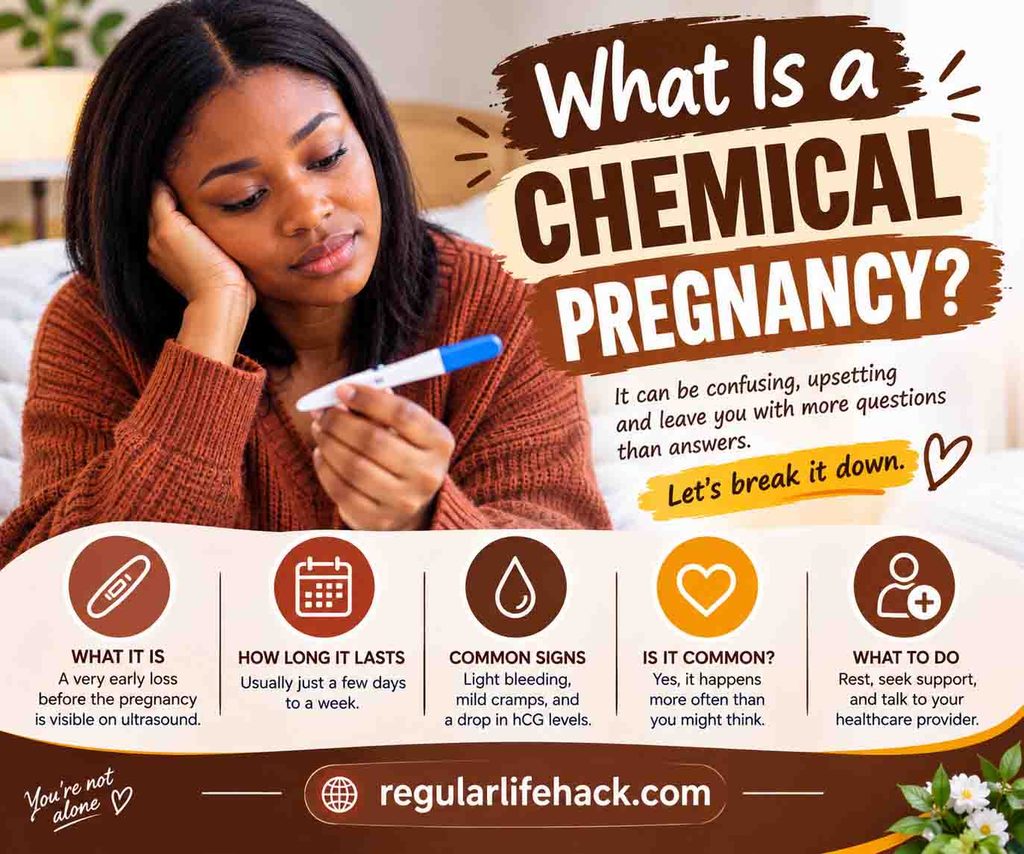
A chemical pregnancy is a very early loss of pregnancy that occurs just after implantation and usually before an ultrasound can detect the pregnancy. It’s called a chemical pregnancy because the it is diagnosed based on the hormone human chorionic gonadotropin (hCG), usually by a pregnancy test, rather than an ultrasound image. It is very early but a it can be emotionally tough.
What Causes Chemical Pregnancy?
A chemical pregnancy is typically due to a problem with the chromosomes of the developing pregnancy. – chromosomal abnormalities, which can prevent the it from developing properly.
Sometimes there could be other factors involved with very early pregnancy loss. Some hormonal or uterine problems. But in many cases the precise cause cannot be established.
Importantly, a chemical pregnancy is typically not due to something the person did. They are typically not due to normal activities, routine exercise, or routine emotional stress.
How do you know?
Some people may not even realise they were having a chemical pregnancy. Others might see:
- A positive pregnancy test and then a negative pregnancy test
- A period that arrives later than expected
- Bleeding of the vagina
- Slight abdominal cramps
- Pregnancy symptoms disappearing fast
The bleeding can be like a heavier or more painful menstrual period, but experiences vary.
How Is a Chemical Pregnancy Diagnosed?
If the pregnancy test is positive, but later tests show that hCG levels are dropping, it may be suspected that a chemical pregnancy has occurred.
A healthcare professional may perform blood tests to measure hCG and to see if the hormone is decreasing. The pregnancy may not be seen on ultrasound. The loss occurs very early.
If you have a positive pregnancy test and then experience bleeding or a negative test, see your healthcare provider for further evaluation.
Can a Chemical Pregnancy Impact Fertility?
A chemical pregnancy doesn’t usually mean you’ll have trouble getting pregnant in the future.
Ovulation may return fairly soon after an early pregnancy loss. However, the best time to try for another pregnancy depends on individual circumstances.
If you’ve had more than one chemical pregnancy or other miscarriages, your healthcare provider might suggest testing to rule out any underlying problems.
Can You Prevent a Chemical Pregnancy?
There is no guarantyd way to prevent a chemical pregnancy as many are related to random chromosomal abnormalities that are out of our control.
General health maintenance, management of existing medical conditions, not smoking, not drinking alcohol, taking recommended prenatal supplements and receiving appropriate prenatal care can support a healthy pregnancy, but they cannot eliminate the risk of early pregnancy loss.
Recommended Reading
Natural Remedies for Miscarriage Recovery
HOLY SPIRIT AND ANOINTING: ANOINTING AND THE ANOINTED
Honouring Your Parents: The First Commandment with a Promise
When to seek medical help?
If you have a positive pregnancy test and are bleeding or have pain, call a healthcare professional.
You should see a doctor right away if you have severe or worsening abdominal or pelvic pain, very heavy bleeding, faint, have a lot of dizziness, have a fever or feel very ill. Sometimes these symptoms can be a sign of a problem that needs urgent treatment such as an ectopic pregnancy.
Emotional Impact of a Chemical Pregnancy
Because a chemical pregnancy happens so early, some people may underestimate the emotional impact of it. But the feelings surrounding pregnancy loss are personal and valid.
It is normal to feel sad, disappointed, confused or anxious about future pregnancies. Support can be found by talking with someone you trust or a healthcare professional.
A chemical pregnancy is an early miscarriage of pregnancy that is often detected using pregnancy testing prior to ultrasound confirmation of pregnancy. Chromosomal abnormalities are often the explanation, but the exact cause is not always known.
Conclusion
Having a chemical pregnancy doesn’t mean that future pregnancies will be affected. If you are worried about early pregnancy loss or have had several losses, speak to a healthcare professional for advice and support that is right for you.