Miscarriage risk is associated with several factors, one of which is age. Knowing the risk of miscarriage by age, can help individuals make informed decisions with health care providers around pregnancy planning and prenatal care. But age in itself does not guarantee one will have a healthy pregnancy.
What does miscarriage mean?
Miscarriage is the loss of a pregnancy before the baby can survive outside the womb. Miscarriage is fairly common, especially in early pregnancy.
This is one of the reasons why many miscarriages happen. The pregnancy is chromosomally abnormal and can not develop normally. It’s usually not caused by exercise, daily activity or something the pregnant person did.
Risk of miscarriage by age
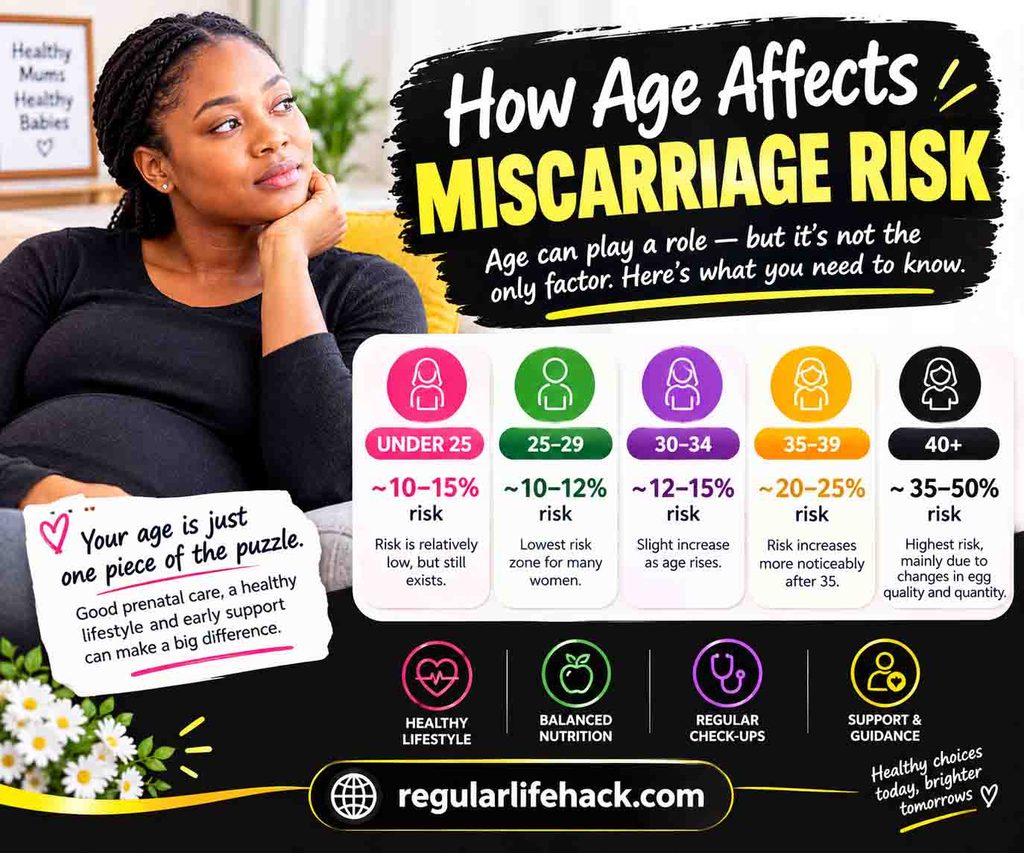
The risk of miscarriage generally increases with increased maternal age. Another key reason is that the likelihood of chromosomal abnormalities in an egg also tends to increase with age.
The pattern is usually described like this:
- Under 30:
The overall risk of miscarriage is generally lower for younger pregnant people, but miscarriage can happen at any age.
- Under 30 – 34:
Risk begins to increase gradually relative to younger age groups.
- Under 35 – 39:
The risk of miscarriage increases. One reason for this is that chromosomal abnormalities become more common.
- 40 and over:
Age increases the risk of miscarriage, often due to chromosomal abnormalities of the foetus.
These are population level patterns, not an individual prediction. Any age can get pregnant and have a healthy pregnancy and younger people can also have a miscarriage.
Why does age affect the risk of miscarriage?
One big thing is egg quality and changes in chromosomes. The older the eggs, the more likely errors in chromosome division will happen. Some chromosomal abnormalities may prevent an embryo from developing normally and can cause miscarriage.
Age can also be associated with other health conditions that could affect pregnancy such as some thyroid disorders, diabetes, high blood pressure and uterine conditions. “However, these factors are unique to each individual and can often be controlled with appropriate medical care.
Is the risk of miscarriage reducible?
Not all miscarriages can be prevented, especially if a chromosome abnormality is present. But being generally healthy and getting good prenatal care can help make a pregnancy go well.
Depending on your situation, your health care professional may tell you to manage any medical conditions you have, review any medicines you take, start prenatal vitamins when recommended, and keep your regular pregnancy appointments.
It’s also important to remember that having a miscarriage doesn’t mean you’ll definitely have another one.
When to talk to a doctor?
If you are concerned about age-related fertility or the risk of miscarriage, especially if you have had previous pregnancy losses or have a pre-existing medical condition, it is worth talking to a healthcare professional about planning for pregnancy.
Your health care professional will be able to look at your age, medical history, past pregnancies and other individual factors, not just your age.
Conclusion
The risk of miscarriage increases with the age of the mother, and chromosomal abnormalities are a significant contributing factor. But age is only part of the picture.
If you are thinking about pregnancy or worried about miscarriage, a professional medical opinion can help you understand your personal situation and the options open to you.