Having a miscarriage at 6 weeks can be hard physically and emotionally. By this point the pregnancy is still very early and symptoms can vary widely from person to person. Knowing what to expect can help you be aware of the possible symptoms, the course of recovery, and when to seek medical attention.
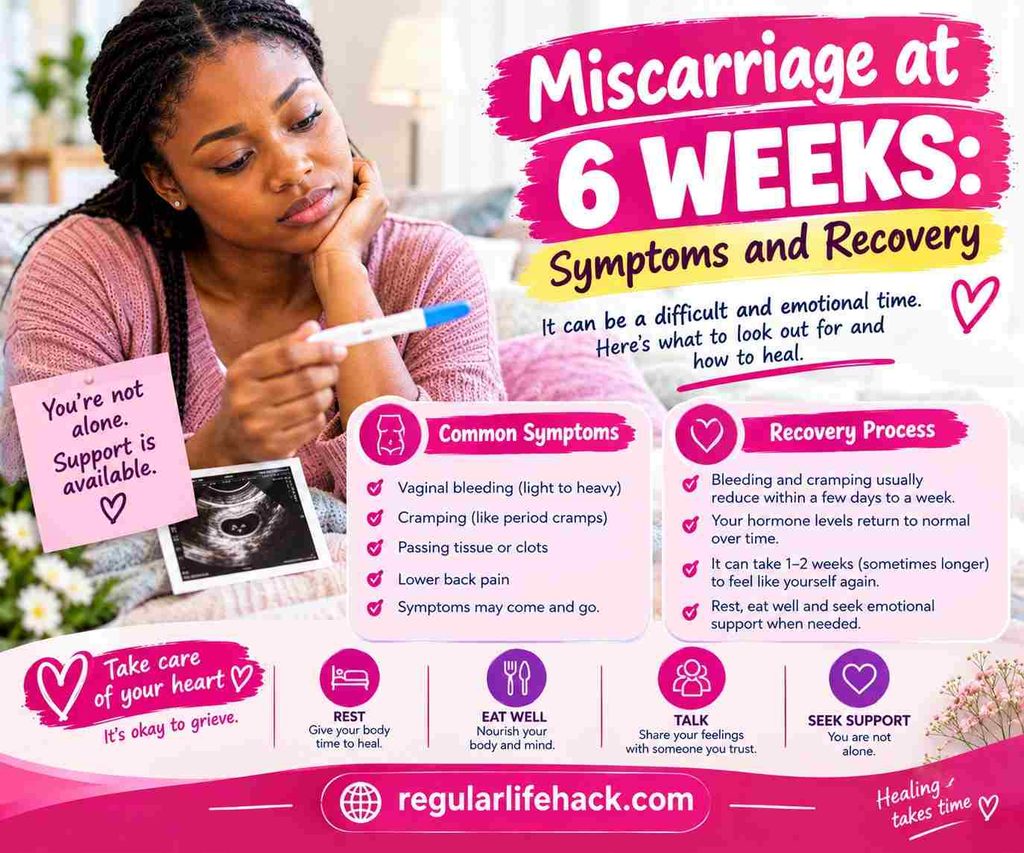
What is a 6 Week Miscarriage?
A miscarriage is when a pregnancy ends before it can live outside the uterus. Signs of a miscarriage at six weeks may include vaginal bleeding, cramping, and changes or loss of pregnancy symptoms.
But bleeding and cramping in early pregnancy are not always a sign of miscarriage. You may need to have a medical assessment to find out what is going on.
6 Weeks Pregnant Symptoms of Miscarriage
Indicators of a miscarriage at 6 weeks include:
- Bleeding or spotting from the vagina
- Cramping in the lower abdomen or pelvis
- Discomfort or pain in the lower back
- Passing blood clots or tissue from a pregnancy
- A sharp decline in pregnancy symptoms
Some people may have few symptoms, while others may notice the bleeding and cramping more.
Remember that there are many causes of bleeding in early pregnancy. For example, an ectopic pregnancy can also cause bleeding and abdominal pain and needs urgent medical assessment.
Reasons for Early Miscarriage
Many early miscarriages are due to chromosomal abnormalities in the developing pregnancy which prevent normal development. These abnormalities usually occur randomly and are not typically due to normal activities or something a pregnant person does.
Other factors can sometimes be involved in pregnancy loss, such as some medical conditions, hormonal problems, infections or abnormalities of the uterus. In many cases, however, the exact cause cannot be identified.
Diagnosis and management
A doctor or midwife may do an ultrasound scan and pregnancy hormone tests to find out whether a miscarriage has happened and whether there is still any pregnancy tissue in the womb.
Management can be expectant (waiting for the body to pass the miscarriage naturally), medical (a medication prescribed by a healthcare professional), or surgical (a procedure to remove any remaining pregnancy tissue).
The decision of the appropriate option depends upon the symptoms, examination findings, medical history and personal circumstances.
Recovering from a Miscarriage at 6 Weeks
Recovery of physical function differs. Bleeding and cramping usually ease as the miscarriage ends, although some spotting can continue afterward.
It can take some time for the menstrual cycle to become regular again . Pregnancy hormone levels can take some time to return to their usual level.
Emotional recovery is just as important. You may experience grief, sadness, disappointment, anger or anxiety after pregnancy loss. It might help to talk to someone you trust or seek professional emotional support.
Recommended Reading
Can You Get Pregnant Immediately After Miscarriage?
HOLY SPIRIT AND ANOINTING: PRESENCE AND POWER OF THE SPIRIT
Biblical Stewardship: Managing Time, Talents, and Treasures for God
Twenty Reasons Why You Should Be Faithful To Your Spouse – New!
When to Call a Doctor
If you experience severe abdominal pain or worsening abdominal pain, very heavy bleeding, fainting, severe dizziness, fever or feel very unwell, seek immediate medical advice.
If you have bleeding or pain in early pregnancy (especially after a positive pregnancy test), seek medical attention for proper evaluation.
Conclusion
Having a miscarriage at 6 weeks can be very difficult but with support and the right medical treatment, you can recover physically and emotionally. Most early miscarriages are due to chromosomal problems that could not have been prevented.
If you think you may be experiencing symptoms of a miscarriage, seek medical attention to determine the cause and receive appropriate care.