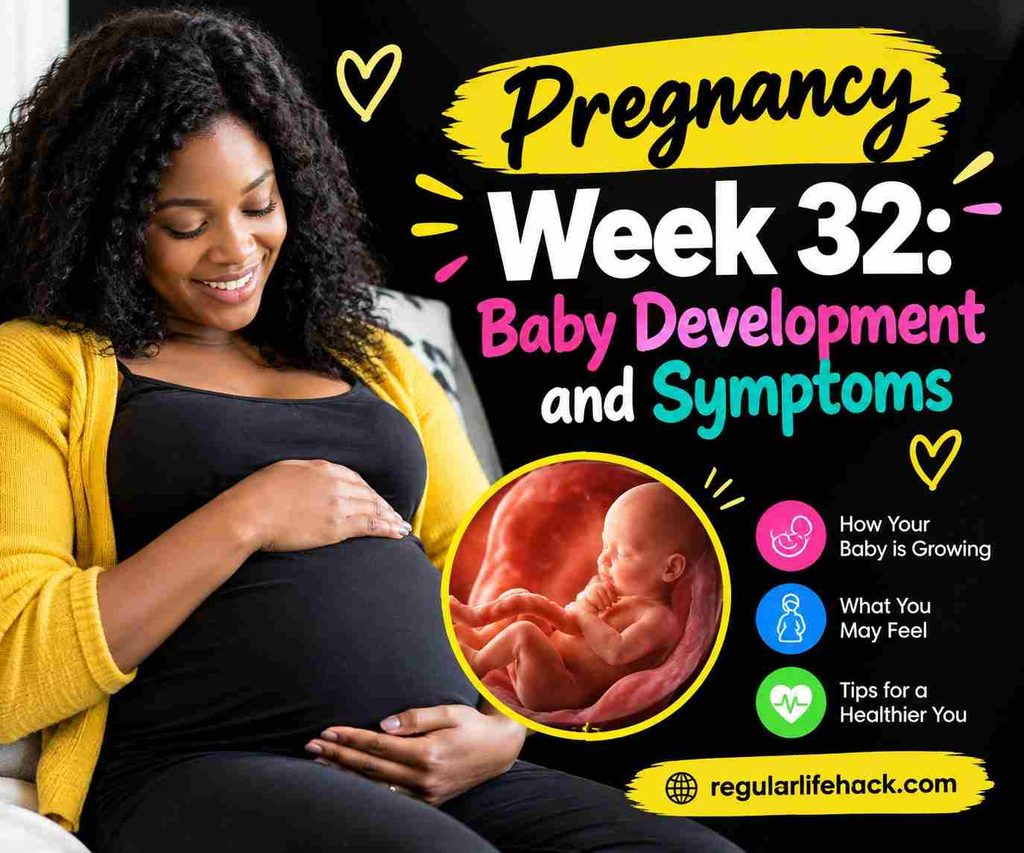
At 32 weeks pregnant you are in the final stages of pregnancy and your baby is still growing, developing and getting ready for birth. Your body is making room for your growing baby, so your belly may feel heavier and things that were easy before may become more difficult. Find out what’s happening with your baby’s development and what symptoms you may have to prepare yourself for the next few weeks.
Your Baby’s Development at 32 Weeks
Your baby is the size of a squash at 32 weeks, measuring about 42 centimetres from head to heel and weighing around 1.7 to 1.8 kilograms. But babies grow at different rates so these measurements are just estimates.
Your baby has developed most of his major organs, but some, especially his lungs and brain, continue to develop.
- Brain Development:
Your baby’s brain is developing rapidly and connections between nerve cells are multiplying. Your baby can react to sound, light and touch.
- Development of the lung:
After birth the lungs continue to develop so they can breathe. They are doing fine but may need a little more time before they are fully ready for life outside the womb.
- Fat in the body:
Your baby is building body fat that will help to regulate his body temperature after delivery. The skin is storing up fat and the wrinkles are diminishing.
- Movement:
You should continue to feel your baby move on a regular basis. As there is less space in the uterus, the movements may feel more like pushes, rolls and stretches. Your baby should still move in the same pattern as usual, though.
- Job:
Most babies get into a head-down position around this stage, although some babies are bottom-down or sideways. The position of your baby can be checked at antenatal appointments by your healthcare provider.
Common Symptoms During Pregnancy at 32 Weeks
When your pregnancy progresses, you may begin to notice a variety of physical changes.
Backache and pelvic discomfort: As your uterus expands, it puts additional pressure on your back, hips and pelvis.
Shortness of breath: Your uterus growing can put pressure on your diaphragm, making you feel more out of breath when you’re active.
Heartburn and Indigestion: Pregnancy hormones and pressure on your stomach can cause a burning sensation or discomfort after eating.
Braxton Hicks contractions: These are usually irregular contractions of the uterus that don’t get stronger or closer together.
More toilet visits: If your bladder is under pressure, you may need to go to the toilet more often.
Swollen feet and ankles: Mild swelling can happen during pregnancy, especially after standing for a long time.
Sleep problems: It may be more difficult to find a comfortable position. You may wake up frequently to urinate or change position.
Every pregnancy is different and you may experience only some of these symptoms.
Recommended Readings
Miscarriage at 10 Weeks: Signs and Treatment
The First Commandment with a Promise
Tips and Tricks to Stop Arguing in Your Relationship
How to Make Money by Selling Pictures Online
32 Weeks Pregnant: Tips for a Healthy Pregnancy
It’s still vital to take care of yourself as you approach delivery.
1. Attend your antenatal appointments: These help your healthcare professional monitor your blood pressure, the baby’s growth and how you both are doing in general.
2. Consume a healthy diet: Include vegetables, fruits, whole grains, protein sources, and iron-rich foods. Drink enough water during the day.
3. Rest often: Take rest when you feel tired and sleep on your side with pillows for support.
4. Move gently: Unless your healthcare provider has advised you differently, walking and other gentle activities might help you keep moving and well.
5. Watch your baby’s movements: Know your baby’s pattern of movements and call maternity assessment straight away if your baby’s movements slow or change significantly.
Go to the nearest emergency room if you have vaginal bleeding or fluid leakage, severe abdominal pain, a severe headache, change in vision, or sudden swelling of the face and hands. Regular contractions before 37 weeks may suggest preterm labour and need urgent assessment.
Preparing for Labour and Delivery
At 32 weeks you can start preparing for your baby’s arrival by gathering things you will need, talking about your birth plan with your doctor or midwife, and making plans for how you will get to your birthing location.
You can also ask questions about labour, pain relief, breastfeeding and caring for your newborn during your antenatal visits.
Conclusion
32 weeks pregnant: Your baby is getting stronger. Important organs are still maturing. Backache, heartburn, sleeping problems and increased pressure on your bladder are common at this stage. Keep attending your antenatal appointments, keep an eye on your baby’s movements, eat healthily and rest when you need to. If you see warning signs or think you are in labour before 37 weeks, get medical help straight away.