You are now at 36 weeks pregnant and entering the final stage of pregnancy, with your baby’s arrival getting ever nearer. Your baby is still growing and your body is getting ready for labour and delivery. This is a great time to get your hospital bag ready, attend your antenatal appointments and learn the signs that labour may be starting.
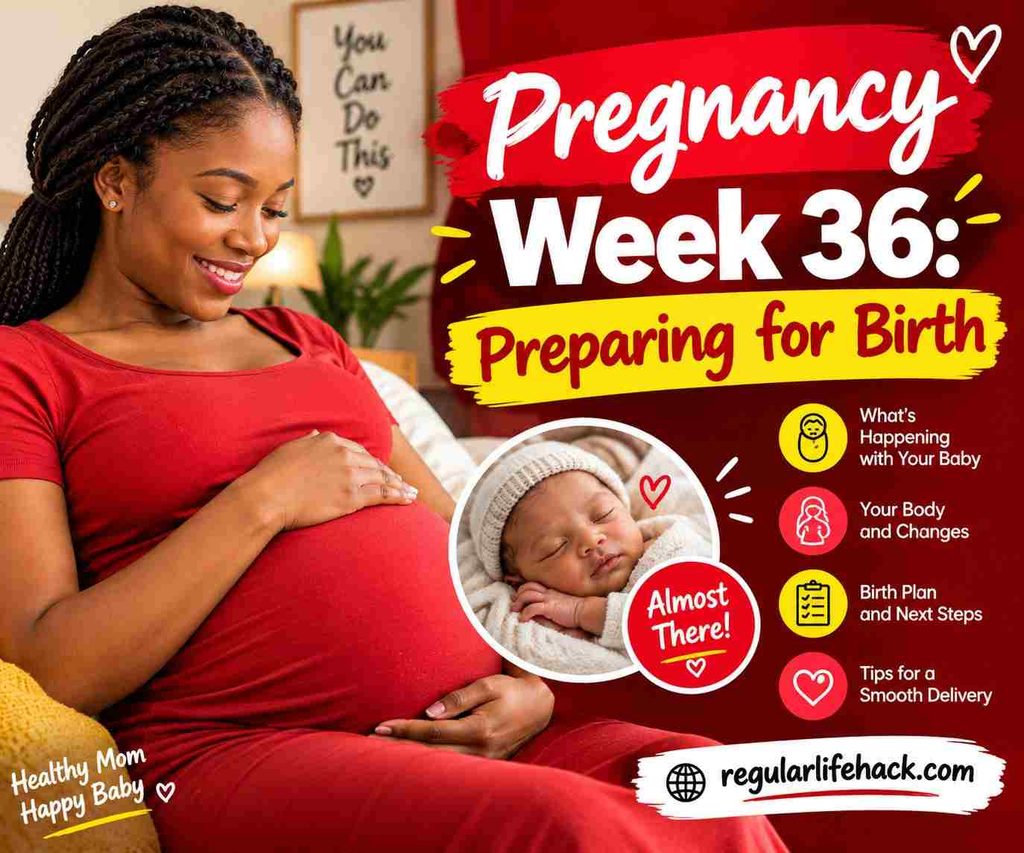
Your Baby at 36 Weeks Pregnant
At 36 weeks your baby is about 47 centimetres long and weighs about 2.6 to 2.8 kilograms, but there is a range of sizes.
Your baby’s lungs and brain are still growing, and fat is being deposited under the skin to help maintain body temperature after birth.
- Baby’s position:
By now many babies have settled into a head-down position. If your baby is in a breech position, head down with the bottom or feet to be born first, your health care provider may talk to you about possible delivery choices.
- Bones and Muscles:
Your baby’s bones are developing, including the skull which remains relatively soft to allow the baby to pass through the birth canal.
- Movement:
Your baby still needs to be active regularly. Movements may feel different if there is limited space, but should not become significantly less frequent. If you notice a decrease or change in your baby’s movements from their normal pattern, contact your maternity unit straight away.
If your baby is born now, they are considered late preterm at 36 weeks. Many babies do well but some may need extra help with feeding, breathing or keeping warm.
Symptoms of 36 Weeks Pregnant
Your body is getting ready to deliver, so you may notice some symptoms:
- Pelvic pressure:
Your baby has dropped lower into your pelvis, so you may feel more pressure on your bladder — and walking may be uncomfortable.
- Backache:
Extra weight from your baby and changes in the way you stand and sit can make your lower back uncomfortable.
- Braxton Hicks contractions:
These practice contractions may be more noticeable, but tend to be irregular and don’t increase in strength.
- Frequent urination:
Because your bladder is under pressure, you may find yourself going to the toilet more often.
- Trouble sleeping:
Discomfort, heartburn and frequent bathroom trips may interfere with your sleep.
- More vaginal discharge:
You may notice more discharge as your pregnancy progresses. But a continual trickle of watery fluid could mean your waters have broken.
Not all women experience the same symptoms and the presence of these symptoms does not necessarily mean that labour is imminent.
Getting Ready for Birth at 36 Weeks
Planning helps take stress out of the last few weeks.
1. Prepare your hospital bag
Take comfortable clothes, toiletries, maternity pads, baby clothes, nappies and important documents. Have your antenatal records and identification ready.
2. Make sure your birth plan is confirmed
Know where you plan to deliver, how you will get there, and who to contact when labour begins. Have a way to get to the maternity facility, especially if it’s far away.
3. Attend your antenatal appointments
Your health care provider can check your blood pressure, the position and growth of your baby, and your overall well-being. Share your concerns and your options for birth.
Recommended Reading
Early Signs of Pregnancy
Church Leaders And Moral Scandals
Ten Marks Of A Mature Christian
THE SCHOOL CALLED MARRIAGE
4. Prepare your house
Wash baby clothes, create a sleeping space, and collect necessary newborn supplies. If necessary, arrange for help with housework.
5. Eat well and get enough rest
Eat a balanced diet, drink plenty of water and get rest when you can. If your healthcare provider hasn’t told you otherwise, gentle physical activity may be appropriate.
What to look for when labour starts
Labour can begin with regular contractions that get stronger and longer and closer together over time. Other symptoms include low back pain, pressure in the pelvis and a mucus discharge that may contain a small amount of blood.
If your waters break, you have vaginal bleeding, your baby is moving less than normal or you think you may be in labour then call your maternity unit immediately. Because you are not yet 37 weeks pregnant, you need to be urgently assessed for possible labour.
Get emergency medical help if you have any of the following very serious symptoms: severe abdominal pain; severe headache with vision changes.
Conclusion
If you are 36 weeks pregnant your baby is in the last stages of development and it is becoming more important to prepare for delivery. Pack your hospital bag, check your transport arrangements, attend your antenatal appointments and learn the signs of labour. Most importantly, keep an eye on your baby’s movements and contact your maternity unit immediately if you have any worries.