Knowing Foods to Avoid During Pregnancy can help you stay healthy and support your baby’s development. Some foodborne infections are more common in pregnancy due to changes in the immune system. Certain foods and drinks can also expose your developing baby to harmful substances.
Fortunately, you can minimise these risks by choosing safe alternatives, cooking food properly, and following your healthcare professional’s advice.
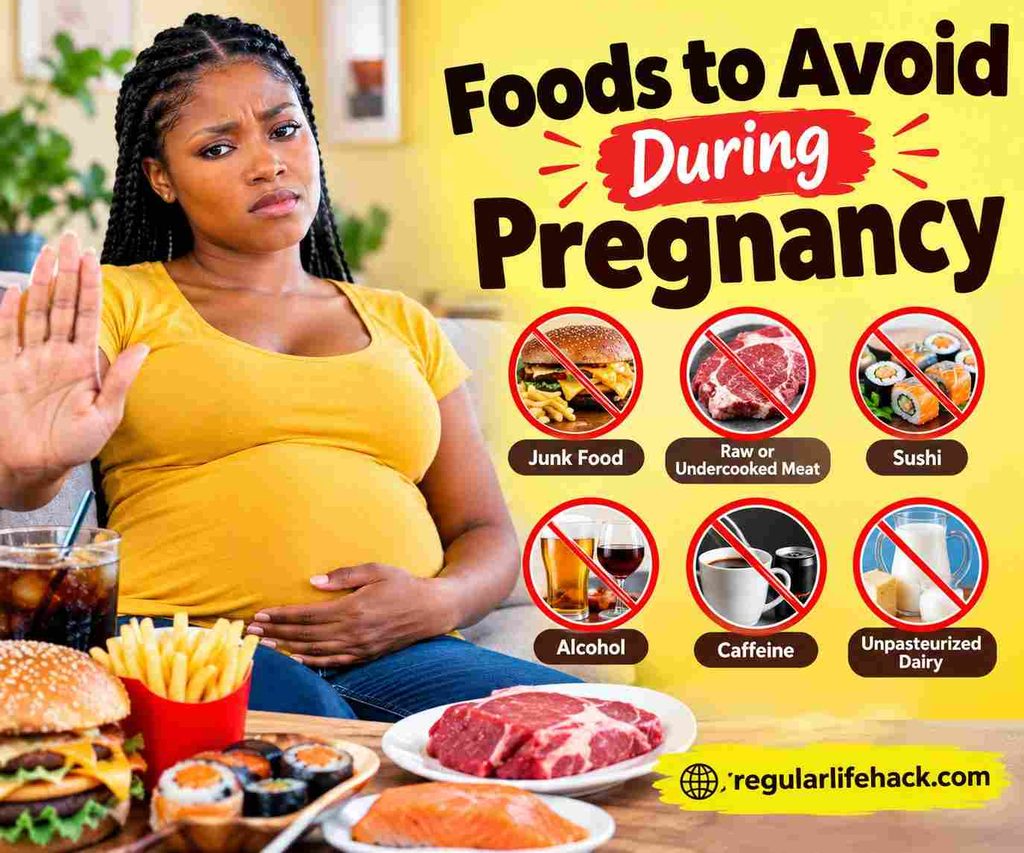
1. Undercooked or raw meat
Avoid eating raw or undercooked beef, pork, poultry or other meats. You could get an infection from harmful bacteria or parasites that can contaminate these foods.
Always cook meat thoroughly, make sure poultry is cooked through and keep raw meat separate from foods that are ready to eat.
2. Raw or Undercooked Fish
Raw oysters, sushi containing raw fish and undercooked shellfish can harbour harmful bacteria or parasites.
Select seafood that is fully cooked. Fish can be a good source of nutrients during pregnancy so you don’t have to avoid all fish. Select low mercury species and follow your local pregnancy guidelines.
3. Mercury rich fish
Some fish have high levels of mercury which can damage the nervous system of a developing baby.
Stay away from high-mercury fish such as shark, swordfish, marlin and king mackerel; Opt for lower-mercury choices like salmon and sardines in recommended amounts.
Fish names and recommendations vary by country so check your current pregnancy guidance for your country.
4. Milk and Milk Products, Raw Milk
Harmful bacteria, including Listeria, can be present in unpasteurised milk and dairy products and can cause serious illness in pregnancy.
Choose pasteurised milk, yoghurt and cheese. Read food labels carefully, particularly if you are buying locally produced dairy products.
5. Uncooked or Undercooked Eggs
Salmonella bacteria may be present in raw or undercooked eggs and can cause food poisoning.
Cook eggs until the white and the yolk are firm, unless you are using pasteurised eggs in a food that will not be cooked further. Avoid foods containing raw eggs unless they are made with pasteurised eggs.
6. Fruits and Vegetables That Are Dirty
Fresh produce gives you important vitamins and fibre but unwashed fruits and vegetables can have harmful germs or soil contamination.
Wash produce thoroughly under clean, running water before you eat, cut or cook it. Don’t wash your food with soap or house cleaning chemicals.
Recommended Readings
Miscarriage at 10 Weeks: Signs and Treatment
The First Commandment with a Promise
Tips and Tricks to Stop Arguing in Your Relationship
How to Make Money by Selling Pictures Online
7. Refrigerated Ready-to-Eat Foods and Processed Meat Products
Listeria can be found in cold cuts, hot dogs, refrigerated pates, and some refrigerated ready-to-eat foods.
Follow advice about local food safety. Reheat deli meats and hot dogs to steaming hot, if advised. Choose safer options like freshly cooked meat instead of refrigerated pâté.
8. Alcohol and Too Much Caffeine
Avoid alcohol during pregnancy since no safe level has been proven.
High caffeine consumption might be harmful too. Many health agencies recommend no more than 200 milligrams of caffeine a day. Remember that all of these contain caffeine: coffee, tea, chocolate, cola and energy drinks.
9. Liver and Vitamin A Supplements
Liver and liver products are a rich source of preformed vitamin A, which can be harmful to a developing baby if consumed in large quantities. Unless advised by a qualified healthcare professional, avoid taking supplements containing retinol.
- Wash hands and kitchen surfaces often.
- Keep raw and cooked foods apart.
- Refrigerate perishables immediately.
- Be sure to cook meat, eggs and seafood thoroughly.
- Check the expiration dates and food storage instructions.
Conclusion
Knowing the Foods to Avoid During Pregnancy will assist you in making safer food choices during your pregnancy. Avoid alcohol, mercury-rich fish, unpasteurised dairy products, raw or undercooked meat or fish, and other foods associated with pregnancy-related risks.
A nutritious diet is still important. When in doubt about the safety of a particular food, seek the advice of your health care professional or a registered dietitian.