Breast engorgement is a common breastfeeding problem that occurs when the breasts become overly full, swollen and uncomfortable. It often happens in the first few days after childbirth when breast milk production increases. It can also occur when feeding sessions are missed or milk is not removed effectively.
Understanding the causes and knowing how to get breast engorgement relief can make breastfeeding more comfortable and help prevent further complications.
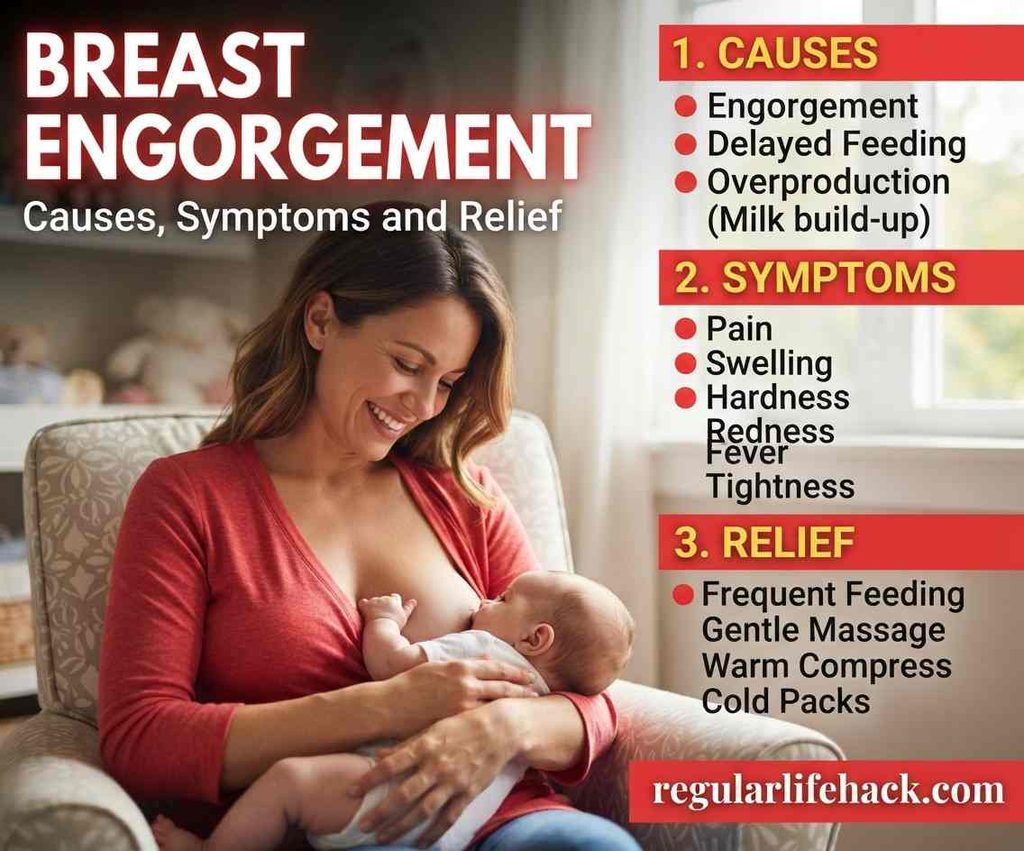
What Causes Breast Engorgement?
Breast engorgement happens when milk builds up in the breasts, alongside increased blood flow and fluid in the breast tissue. Common causes include:
- Milk coming in after childbirth: Breast fullness often increases when milk production rises a few days after delivery.
- Missed or delayed feeds: Going longer than usual between breastfeeding sessions can cause milk to accumulate.
- Poor baby latch: If your baby does not attach properly, they may not remove milk effectively.
- Sudden changes in feeding routines: Reducing breastfeeding or stopping suddenly can contribute to engorgement.
- Oversupply of breast milk: Producing more milk than your baby needs may increase breast fullness.
Common Symptoms of Breast Engorgement
The symptoms can range from mild discomfort to significant swelling. Common signs include:
- Breasts that feel very full, firm or heavy.
- Swelling and tenderness.
- Warm or tight breast skin.
- Flattened nipples, making it difficult for the baby to latch.
- Mild discomfort or pain during feeding.
- A feeling of fullness that does not improve after breastfeeding.
If you develop fever, flu-like symptoms or a worsening red and painful area, seek medical advice because these may indicate mastitis or another infection.
Effective Breast Engorgement Relief Tips
The following measures may help ease discomfort:
1. Breastfeed Frequently
Feed your baby whenever they show hunger signs. Avoid unnecessarily delaying feeds, especially during the early weeks.
2. Use a Cool Compress
Place a clean, cool cloth or wrapped cold pack on the breasts after feeding to help reduce swelling and discomfort.
3. Soften the Breast Before Feeding
If the breast is too firm for your baby to latch, gently hand-express a small amount of milk to soften the area around the nipple.
4. Try Gentle Hand Expression
Express only enough milk to relieve uncomfortable fullness or help your baby latch. Avoid repeatedly pumping to empty the breasts, as this may encourage oversupply.
Recommended Reading
When Does Breast Milk Come In After Birth?
Can You Get Pregnant Immediately After Miscarriage?
EVANGELISM & FOLLOW-UP MADE EASY: THE WORTH OF A SOUL
The Mystery of Midnight Prayer: Breaking Chains in the Night Season
5. Wear a Comfortable Bra
Choose a supportive, well-fitting bra that does not squeeze or put excessive pressure on the breasts.
6. Avoid Deep Breast Massage
Forceful massage or excessive pressure can worsen inflammation. Use gentle handling instead.
When Should You Seek Medical Help?
Contact a healthcare professional if breast swelling or pain does not improve, or if you notice a hot, red or increasingly painful area. Seek prompt medical advice if you develop a fever, chills or flu-like symptoms.
A midwife or lactation consultant can also check your baby’s latch and help you establish a comfortable feeding routine.
Conclusion
Breast engorgement can make breastfeeding uncomfortable, but appropriate care can provide relief. Frequent feeding, gentle milk expression, cool compresses and a comfortable bra may help manage symptoms.
If the discomfort persists or you develop signs of infection, seek professional medical support. Early attention can help protect your breastfeeding experience and support your baby’s feeding needs.