How to Break the Cycle of Morning Anxiety? Waking up should feel like a clean slate, a gentle transition into a new day filled with possibility. For millions of people, however, the morning alarm doesn’t bring peaceful renewal; it triggers an immediate wave of dread, a racing heart, and a mind flooded with catastrophic thoughts. If you regularly feel gripped by uneasiness before your feet even touch the floor, you are not alone. Understanding how to break the cycle of morning anxiety starts with recognising why it happens and taking intentional, practical steps to rewire your brain’s morning response.
Why Morning Anxiety Happens
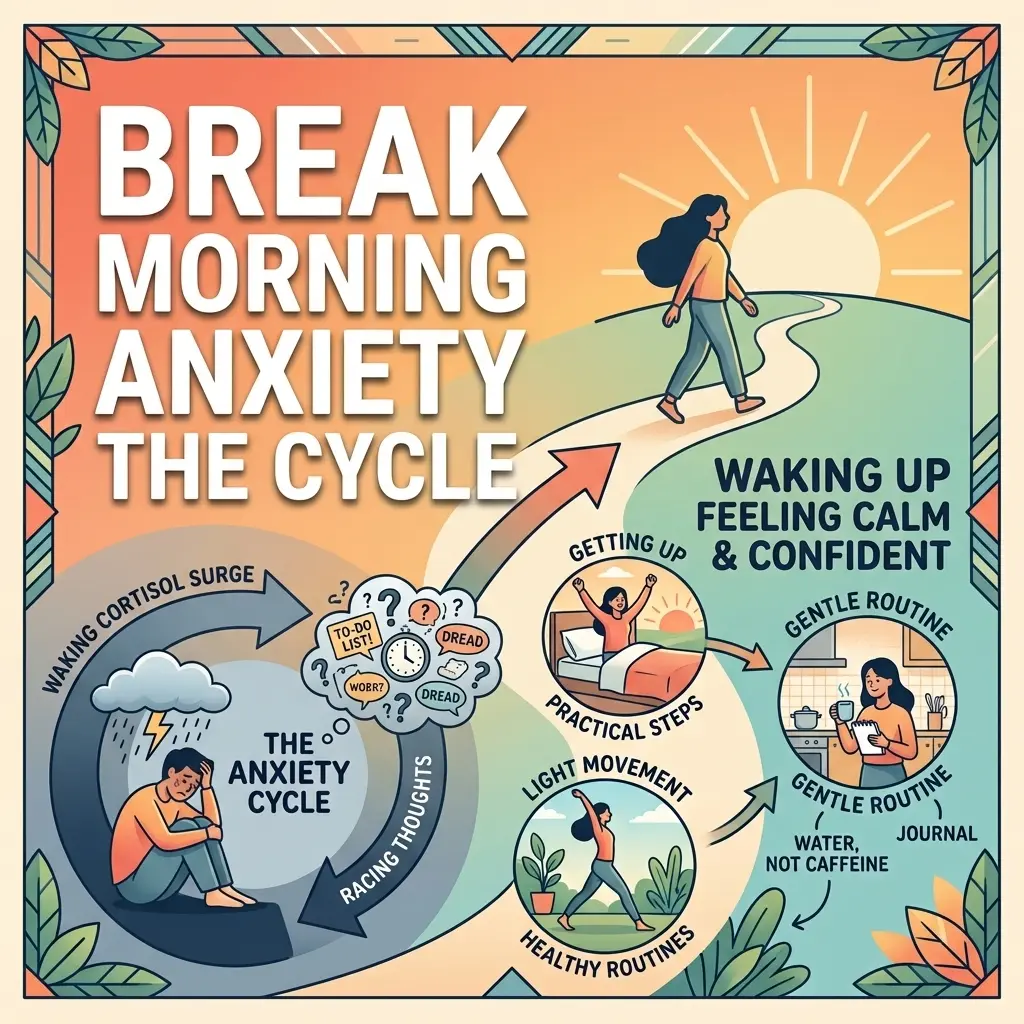
To overcome morning anxiety, it helps to understand its biological mechanics. Human bodies operate on a circadian rhythm heavily influenced by hormones. During the early morning hours, the body naturally releases a surge of cortisol—often referred to as the stress hormone—to help us wake up and feel alert. This natural biological process is called the Cortisol Awakening Response (CAR).
For a person already experiencing elevated chronic stress or an anxiety disorder, this natural spike in cortisol acts like pouring gasoline on a smoldering fire. The physical sensation of alertness gets misidentified by an overactive nervous system as an immediate threat. Your mind rushes to find a reason for the physical tension, latching onto work stresses, personal worries, or general existential dread. Thus, the cycle begins: physical cortisol release causes mental worry, which triggers more adrenaline, cementing a pattern of waking panic.
Step-by-Step Strategies to Interrupt the Cycle
Breaking this self-reinforcing loop requires a combination of physical grounding techniques, routine adjustments, and cognitive reframing. Here are four ways to answer the question: how to Break the Cycle of Morning Anxiety
1. Change Your Immediate Physical Response
The moment you notice anxiety upon waking, resist the urge to stay in bed and mentally rehearse your fears. Equally, avoid reaching immediately for your smartphone. Checking emails or social media instantly feeds fresh information into a brain already scanning for threats.
Instead, practise a physiological grounding technique before getting out of bed:
- Box Breathing: Inhale deeply through your nose for 4 seconds, hold for 4 seconds, exhale through your mouth for 4 seconds, and hold empty for 4 seconds. Repeat this four times.
- Somatic Check-In: Place one hand on your chest and one on your belly. Remind yourself aloud: “This is just cortisol. My body is waking up, and I am completely safe.”
2. Hydrate and Delay Caffeine
When you wake up, your body is naturally dehydrated, which can mimic or exacerbate symptoms of anxiety, such as a rapid heart rate and lightheadedness. Drink a large glass of room-temperature water before reaching for coffee. While caffeine provides a quick boost, drinking it on an empty, cortisol-flooded stomach amplifies nervous system arousal. Consider delaying your morning coffee by 60 to 90 minutes after waking.
3. Establish a Low-Friction Morning Routine
Uncertainty and rushing fuel anxiety. Design a predictable, low-demand morning routine the night before. Lay out your clothes, prepare your lunch, and write down your top three priorities for the day. When your brain knows exactly what steps to take upon waking, it reduces decision fatigue and keeps you moving forward rather than getting stuck in anxious loops.
4. Practise Gentle Movement
Light physical movement helps dissipate excess adrenaline and cortisol accumulated overnight. You don’t need an intense workout; ten minutes of gentle stretching, a short neighbourhood walk, or yoga can signal to your nervous system that you are in control and out of danger.
Reclaiming Your Mornings
Learning how to break the cycle of morning anxiety is not an overnight fix—it is a gradual process of retraining your body’s threat detection system. By addressing both the biological triggers and your mental response, you can slowly replace dread with calm, transforming your mornings back into a time of quiet confidence.