Male fertility tests help healthcare professionals assess the reproductive health of men and identify possible reasons for difficulties with conception. These investigations can examine sperm quality, hormone levels, reproductive organs and other factors that influence sperm production and function.
Understanding the different male fertility tests and how to prepare for them can make the testing process easier and less stressful.
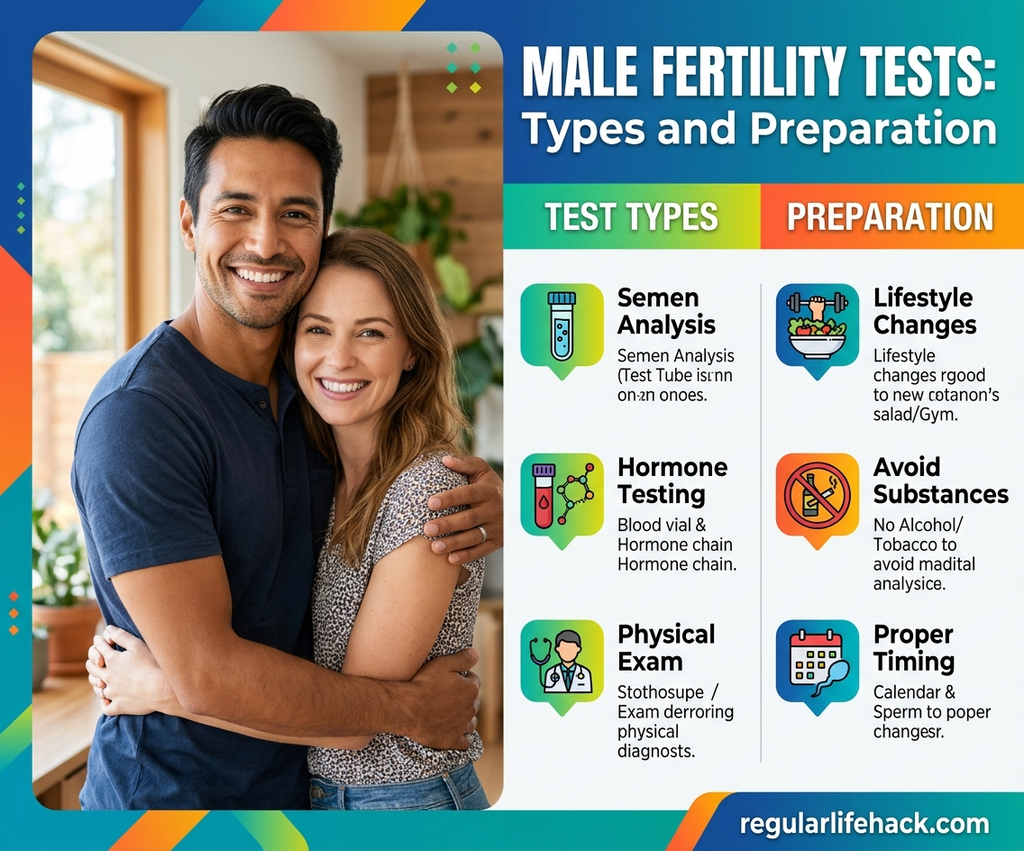
Why Are Male Fertility Tests Important?
Male fertility problems may be associated with low sperm count, poor sperm movement, abnormal sperm shape, hormonal imbalances or blockages in the reproductive tract.
Testing helps identify possible causes and guides decisions about further investigations or treatment. Male fertility assessment is often recommended alongside evaluation of the female partner.
Common Types of Male Fertility Tests
1. Semen Analysis
Semen analysis is one of the most common and important male fertility tests. It examines a semen sample to assess:
- Sperm concentration and total count.
- Sperm movement (motility).
- Sperm shape (morphology).
- Semen volume.
- Sperm vitality.
The results help identify possible abnormalities in sperm quality. An abnormal result does not automatically mean infertility, and repeat testing may be recommended.
2. Hormone Blood Tests
Hormones play an important role in sperm production. Blood tests may measure:
- Testosterone: Supports male reproductive function.
- FSH: Helps regulate sperm production.
- LH: Stimulates testosterone production.
- Prolactin: Elevated levels may interfere with reproductive hormones.
These tests may help identify hormonal conditions affecting fertility.
3. Physical Examination
A healthcare professional may examine the reproductive organs to assess testicular size, structure and other possible abnormalities.
The examination may also identify a varicocele, which involves enlarged veins around the testicles and can sometimes affect sperm quality.
4. Scrotal Ultrasound
An ultrasound scan uses sound waves to produce images of the testicles and surrounding structures.
It may be recommended when a physical examination suggests a possible abnormality, swelling, varicocele or other reproductive condition.
5. Genetic Testing
In some cases, genetic investigations may be recommended, particularly when sperm counts are extremely low or sperm are absent from the semen.
These tests can help identify inherited conditions that affect sperm production or reproductive function.
6. Additional Investigations
Depending on the initial findings, a specialist may recommend urine testing after ejaculation, tests for reproductive infections or imaging to investigate possible blockages in the reproductive tract.
Not everyone needs these additional investigations.
Recommended Reading
Pregnancy Week 36: Preparing for Birth
Resolving Marital Conflicts (Christian Perspective)
The Courage of Esther: For Such a Time as This
Tips For Navigating Long-Term Relationship
How to Prepare for Male Fertility Tests
Preparation depends on the type of test being performed. For semen analysis, laboratories commonly recommend:
- Avoid ejaculation for two to seven days before sample collection, following the laboratory’s instructions.
- Collect the entire sample using the container provided by the laboratory.
- Avoid using ordinary lubricants or condoms unless specifically approved by the laboratory.
- Inform the laboratory about recent fever, illness or medication use.
- Follow instructions about how quickly the sample must be delivered.
For blood tests, ask whether fasting or specific appointment timing is required.
What Happens After Testing?
A healthcare professional will review the results and explain whether further assessment is necessary.
If abnormalities are identified, possible next steps may include repeat semen analysis, additional blood tests, specialist referral or treatment of an underlying condition.
Conclusion
Male fertility tests provide useful information about sperm quality, hormone levels and reproductive health. Common investigations include semen analysis, hormone blood tests, physical examination, ultrasound and selected genetic tests.
Following preparation instructions and discussing results with a qualified healthcare professional are important steps towards understanding male reproductive health and identifying appropriate care.