A Pregnancy Due Date Calculator will tell you when your baby is due. Knowing your estimated due date can help you plan for prenatal appointments, monitor your baby’s development, and prepare for delivery.
A due date is a handy guide but most babies don’t turn up on the day they are due. Knowing how pregnancy due dates are calculated can help you know what to expect.
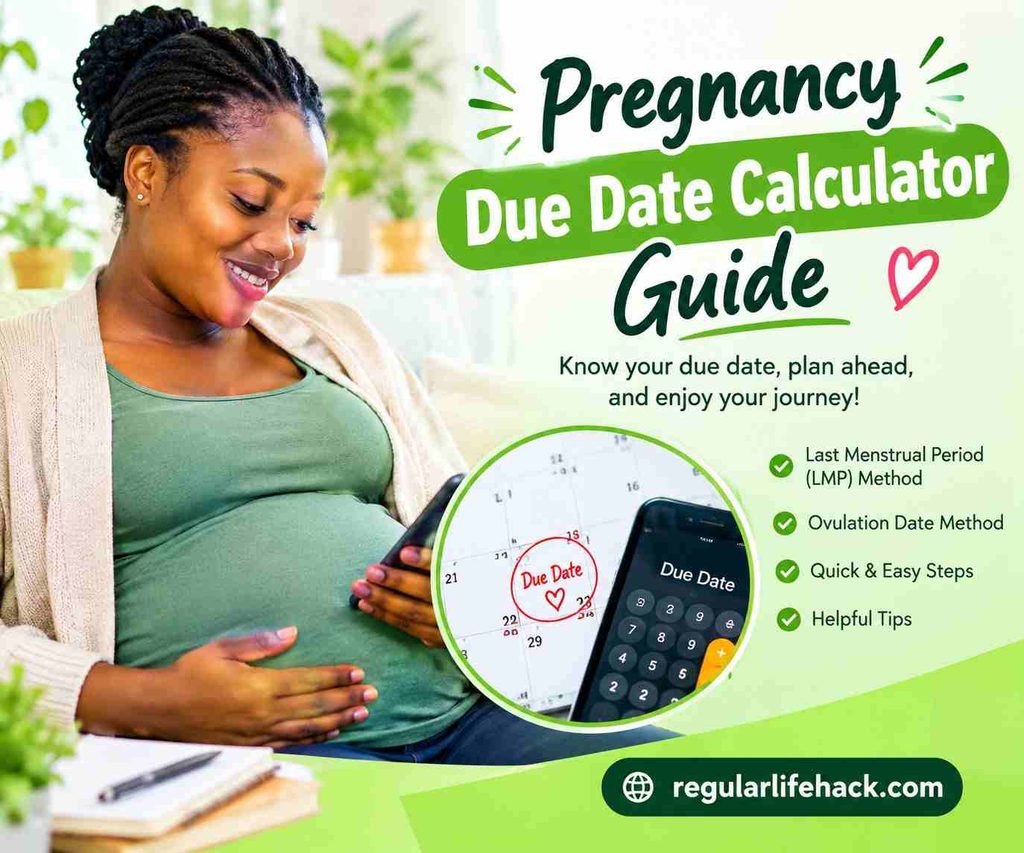
What is Pregnancy Due Date Calculator?
A Pregnancy Due Date Calculator is a tool that estimates the baby’s due date based on information such as the first day of your last menstrual period or the date you conceived.
Healthcare professionals generally estimate pregnancy to be about 40 weeks or 280 days from the first day of the last menstrual period (LMP) for calculation purposes. This method assumes a normal 28-day cycle.
How Is Your Pregnancy Due Date Calculated?
There are a few ways that you can estimate your due date.
1. With Your Last Menstrual Period
This is one of the most popular ways. The first day of your last menstrual period is added to 280 days (40 weeks) to establish an estimated due date.
If your last period began on January 1, your estimated due date would be around October 8 in a non-leap year.
2. Using Your Date of Conception
If you know approximately when you conceived, your estimated due date is typically around 266 days or 38 weeks later. But it can be difficult to know exactly when conception occurred.
3. With an ultrasound scan
An ultrasound scan can be particularly helpful in early pregnancy to estimate the gestational age and help to refine your due date. If you are unsure about your menstrual dates or have an irregular cycle, your healthcare professional may suggest this method.
What Is The Accuracy Of A Pregnancy Due Date Calculator?
A Pregnancy Due Date Calculator gives an estimate, not an exact prediction. Ovulation does not always happen on day 14 and cycles vary from person to person.
Your baby might be born a little early or a little late. Your health care provider will use your menstrual history, ultrasound results and other clinical information to provide the most accurate estimate possible.
What Do the Pregnancy Weeks Mean?
Pregnancy is divided into three terms.
- First trimester: 1 to 13 weeks
- Second trimester: 14-27 weeks
- Third trimester: From week 28 until delivery
Pregnancy dating begins on the first day of your last menstrual period, so the first two weeks are usually counted before conception occurs.
Recommended Reading
Pregnancy Week 36: Preparing for Birth
Resolving Marital Conflicts (Christian Perspective)
The Courage of Esther: For Such a Time as This
Tips For Navigating Long-Term Relationship
Why it’s important to know your due date
It can help you to know your estimated due date:
- Schedule prenatal appointments and necessary tests.
- Follow your baby’s growth week by week.
- Plan support and arrange maternity leave.- Pack your bag for the hospital and for the newborn.
- Know when to seek advice about labour signs.
What if your periods are irregular?
If you have irregular periods, counting from your last period may not be the most accurate way to predict your due date. Ovulation may occur earlier or later than expected and this can affect the dating of pregnancy.
An early ultrasound and a consultation with a qualified health care professional can help to provide a more accurate estimate.
Conclusion
A Pregnancy Due Date Calculator is a good first step to estimate when your baby might be born. It can help you track your pregnancy and get ready for childbirth, but it cannot predict the day labour will arrive.
For the most accurate estimate, be sure to share your menstrual history with your healthcare professional, and attend your recommended prenatal appointments. The estimated delivery date is a guideline and not a deadline.