Sore nipples while breastfeeding are a common concern, especially during the first few weeks after childbirth. While some tenderness may occur as you and your baby adjust to breastfeeding, ongoing pain should not be ignored. Understanding the possible causes can help you find relief and make feeding more comfortable.
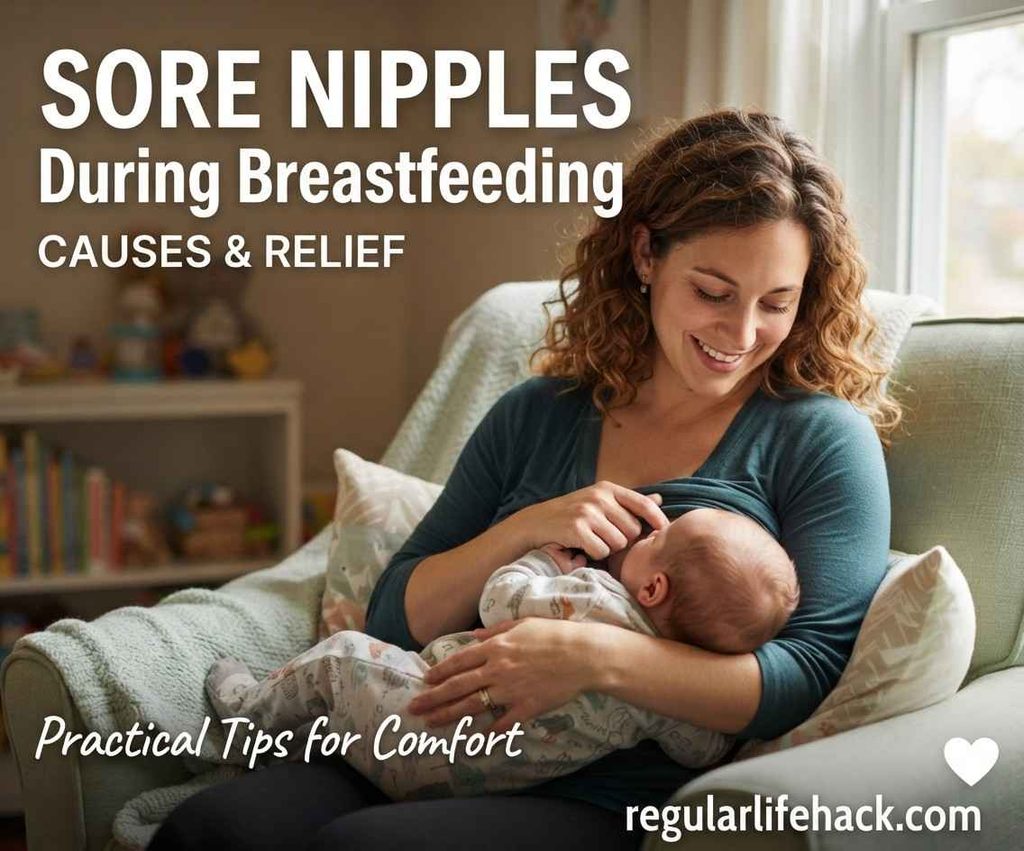
Common Causes of Sore Nipples While Breastfeeding
Several factors can contribute to nipple discomfort:
1. Poor Latch
One of the most common causes is an incorrect latch. If your baby takes only the nipple instead of a good portion of the surrounding breast tissue, feeding may become painful.
2. Incorrect Breastfeeding Position
An uncomfortable position can make it difficult for your baby to attach properly. It may also cause pulling or pressure on the nipple.
3. Frequent or Long Feeding Sessions
Frequent feeding is normal for newborns, but repeated friction from an ineffective latch can leave nipples tender or irritated.
4. Dry or Irritated Skin
Soap, fragranced creams, harsh detergents and some breast pads can irritate the sensitive skin around the nipples.
5. Infection or Other Breastfeeding Conditions
Persistent pain, unusual nipple changes or symptoms affecting the breast may sometimes be associated with infection or another medical condition. A healthcare professional can help identify the cause.
How to Relieve Sore Nipples
The following practical steps may help reduce discomfort:
- Improve your baby’s latch: Make sure your baby opens their mouth widely and takes in a good portion of the breast, not just the nipple.
- Try different positions: Experiment with comfortable breastfeeding positions that support your baby’s head and body.
- Avoid harsh products: Clean the breast gently with water and avoid fragranced soaps or products that may irritate the skin.
- Use a cool compress: A clean, cool cloth placed briefly on the breast after feeding may help soothe discomfort.
- Change breast pads regularly: Keep the area clean and dry, and replace damp breast pads.
- Seek breastfeeding support: A midwife, lactation consultant or other qualified healthcare professional can assess the latch and suggest appropriate changes.
If breastfeeding is too painful, ask a healthcare professional for advice on how to maintain feeding or milk expression safely while the problem is addressed.
When Should You Seek Medical Advice?
Get medical advice if nipple pain is severe, continues despite correcting the latch, or is accompanied by unusual discharge, persistent cracks or changes in the nipple.
Seek prompt medical attention if you develop breast redness, warmth, swelling, fever or flu-like symptoms, as these may indicate mastitis or another infection.
Do not assume that persistent pain is simply part of breastfeeding. Early support can prevent the problem from becoming worse.
Recommended Reading
Foods That May Support Breast Milk Production
Natural Remedies for Miscarriage Recovery
HOLY SPIRIT AND ANOINTING: ANOINTING AND THE ANOINTED
Honouring Your Parents: The First Commandment with a Promise
Can You Prevent Sore Nipples During Breastfeeding?
Although not every case can be prevented, good breastfeeding practices can reduce the risk.
Start by ensuring your baby is positioned comfortably and has a deep latch. Avoid pulling your baby away while they are still attached; gently break the suction first. Attend routine postnatal checks and ask for help whenever feeding becomes uncomfortable.
Conclusion
Sore nipples while breastfeeding can make feeding difficult, but the discomfort often improves when the underlying cause is identified and addressed. A good latch, comfortable positioning, gentle skin care and professional breastfeeding support can make a significant difference.
Remember, breastfeeding should not be persistently painful. If discomfort continues, speak with a qualified healthcare professional rather than trying to manage it alone.