Blocked milk ducts are a common breastfeeding concern that can cause breast discomfort, tenderness and swelling. They occur when milk is not flowing easily through part of the breast, often because of inflammation and narrowing of the milk ducts.
Recognising blocked milk duct symptoms early can help you manage the discomfort and reduce the risk of complications. With appropriate care and breastfeeding support, many cases improve without interrupting normal feeding.
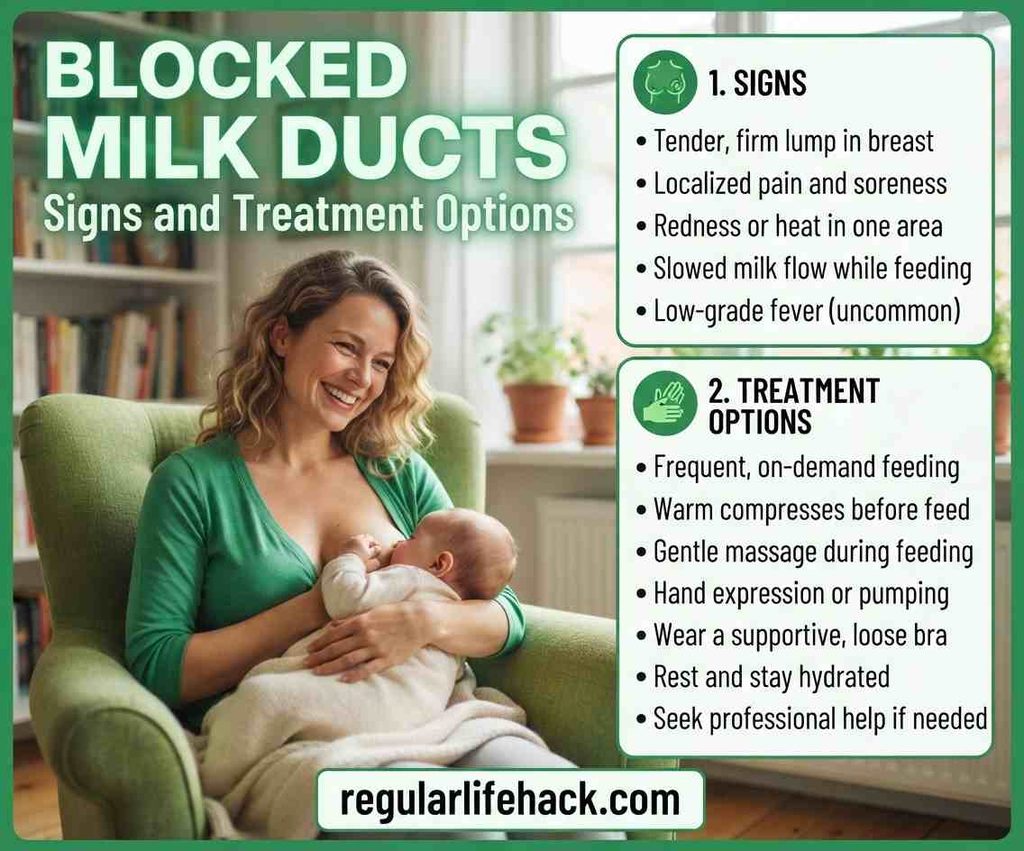
What Causes Blocked Milk Ducts?
A blocked milk duct can develop when milk removal is less frequent or effective than usual, or when inflammation affects milk flow. Common contributing factors include:
- Missed feeding sessions: Longer gaps between feeds may contribute to breast fullness and inflammation.
- Poor baby latch: An ineffective latch can make milk removal less efficient.
- Sudden changes in feeding routines: Reducing breastfeeding or stopping abruptly may increase breast discomfort.
- Pressure on the breasts: Tight bras or prolonged pressure from clothing may contribute to discomfort.
- Oversupply: Producing more milk than your baby needs can increase breast fullness.
Common Blocked Milk Duct Symptoms
The symptoms may affect one area of the breast or a larger region. Common signs include:
- A tender or painful area in the breast.
- Localised swelling or a firm lump-like area.
- Discomfort that may increase during feeding.
- Mild redness in the affected area.
- A feeling of fullness that does not completely improve after feeding.
A blocked duct does not always feel like a clearly defined lump. If symptoms worsen or you develop a fever, seek medical advice because mastitis may be developing.
How to Treat a Blocked Milk Duct
The following steps may help reduce inflammation and improve comfort:
1. Continue Normal Breastfeeding
Continue feeding your baby according to their usual needs. There is generally no need to stop breastfeeding because of a suspected blocked duct.
2. Apply a Cool Compress
Place a clean, cool cloth or wrapped cold pack on the affected area to help reduce swelling and discomfort.
3. Avoid Tight Clothing
Wear a comfortable, supportive bra that does not put pressure on the breasts. Avoid anything that feels restrictive.
4. Avoid Deep Massage
Do not squeeze, press or massage the affected area forcefully. Deep massage can increase inflammation and make symptoms worse. Gentle handling is preferable.
5. Express Milk Only When Needed
If your baby cannot feed or your breasts remain uncomfortably full, gentle hand expression may help. Avoid excessive pumping or trying to empty the breast completely, as this can encourage oversupply.
6. Get Breastfeeding Support
A midwife or lactation consultant can assess your baby’s latch, feeding routine and possible causes of recurring discomfort.
Recommended Reading
When Does Breast Milk Come In After Birth?
Can You Get Pregnant Immediately After Miscarriage?
HOLY SPIRIT AND ANOINTING: PRESENCE AND POWER OF THE SPIRIT
Overcoming the Spirit of Fear: Walking in Power, Love, and a Sound Mind
When Should You See a Healthcare Professional?
Seek medical advice if the affected area becomes increasingly painful, red or swollen, or if symptoms do not improve.
Get prompt medical attention if you develop a fever, chills, flu-like symptoms or feel generally unwell. These may be signs of mastitis, which sometimes requires medical treatment.
Do not attempt to remove a suspected blockage by force or delay care when symptoms are getting worse.
How Can You Prevent Blocked Milk Ducts?
You may reduce the likelihood of recurring problems by:
- Breastfeeding according to your baby’s hunger cues.
- Maintaining a comfortable feeding routine.
- Ensuring your baby has a good latch.
- Avoiding unnecessary pressure on your breasts.
- Making changes to breastfeeding gradually rather than stopping suddenly.
Conclusion
Blocked milk duct symptoms can include breast tenderness, swelling and a firm or painful area. Gentle care, normal breastfeeding, cool compresses and appropriate professional support may help relieve discomfort.
If symptoms persist or you develop fever and worsening breast pain, seek medical attention promptly. Early support can help prevent complications and make breastfeeding more comfortable.