Male infertility refers to reproductive difficulties associated with factors affecting the male reproductive system. It may involve problems with sperm production, sperm quality or the movement of sperm.
Understanding the common causes of male infertility is important because reproductive health challenges do not always originate from the female partner. In many cases, male-related factors contribute to difficulties with conception.
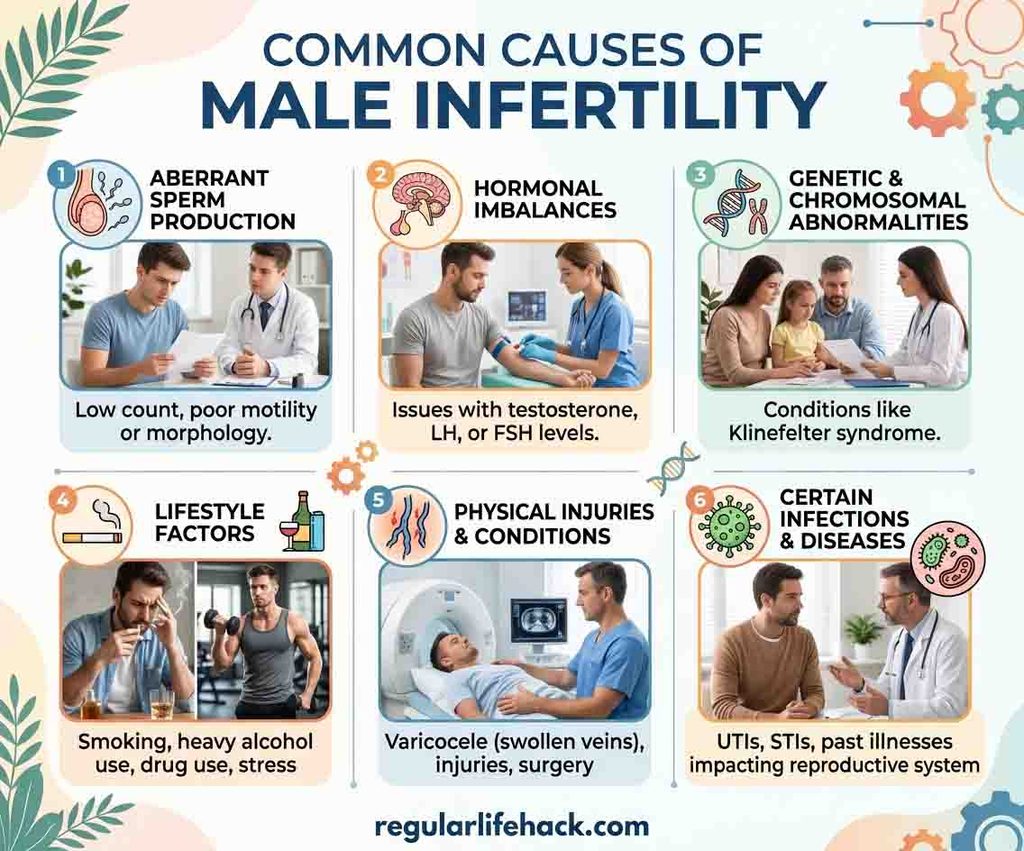
1. Low Sperm Count
A low sperm count means that the semen contains fewer sperm than expected. This can reduce the likelihood of sperm reaching and fertilising an egg.
Several factors may contribute to low sperm production, including hormonal imbalances, certain infections, genetic conditions and problems affecting the testicles.
2. Poor Sperm Movement
Sperm motility refers to the ability of sperm to move effectively. Healthy movement is important because sperm must travel through the female reproductive tract to reach an egg.
Poor sperm motility can make this process more difficult. It may be associated with infections, hormonal problems, lifestyle factors or other reproductive conditions.
3. Abnormal Sperm Shape
Sperm morphology describes the size and shape of sperm cells. Certain abnormalities may affect how effectively sperm move and function.
However, an abnormal morphology result does not automatically mean a man is infertile. Results must be interpreted alongside other semen analysis findings.
4. Varicocele
A varicocele is an enlargement of veins within the scrotum. It can affect testicular function and may contribute to reduced sperm production or quality.
Some men with varicoceles have no symptoms, while others may experience discomfort or swelling. A medical examination can help determine whether treatment is necessary.
5. Hormonal Imbalances
Hormones such as testosterone, follicle-stimulating hormone (FSH) and luteinising hormone (LH) play important roles in sperm production.
Problems affecting the pituitary gland, testicles or other hormone-producing organs may interfere with normal reproductive function.
Blood tests can help identify certain hormonal conditions.
6. Infections and Reproductive Conditions
Some infections can affect the reproductive system and may interfere with sperm production or transport.
Certain sexually transmitted infections, particularly when untreated, can cause inflammation or damage that affects reproductive health.
Other conditions, including previous testicular injuries or surgery, may also contribute to male infertility.
7. Lifestyle and Environmental Factors
Certain lifestyle and environmental exposures may negatively affect sperm quality.
Examples include:
- Smoking and tobacco exposure.
- Excessive alcohol consumption.
- Use of anabolic steroids or certain recreational drugs.
- Exposure to some industrial chemicals.
- Significant or prolonged heat exposure to the testicles.
- Poorly controlled long-term health conditions.
Avoiding harmful substances and maintaining general health can support reproductive wellbeing, although lifestyle changes cannot resolve every underlying cause.
Recommended Reading
Pregnancy Symptoms Week by Week
9 Mistakes Singles and Newly-Weds Need To Avoid
Quenching the Fiery Darts of Doubt
Leading Like Jesus In Ministry
8. Ejaculation and Sperm Transport Problems
Some conditions prevent sperm from being released normally or transported through the reproductive tract.
For example, a blockage in the reproductive ducts or certain ejaculation disorders may affect the presence of sperm in semen.
Medical assessment can help identify the underlying problem.
How Is Male Infertility Diagnosed?
A semen analysis is one of the main tests used to assess male reproductive health. It examines sperm concentration, movement and shape.
Depending on the findings, a healthcare professional may recommend hormone blood tests, physical examination, ultrasound or genetic investigations.
Conclusion
The common causes of male infertility include low sperm count, poor sperm movement, abnormal sperm shape, varicocele, hormonal imbalances, infections and sperm transport problems.
Because several factors can contribute to reproductive difficulties, proper medical assessment is important. Male infertility is a health condition that deserves appropriate attention, accurate diagnosis and professional support.