Folic acid is one of the most vital nutrients for a woman who is planning to become pregnant or already is pregnant with a baby. Taking the recommended amount of folic acid during pregnancy helps support the baby’s early development and decreases the risk of serious birth defects of the brain and spinal cord.
Knowing when to begin taking folic acid, how much to take and which foods contain folate can help you make informed choices about your pregnancy health.
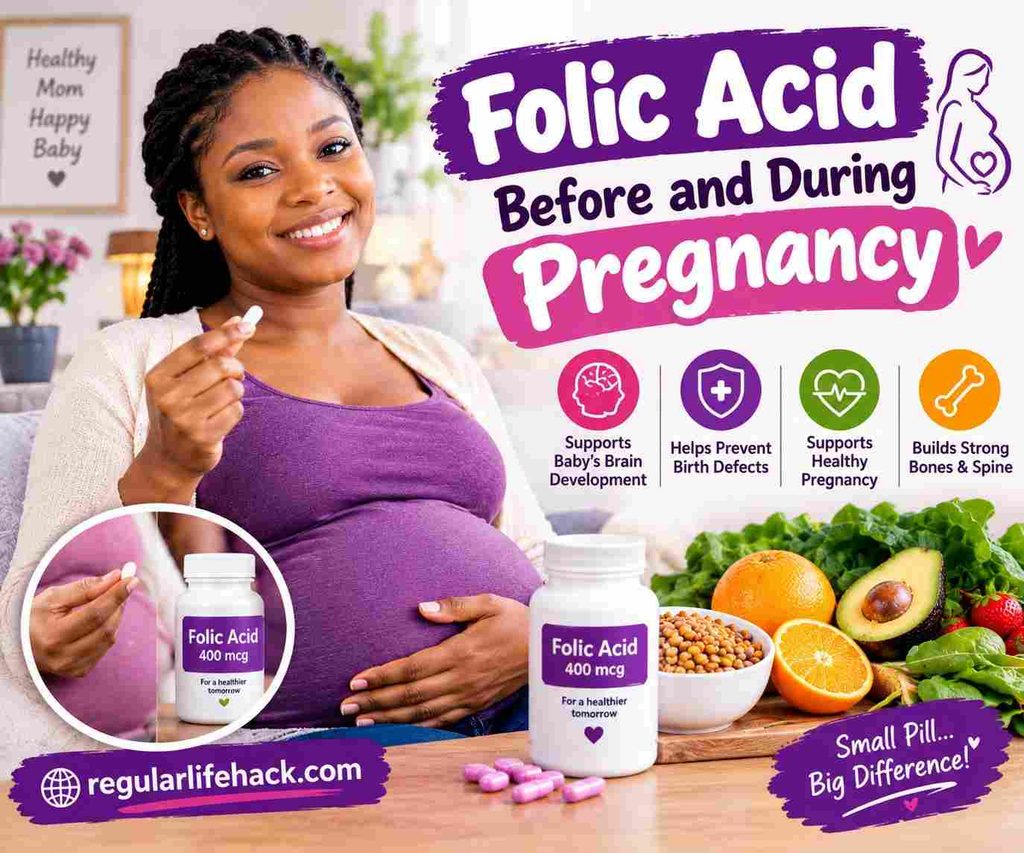
About Folic Acid
Folic acid is a man-made form of folate, a B vitamin also called vitamin B9. Folate is the natural form in food, folic acid is the form used in supplements and fortified foods.
This nutrient helps the body make DNA and new cells. This is especially important during early pregnancy when the baby’s brain and spinal cord are developing.
Why Do I Need Folic Acid During Pregnancy?
Folic acid taken before conception and in early pregnancy helps reduce the risk of neural tube defects such as spina bifida. These conditions occur when the neural tube fails to close completely during early development.
This process occurs very early, often before a woman even knows she is pregnant. This is why it is so important to get enough folic acid before conception. Folic Acid Is Good for Healthy Cell Growth and Red Blood Cell Formation.
How Much Folic Acid Should I Take?
If you’re planning a pregnancy or could become pregnant, take 400 micrograms (mcg) a day of folic acid. Most women should take this amount. Ideally, start at least one month before conception and continue through the first trimester of pregnancy.
For some women, a higher dose is necessary, usually 5 milligrams daily, due to certain risk factors such as a previous pregnancy affected by a neural tube defect or certain medical conditions or medicines. Whether a higher dose is right should be decided by a healthcare professional.
Do not take high doses without medical advice.
When to start folic acid?
Pre-pregnancy is the perfect time to begin. Since early development starts soon after conception, waiting until you get a positive pregnancy test could mean missing part of the recommended preparation period.
If you are already pregnant and not taking folic acid, you should first contact a healthcare professional or chemist for advice. It’s good to meet your nutritional needs early on.
Foods Rich in Folate While supplements are important, a well-rounded diet can also provide folate. Good sources are:
- Dark leafy greens: kale, spinach, and other leafy greens.
- Beans and lentils: They are a good source of folate and plant protein.
- Oranges and other citrus fruits: citrus fruits.
- Avocado: Has folate and other nutrients.
- Fortified cereals and grains: Some are fortified with folic acid.
Food sources are in addition to supplements, but should not replace the recommended folic acid supplement when planning a pregnancy or during early pregnancy.
Recommended Reading
How to Calculate Your Pregnancy Due Date
Healthy Relationships In Christian Homes
The Integrity of Job: Worshipping God in the Midst of Loss
Finding Time for Your Partner in a Busy Schedule
Folate and Prenatal Vitamins: Is Folic Acid Needed?
Yes. Folic acid is found in many prenatal vitamins. Check the label on the product to see how much it provides, and ask a healthcare professional if that is enough for you.
Never take multiple supplements at the same time unless you read what they contain, as you can get too much of some nutrients.
Conclusion
Taking folic acid during pregnancy, particularly before conception and during the first 12 weeks, is a small but important step in helping your baby develop. Most women need 400 mcg a day but some need a higher dose that’s prescribed. Get personalised medical advice if you have health conditions, take regular medication or are not sure about the right dose. Use the right supplementation with a healthy diet.