Being active during pregnancy can help your physical and mental health. Doing the right things can help you sleep better, ease back pain, keep your blood flowing well, and prepare your body for the rigours of labour. However, it’s important to select safe exercises during pregnancy, as your body changes through each trimester.
Be sure to talk with your health care provider before starting any new exercise program, especially if you have any complications of pregnancy or any existing medical condition.
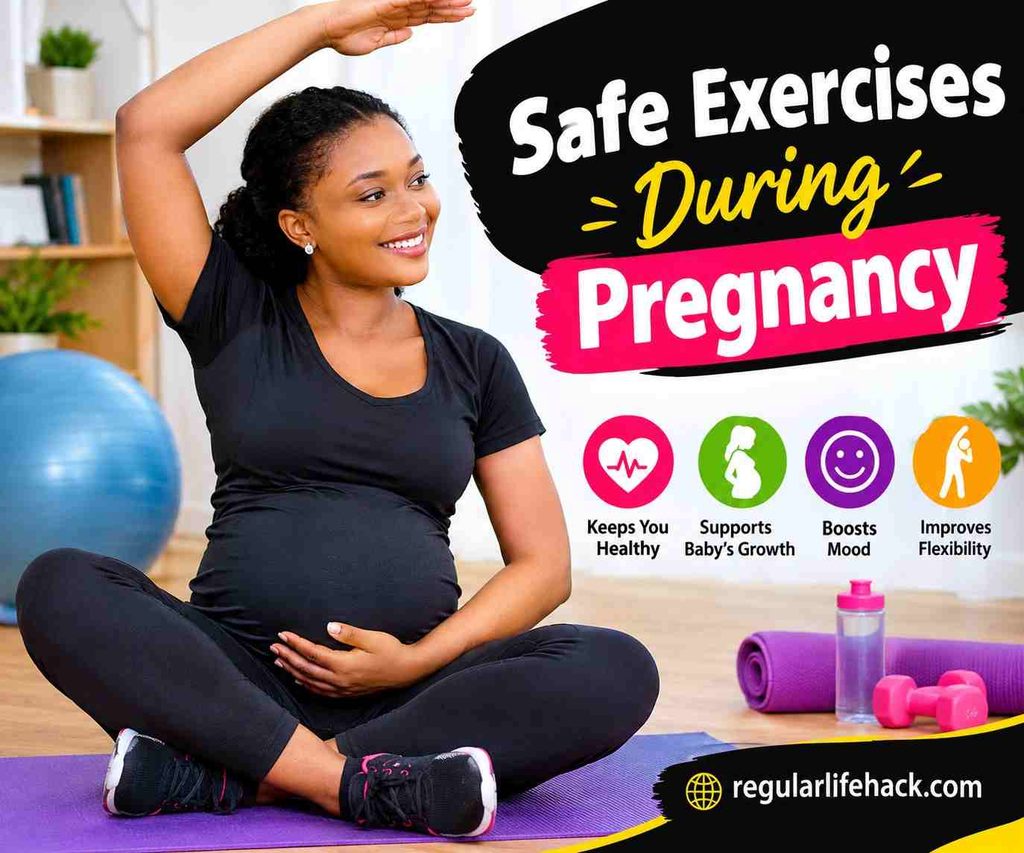
Benefits of Exercise in Pregnancy
For most women with normal pregnancies, regular physical activity offers a number of benefits including:
- Improve your cardiovascular fitness and stamina.
- keeps healthy blood sugar levels.
- Alleviating common pregnancy complaints like back pain.
- Aid in stress management and sleep.
- Promoting general well-being and recovery postpartum.
Exercise should feel good and feel doable. This is not the time to run your body into the ground or to beat your personal best.
5 Safe Exercises for Pregnant Women
1. Walks
Walking is one of the easiest and safest exercises to do during pregnancy. It needs minimal equipment and can be adapted to your fitness level. If you’re feeling well, start with short, comfortable walks and gradually increase the length of your walks.
Select level surfaces, wear supportive footwear, and drink water regularly.
2. Swimming
Swimming and water-based exercise is a great way to stay active with less pressure on your joints. The water also helps support your changing body weight, which can make movement feel more comfortable.
Be sure to choose a safe swimming facility and avoid diving or activities that increase your risk of injury.
3. Prenatal Yoga
Prenatal yoga incorporates gentle movements, breathing and relaxation. It can help improve flexibility, balance and stress management.
Choose a class geared toward pregnancy, avoid poses that cause pain or dizziness, and don’t overstretch, as pregnancy hormones can make joints and ligaments more flexible.
4. Cycling (Static)
A stationary exercise bike provides a cardiovascular workout, and you don’t have to worry about balancing on a traditional bike outside. Make the resistance comfortable, without overheating.
Adjust the seat and handlebars to suit your body. If you feel sick, stop.
5. Soft Strength Training
Light resistance exercises can help you maintain muscle strength during your pregnancy. Use weights you can handle and move properly. Don’t hold your breath or lift anything that makes you strain.
A certified prenatal fitness instructor can help you modify exercises to suit your stage of pregnancy.
Recommended Readings
Miscarriage at 10 Weeks: Signs and Treatment
The First Commandment with a Promise
Tips and Tricks to Stop Arguing in Your Relationship
How to Make Money by Selling Pictures Online
Recommended Activity Levels?
For most pregnant women without medical or obstetric contraindications, health guidelines suggest minimum 150 minutes of moderate-intensity aerobic activity per week. You can break this up into shorter sessions throughout the week.
If you weren’t physically active before pregnancy, begin slowly. If you were exercising regularly before you became pregnant, you may be able to continue with proper modifications after consulting your healthcare professional.
Some activities are riskier in pregnancy. These can include:
- Contact sports that carry a risk of abdominal injury.
- Activities with a high risk of falling such as horse back riding or downhill skiing.
- Scuba diving.
- Exercising in hot or humid conditions
- Activities with heavy straining or high risk of collision.
Based on your medical history and pregnancy, your health care provider might suggest other limitations.
When To Exercise?
Stop exercising and call your doctor if you have vaginal bleeding, fluid leaking from the vagina, chest pain, dizziness, severe headache, painful regular contractions, calf pain or swelling, or unusual shortness of breath.
If your symptoms are severe or you think you may be having an emergency, get medical attention right away.
Conclusion
Choosing safe exercises while pregnant can help you stay active and support your well-being during pregnancy. Many women can safely engage in walking, swimming, prenatal yoga, stationary cycling, and gentle strength training. Remember to listen to your body, stay hydrated, avoid risky activities, and consult your healthcare professional for an exercise routine that is tailored to your individual needs.