Preparing your hospital bag checklist ahead of time can make you feel more organised and confident as you prepare to welcome your baby. Packing the essentials ahead of time means you’re less likely to forget important belongings when labour begins.
This Hospital Bag Checklist contains all the essentials for yourself, your newborn and anyone helping you through labour and delivery.
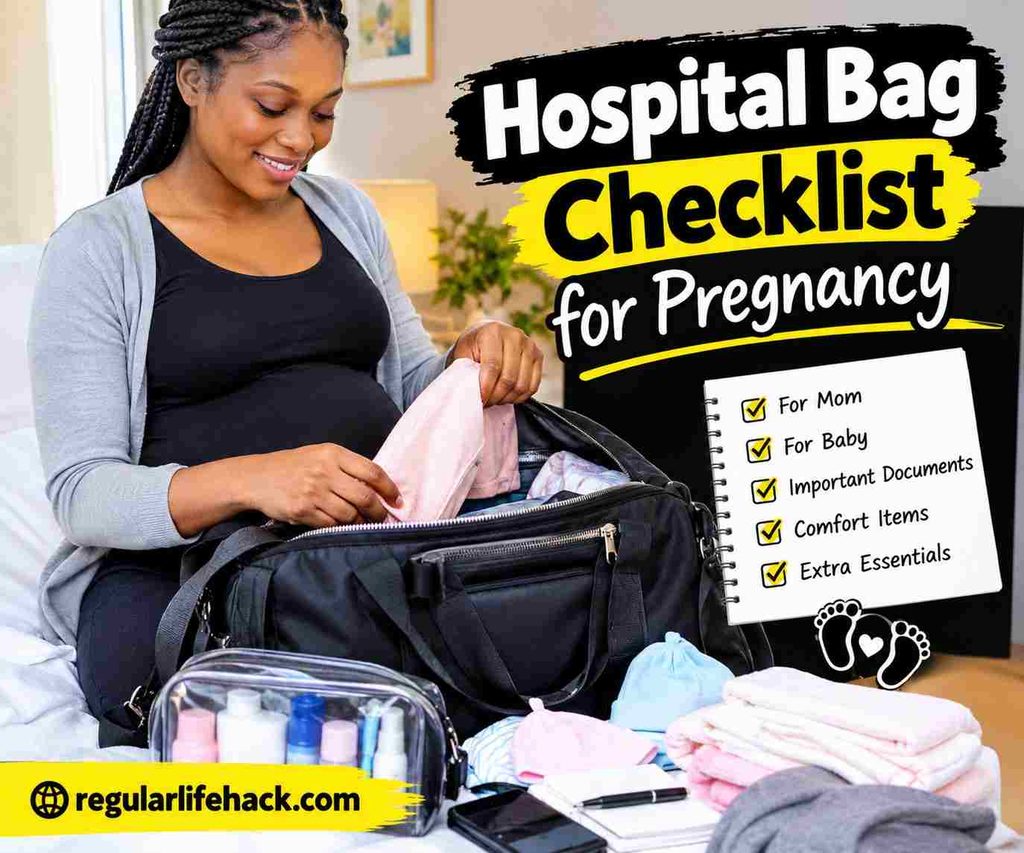
When Should You Pack Your Hospital Bag
It’s a good idea to pack your hospital bag around 35 to 36 weeks of pregnancy, or earlier if your health care provider recommends it. Babies are sometimes born before their due date so having things ready beforehand can help you to avoid a last minute rush.
Check with your hospital or maternity unit, as their policies and supplies available may affect what you need to bring.
1. Hospital Bag Checklist for Mom
Pack comfy items so you feel more comfortable during labour and after delivery.
Sleepwear: Loose-fitting nightdresses or pyjamas that are easy to get on and off, especially if you are thinking of breastfeeding.
Bras, maternity or nursing: A couple of comfortable ones.
Maternity pads: These can help with bleeding after delivery.
Comfortable pants: High-waisted, breathable pants can be helpful postpartum.
Toiletries: Pack a toothbrush, toothpaste, soap, shampoo, deodorant, lip balm and a hairbrush.
Slippers and socks: Comfortable shoes for walking around the maternity ward.
Going-home clothes: Pack a loose, comfortable outfit to wear home from the hospital.
Towels and washcloths: See if your hospital offers these.
Charger and mobile: Keep your phone handy for communication and photos.
You might also want to bring a water bottle, snacks if allowed, and any prescription medicines in their original packaging.
2. Baby Hospital Bag Checklist
Your newborn will need a few essential items for the hospital stay and trip home.
Newborn clothes: Pack some bodysuits, vests and sleepsuits.
Baby nappies: Pack enough for the length of your hospital stay.
Cotton wool or suitable wipes: Ask your maternity unit for advice on newborn skin care.
Baby blanket: Pick one that matches the weather and your travel plans.
Hat and socks: Take if recommended or if warm clothing is needed.
Muslin cloths: are handy for feeding and wiping up little spills.
Going home outfit: Wear easy clothes, appropriate for the weather.
Car seat: If you will be travelling by car, arrange for an appropriate, correctly fitted infant car seat before discharge.
Pack a few extra baby outfits, just in case.
Recommended Reading
Pregnancy Week 36: Preparing for Birth
How To Minister To God’s Servant And Their Family
Tips For Navigating Long-Term Relationship
Lessons from the Life of Caleb: Possessing a Different Spirit
3. Documents to Bring with You
File folder to keep important papers together and readily available. Depending on where you are and your hospital, these may include:
- Antenatal notes and maternity record.
- Details of hospital appointment.
- Identification papers.
- Health insurance information, if any.
- Preferences for birth or a birth plan, if you have one.
- Contact information for your health care provider.
Check with your maternity unit for any further paperwork they might need.
4. What to Pack for Your Birth Companion?
If someone is supporting you in labour they may need a phone charger, snacks and drinks, comfortable clothes, toiletries and any medication they need.
They should also know how to contact your maternity unit, and how to get to the hospital.
5. Things NOT to Take
Don’t bring expensive jewellry, large amounts of cash, unnecessary electronics, or too much luggage. Many facilities offer some basic supplies, as hospital space is often at a premium.
Check with the hospital for guidance before packing any specialist equipment or food.
Conclusion
A good Hospital Bag Checklist can help make the transition to hospital care more manageable. Prepare your personal items, baby clothes, important documents and travel arrangements ahead of time. Keep the bag somewhere you can easily find, go through the contents with your birth partner and follow the instructions of your maternity unit, so you can concentrate on receiving care and welcoming your newborn.