Your first prenatal appointment marks a significant milestone in your pregnancy. It allows you to discuss your health, check pregnancy information, ask questions, and start planning for your baby’s growth and delivery.
Whether you are pregnant for the first time or have had a baby before, knowing what happens during the first visit can help you feel more prepared and confident.
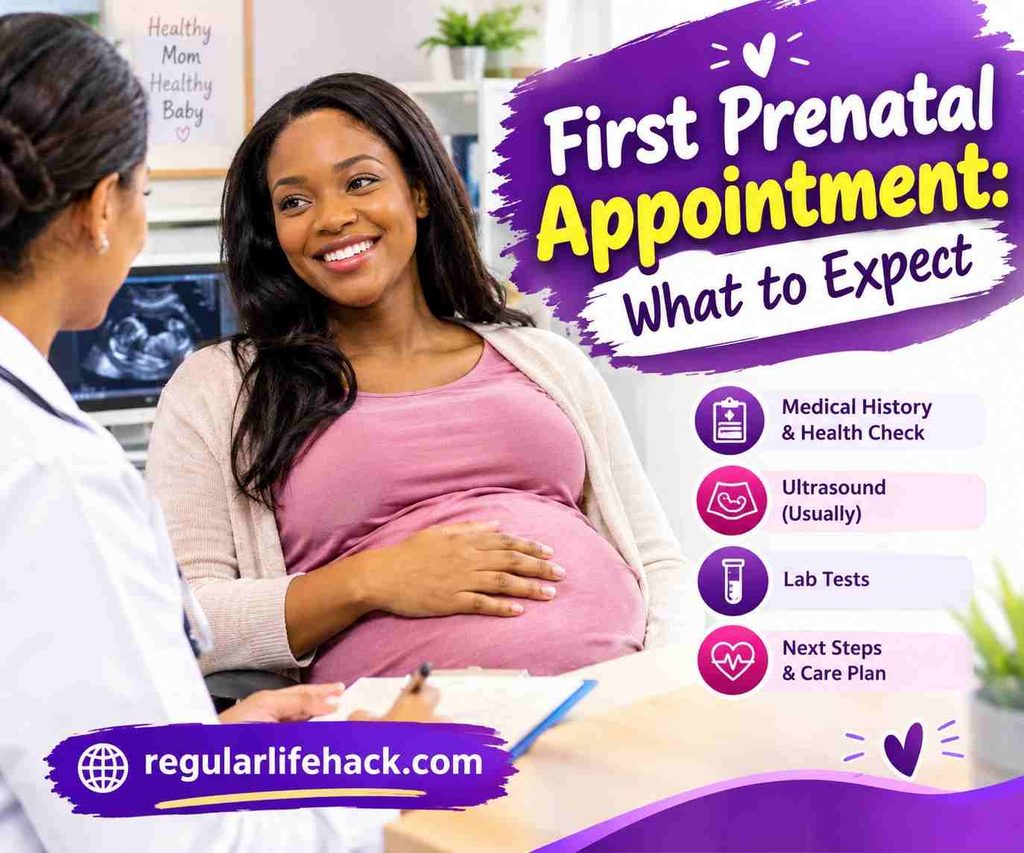
When do I schedule my first prenatal appointment?
Call your health care provider as soon as you know you are pregnant. For many healthcare systems, the first booking appointment is scheduled in the first trimester, ideally before 10 weeks of pregnancy if possible.
If you have a medical condition, are taking regular medication or are experiencing symptoms such as vaginal bleeding or abdominal pain, seek advice immediately rather than waiting for a routine appointment.
What to Expect on Your First Prenatal Appointment?
Your appointment may include a number of important assessments.
1. Look at your medical history
Your healthcare professional will enquire about your general health, previous pregnancies, surgeries, allergies, medications, and medical conditions.
You may also be asked about other relevant lifestyle factors and your family’s medical history. Answer honestly so your care team can identify any possible risks and offer the right support.
2. Your pregnancy dating will be confirmed
The first day of your last menstrual period will usually be asked for. This information allows you to figure out how many weeks pregnant you are and find out your expected due date.
Your dates may be uncertain Your menstrual cycles may be irregular or there may be a medical reason for assessing the pregnancy An ultrasound may be recommended.
3. Measuring Your Blood Pressure and Weight
During your initial assessment, your healthcare provider may measure your blood pressure and record your weight. These measurements can serve as a baseline to track your health during pregnancy.
4. Blood and Urine Tests During Pregnancy
Depending on where you live and your medical needs, your first prenatal visit may include blood and urine tests.
Blood tests can check your blood group and Rh status, anaemia and some infections. During pregnancy visits, you will usually be screened for diseases such as HIV, hepatitis B, and syphilis.
Urine testing can be done to look for signs of a urinary tract infection or other problems. Your health care provider will tell you what tests are recommended and how the results will be used.
5. Vitamins and nutrition discussion
Your healthcare provider will discuss healthy eating, hydration and supplements. Folic acid is very important in early pregnancy as it helps reduce the risk of neural tube defects.
Women planning a pregnancy or in the early stages of pregnancy are advised to take 400 micrograms of folic acid daily for the first 12 weeks. Some women may need to be prescribed a higher dose depending on individual risk factors.
Ask before you start, stop or change any prescribed medicine or supplement.
Recommended Reading
Pregnancy and Back Pain: Causes and Relief
Healthy And Happy Marriages In Church
The Courage of Esther: For Such a Time as This
Tips for Rebuilding Trust After Betrayal
Questions to Ask at Your First Prenatal Appointment
Having some questions prepared can help you make the most of your visit. Think about asking:
- How far along am I in my pregnancy? What is my estimated due date?
- What kind of prenatal testing and scans will I need?
- What should I avoid eating, taking and doing?
- What symptoms should prompt immediate medical care?
- How frequently will I have to come for prenatal checkups?
- Who do I contact if I have concerns between appointments?
Write your questions down beforehand so you don’t forget anything important.
Preparing for your appointment
Bring any relevant medical records, a list of medicines and supplements you take, and information on your last menstrual period, if you know it. You may also want a notebook or a trusted person to accompany you.
Don’t worry about remembering every detail. Your health care provider can help you understand the information.
Conclusion
Your first prenatal visit helps lay the foundation for your pregnancy care. Your visit will include a review of your medical history, ordering tests and a discussion about nutrition, all to support your health and the development of your baby. Book early and ask questions and attend your recommended follow-up appointments to get the right care throughout pregnancy.