If you are trying to get pregnant, knowing how to track ovulation can help you figure out when you are most likely to conceive. In ovulation an egg is released by an ovary, usually once in each menstrual cycle.
Learning how to track ovulation may help make planning for pregnancy easier. It can help you identify your fertile window. There are a few simple ways to track your cycle and get to know your body’s natural rhythms.
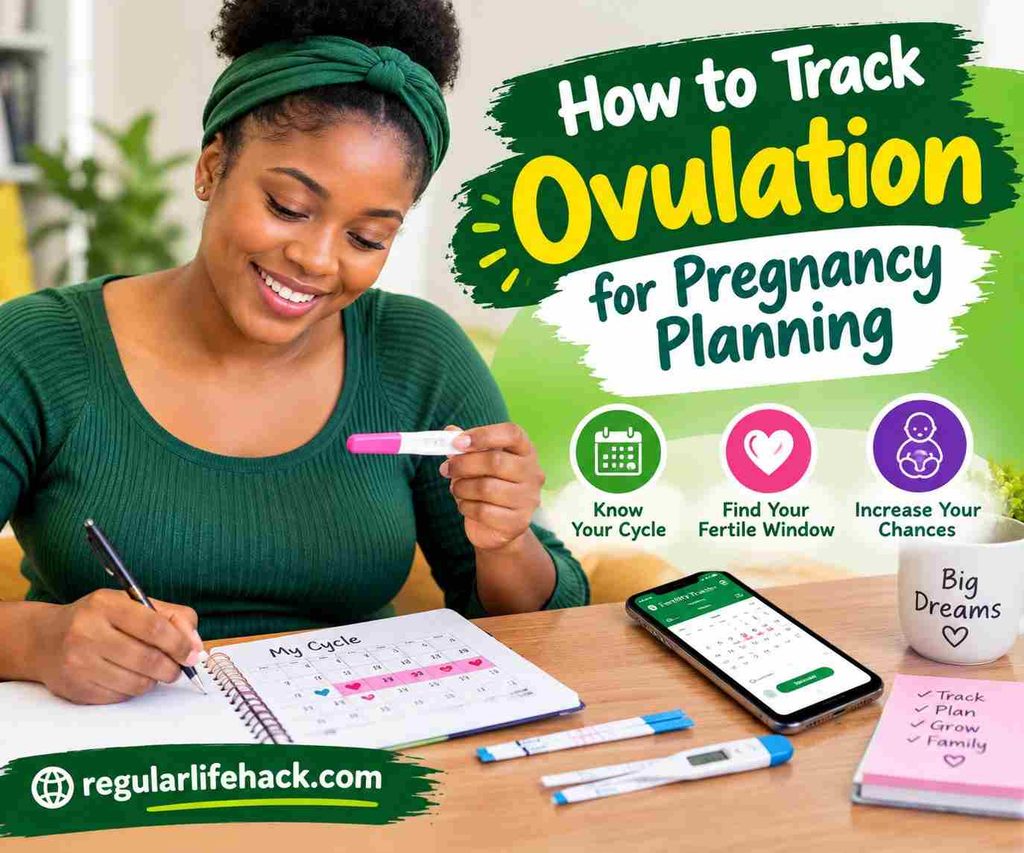
1. Monitor your menstrual cycle
One of the simplest ways to begin tracking ovulation is to chart your menstrual periods. Day one is the first day of your menstrual bleeding.
Count the number of days until the day before your next period starts. Add them up to get your cycle length. Ovulation usually takes place about 14 days before your next period, but this can vary.
Let’s say you have a regular 28-day cycle, for example. Ovulation may happen around Day 14. Your fertile window could be any time from Day 9 through 14.
Calendar methods are estimates, not hard predictions, especially if your periods are irregular.
2. Monitor Cervical Mucus Changes
Hormones fluctuate throughout the menstrual cycle and this causes changes in cervical mucus.
As you get closer to ovulation, your discharge will often be clearer, wetter, slippery and stretchy like raw egg white. This type of mucus assists sperm to move through the reproductive tract.
After ovulation, discharge can be heavier or less noticeable.
If you do this on a regular basis, you will be able to tell when you are coming up to your fertile days. However, abnormal discharge with itching, a strong smell or pain should be examined by a healthcare professional.
3. Use an Ovulation Predictor Kit
Ovulation predictor kits can help you identify your most fertile days, and they are available at most pharmacies. These tests measure the increase of luteinising hormone (LH) in your urine, which usually happens about 24 to 36 hours before ovulation.
Read the instructions that come with your test, including when to start testing and what is the best time to take your sample.
If a positive result is obtained, it means that you may be ovulating soon and it is a good time to plan intercourse. But an LH surge doesn’t guarantee you’ll ovulate.
4. Monitor Your Basal Body Temperature
Your basal body temperature is your temperature at rest, taken immediately upon arising and before getting out of bed.
After ovulation, progesterone usually causes a small rise in temperature. If you take your temperature for a few cycles in the morning, you may see a pattern.
The increase in temperature typically occurs after ovulation, so tracking temperature is more effective at confirming a pattern than predicting ovulation ahead of time.
Recommended Reading
How to Improve Fertility Naturally
Foods to Avoid After a Miscarriage
Finding Time for Your Partner in a Busy Schedule
5. Look into a fertility app
A fertility tracking app can help you log period dates, cycle length, cervical mucus observations, and ovulation test results.
Some apps use your previous cycles to predict your fertile window. But predictions can be wrong, particularly if your cycle is irregular from month to month.
Don’t rely on the predictions an app makes. Instead, use it as a tracking tool.
When is the Best Time to Try to Get Pregnant?
The fertile window usually includes the five days leading up to and including the day of ovulation. Sexing every one to two days during this time can increase chances of conception.
You don’t have to pinpoint the exact hour that you ovulate to be able to plan well.
When to See a Doctor?
If you have regular or frequent irregular periods or no periods at all, talk to a healthcare professional about possible causes.
If you haven’t conceived after 12 months of regular unprotected sex, consider a fertility check-up. If the woman is 35 or older, seek advice after 6 months, or sooner if there are known reproductive health issues.
Conclusion
Knowing how to track ovulation can help you understand your menstrual cycle and determine your most fertile days. Tracking your periods, observing cervical mucus, using ovulation predictor kits and monitoring your temperature can give you a better picture of your cycle when used together.
These methods do not guarantee pregnancy; they provide an estimation. If you are having trouble getting pregnant, a medical professional can help you understand what to do next.