Recovering from a miscarriage involves both physical and emotional healing. During this time, proper nutrition can support your body’s recovery, help restore lost nutrients, and reduce the risk of infection. Just as there are nourishing foods to include in your diet, there are also certain foods to avoid after miscarriage to promote a smoother recovery.
While no specific food can speed up healing overnight, making healthy dietary choices can help your body regain strength and prepare for future pregnancies if you choose to conceive again.
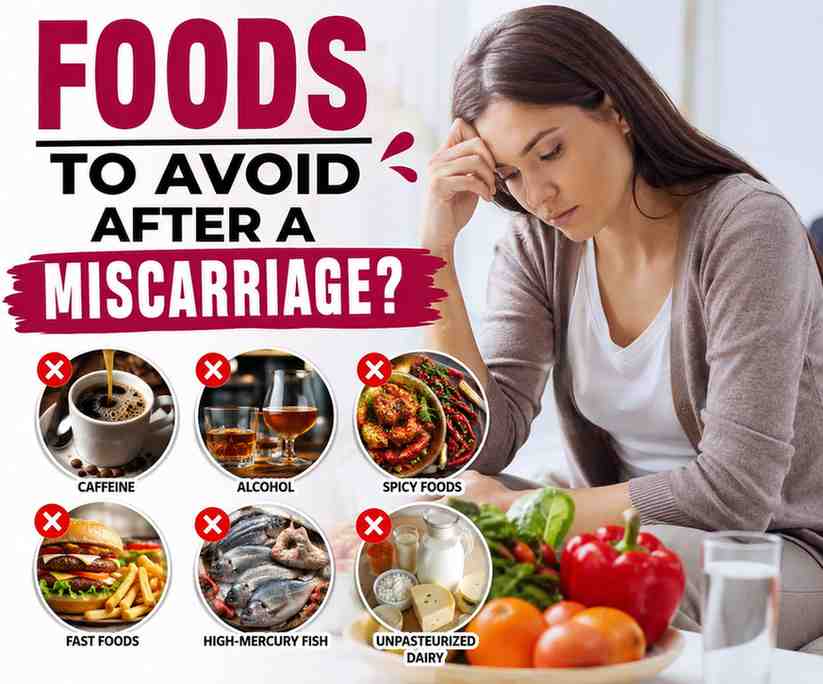
Why Diet Matters After a Miscarriage
After a miscarriage, your body may need time to recover from blood loss, hormonal changes, and tissue healing. Eating a balanced diet rich in vitamins, minerals, protein, and iron supports recovery, while avoiding certain foods may help reduce digestive discomfort and lower the risk of foodborne illness.
1. Raw or Undercooked Meat
One of the most important foods to avoid after miscarriage is raw or undercooked meat. These foods may contain harmful bacteria such as Salmonella or E. coli, which can increase the risk of infection while your body is healing. Always cook meat thoroughly before eating.
2. Raw Seafood and Shellfish
Sushi made with raw fish, oysters, clams, and other raw seafood may carry bacteria, viruses, or parasites that can lead to food poisoning.
Choose fully cooked seafood until your healthcare provider confirms that your recovery is progressing well.
3. Unpasteurized Dairy Products
Avoid milk, cheese, and yogurt made from unpasteurized milk. These products can contain Listeria and other harmful bacteria that may cause serious infections.
Instead, choose pasteurized dairy products, which are considered safer.
4. Highly Processed Junk Foods
Chips, sugary snacks, fast food, and highly processed meals provide little nutritional value and may contribute to inflammation, fatigue, and poor overall health.
Limiting processed foods allows you to focus on nutrient-rich meals that support healing.
5. Excess Sugary Foods and Drinks
Although an occasional treat is fine, consuming large amounts of sugary foods and beverages can lead to blood sugar fluctuations and may reduce the overall quality of your diet.
Opt for naturally sweet fruits when possible.
6. Alcohol
Alcohol is among the most important foods to avoid after miscarriage, especially if you are taking prescription medications, recovering from a procedure, or planning to try for another pregnancy soon.
Alcohol may interfere with healing, interact with medications, and affect your overall well-being. Discuss alcohol use with your healthcare provider before drinking.
7. Excessive Caffeine
Moderate caffeine intake is generally acceptable for many adults, but excessive amounts may interfere with sleep and contribute to dehydration.
Consider limiting coffee, energy drinks, and caffeinated soft drinks while your body recovers. If you’re planning another pregnancy, ask your healthcare provider about an appropriate daily caffeine limit.
8. Fried and Greasy Foods
Heavy, greasy meals can be difficult to digest and may worsen nausea or digestive discomfort that some women experience after a miscarriage.
Choose grilled, baked, or steamed foods instead.
9. Foods High in Sodium
Highly salted foods such as processed meats, canned soups, and packaged snacks may contribute to bloating and fluid retention.
Preparing fresh meals at home allows you to better control your sodium intake.
Recommended Reading
What Causes Early Pregnancy Miscarriage?
Overcoming Trust Issues In A Relationship
Foods to Eat Instead
While knowing the foods to avoid after miscarriage is important, it’s equally helpful to focus on nourishing options, including:
- Iron-rich foods such as lean beef, spinach, beans, and lentils
- Protein sources like chicken, eggs, fish, and legumes
- Fresh fruits and vegetables
- Whole grains
- Healthy fats from avocados, nuts, seeds, and olive oil
- Plenty of water to stay hydrated
These foods help replenish nutrients, support tissue repair, and restore energy levels.
Listen to Your Body
Every woman’s recovery is different. Some women regain their appetite quickly, while others may experience temporary nausea or emotional stress that affects eating habits.
Eat small, balanced meals if large meals feel overwhelming, and don’t hesitate to seek guidance from your healthcare provider or a registered dietitian if you have concerns about your nutrition.
When to Seek Medical Care
Contact your healthcare provider if you experience:
- Heavy or prolonged bleeding
- Fever or chills
- Severe abdominal pain
- Foul-smelling vaginal discharge
- Persistent vomiting or inability to eat
These symptoms may indicate complications that require prompt medical attention.
Conclusion
Understanding the foods to avoid after miscarriage can support a healthier recovery. Avoiding raw meat, raw seafood, unpasteurized dairy products, alcohol, excessive caffeine, highly processed foods, and overly greasy meals may help reduce the risk of infection and promote healing.
Pair these dietary choices with adequate rest, hydration, regular follow-up care, and emotional support. If you have questions about your recovery or future pregnancy plans, consult your healthcare provider for personalized advice based on your individual health needs.