Miscarriage is usually talked about in terms of maternal health, but factors related to the male partner may also be part of pregnancy loss. Learning about potential male causes of miscarriage can open up the discussion for couples and healthcare professionals to consider both partners when searching for answers to recurrent or unexplained pregnancy loss.
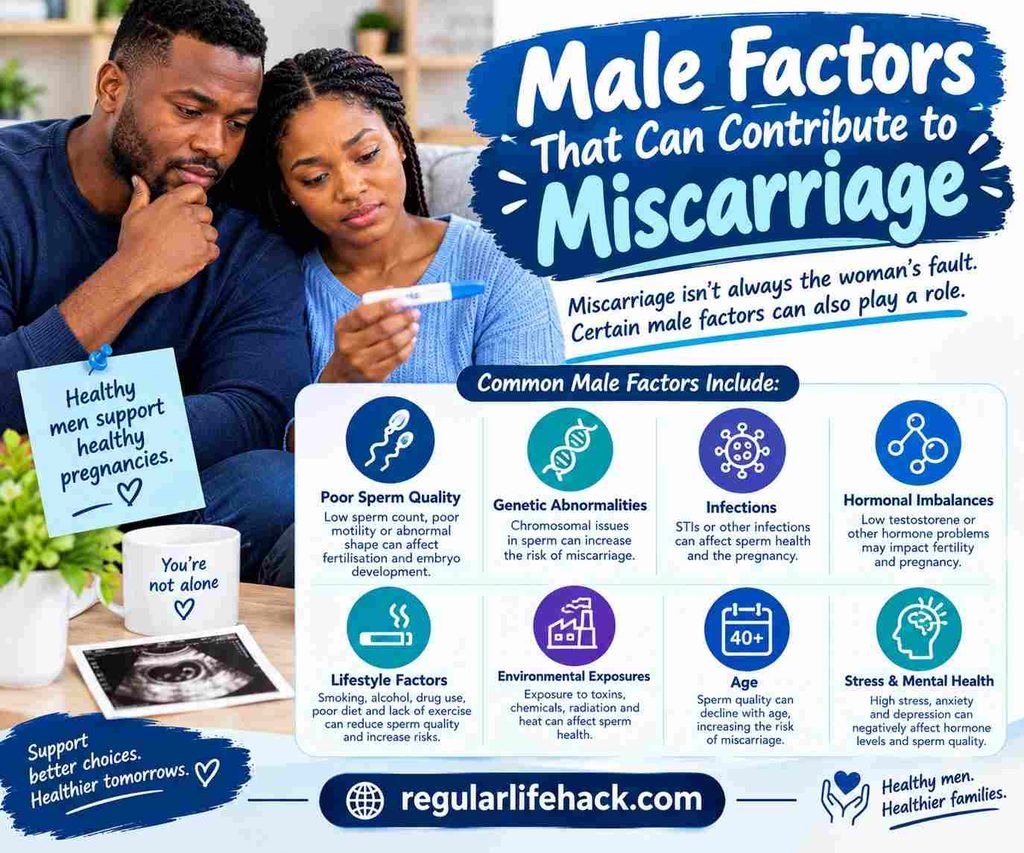
Can Male Factors Lead to Miscarriage?
Yes. The genetic and biological quality of sperm could affect early embryonic development. Sometimes problems that affect sperm DNA or chromosomes can contribute to problems with conception or pregnancy development, as sperm contribute half of the embryo’s chromosomes.
However, there are many potential causes of miscarriage and the presence of a male factor does not mean that the male partner is solely to blame for pregnancy loss.
Chromosomal Abnormalities in Sperm
After fertilisation, the sperm contains genetic material that combines with the egg. If sperm has chromosome abnormalities, the embryo may have an abnormal number or structure of chromosomes.
Some embryos with major chromosomal abnormalities may not develop properly and may result in miscarriage. Chromosomal problems can also come from the egg, so during an evaluation it may be necessary to consider both partners.
DNA fragmentation of sperm
Another possible factor is sperm DNA fragmentation, which is a term used to describe damage or breaks to the DNA in sperm cells.
Research has linked increased sperm DNA fragmentation with reproductive problems including recurrent pregnancy loss. But the relationship is complicated and testing is not necessarily recommended for all couples with a single miscarriage.
Your fertility specialist may suggest further testing if you have a history of multiple pregnancy losses or other fertility difficulties.
Age and Sperm Quality
Male reproductive factors can also change with age. Some measures of sperm quality and the likelihood of some genetic changes in sperm may increase with age in men.
That doesn’t mean older men can’t have healthy pregnancies. Age is only one part of the puzzle that healthcare professionals might look at when assessing fertility or recurrent pregnancy loss.
Lifestyle and Health Variables
Many health and lifestyle factors can influence sperm quality. These may consist of:
Smoking or exposure to tobacco
- Drinking too much alcohol
- Certain recreational drugs
- Major weight changes or obesity
- Some infections
- Some medications or medical treatments
- Exposure to high temperatures or certain chemicals in the workplace
These factors do not cause miscarriage right away, and changing them does not mean that pregnancy loss can be prevented. However, maintaining general health can help reproductive health.
Recommended Reading
Strength Training with Plant Based Protein
Overcoming Jealousy In A Relationship
Ten Marks Of A Mature Christian
PRODUCTIVITY: The Master Key of Abundance – New!
How Do We Study Male Causes of Miscarriage?
A healthcare provider may review the medical and reproductive history of both partners if a couple has had multiple pregnancy losses.
Depending on the circumstances, investigations may include semen analysis and genetic or sperm-related testing in selected cases. The appropriate tests will depend on the couple’s history and should be discussed with a qualified healthcare professional.
What Should Couples Do?
A healthy approach is to evaluate both partners, rather than assuming the woman is the cause of the miscarriage.
Men who are concerned about fertility or recurrent pregnancy loss can discuss their medical history, medications, lifestyle, and reproductive health with their doctor or fertility specialist. Recurrent pregnancy loss can be distressing for both partners, and couples should also be offered emotional support.
Conclusion
Possible causes of miscarriage (male) Genetic problems with sperm Sperm DNA damage Increasing paternal age Some health or lifestyle factors But miscarriage is a complex process and often there is no single identifiable cause.
Testing of both partners may identify potential causes and allow for appropriate medical management for couples with recurrent pregnancy loss.