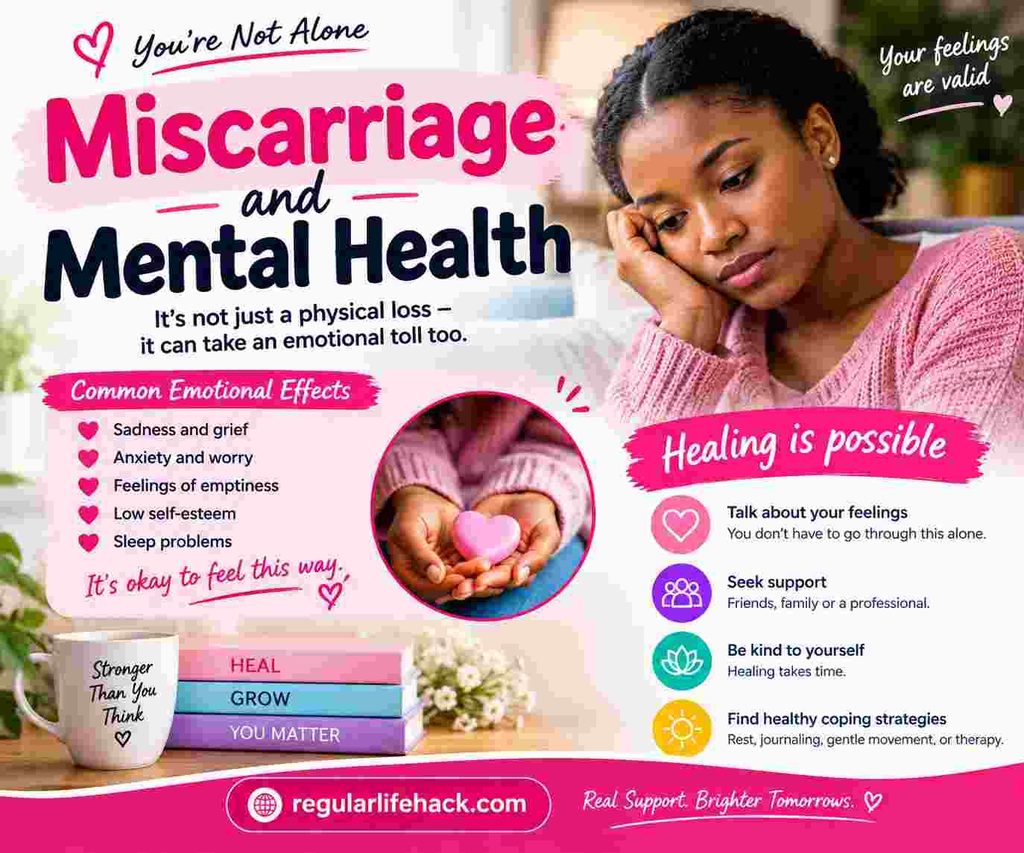
Miscarriage can impact more than your physical health. After a pregnancy loss you may feel sad, grieving, anxious, angry, guilty or empty. For some, these feelings can become more persistent and evolve into depression. Understanding how miscarriage affects mental health can be helpful in supporting people to understand when they may need more help.
Can Miscarriage Cause Depression?
It’s normal to feel sad after a miscarriage, but grief and depression are not quite the same. Grief may come in waves that slowly become more manageable. Depression is a persistent low mood, and difficulty functioning in everyday life.
Miscarriage depression is not a sign that you are weak or have failed. Pregnancy loss is an emotional experience and everyone processes it in their own way.
Miscarriage: Common Emotional Responses
Someone may experience after a miscarriage:
- Sadness or crying a lot
- Fear of subsequent pregnancies
- Changes in appetite or trouble sleeping
- Loss of interest in activities they normally like
- Trouble concentrating
- Guilt, self-blame
- *Emotional numbness/loneliness
- Trouble handling day-to-day activities
Not everyone will have these symptoms, and there is no specific time frame in terms of emotional recovery.
How Does a Miscarriage Affect Mental Health?
There are several reasons why women have emotional difficulties after pregnancy loss. Hormonal changes after a miscarriage can affect mood, while the experience itself can lead to grief and uncertainty.
Some people may also have questions about the cause of the miscarriage, or worry if they will have a healthy pregnancy in the future. Sometimes difficult emotions arise unexpectedly when you’re in social situations, or hear pregnancy announcements, or see babies.
Many miscarriages are caused by things outside of your control, so keep this in mind. Usually there is no reason to blame yourself.
Recommended Reading
Miscarriage Recovery Timeline
The God of the Second Chance: Restoration After a Fall
Tips For Keeping Romance Alive After Having Kids
Taking Care of Your Mental Health After a Miscarriage
Allow yourself time to process what has happened, don’t expect to feel better straight away. Talking to a trusted friend, partner, family member, counsellor, or healthcare professional can provide emotional support.
Other useful methods include:
- Getting a lot of sleep
- Eating regular well-balanced meals
- Connecting with people who support you
- Gradually returning to normal activities
- Writing down thoughts and feelings if that feels helpful
- Stepping away from emotionally overwhelming situations
You do not have to grieve in any specific way. ### When should you get professional help?
If you still feel sad, anxious or have other emotional symptoms that are hard to deal with or interfere with your school, work, relationships, sleep or daily life, consider talking to a healthcare professional.
Talk to a doctor, or mental health professional, who can assess your symptoms and discuss appropriate support or treatment. Asking for help doesn’t mean you’re not coping, it means you deserve to get help as you recover.
If you think you are in danger right now, or cannot keep yourself safe, you should tell a trusted adult or get urgent help from your local emergency or healthcare services.
How to Help Someone Who Suffers from Miscarriage Depression
If someone you know is having a hard time after a miscarriage, listen to them without judgement. Don’t minimise comments like just move on or concentrate on having another baby.
Offer practical support, keep in touch and promote professional help where needed. Sometimes just saying, “I’m here for you”, can make a difference.
Conclusion
Miscarriage can be very damaging to mental health and some people may experience miscarriage depression too, as well as grief. Everyone needs time to heal emotionally, and it differs from person to person.
With compassion, social support and professional help, you can get someone through this difficult time. Most importantly, if someone has emotional difficulties after pregnancy loss, it doesn’t mean they have failed—they deserve understanding and support.