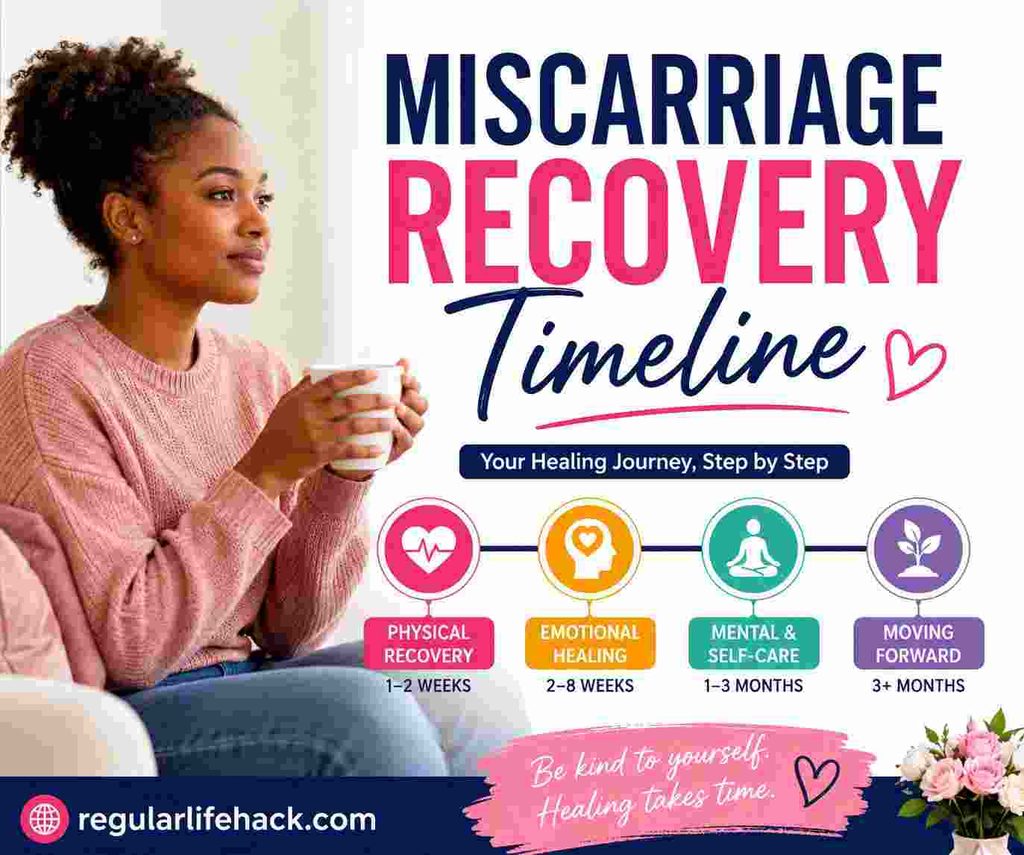
Recovery from a miscarriage is different for every woman. Physical recovery might take a few weeks, but emotional healing can take much longer. Knowing a typical miscarriage recovery time line can help you know what to expect and when you might need medical care.
How long it takes to recover depends on things like how far along the pregnancy was, whether all of the pregnancy tissue passed on its own, or if medication or a procedure was necessary.
First Few Days After Miscarriage
Bleeding and cramping are usually the most noticeable symptoms in the first days. Bleeding can be heavier than a normal period and may include blood clots.
The uterus contracts and shrinks back down, which causes cramping. Tiredness is another common complaint, especially if there has been a lot of blood loss.
During this phase of miscarriage recovery, rest as much as you can, drink fluids, eat healthy foods, and follow your healthcare provider’s directions.
First Week
Usually, bleeding should begin to taper off in the first week. It may turn from bright red to pink or brown and then gradually fade.
You may continue to have mild cramping, but it should usually ease off.
Your body is having hormonal shifts, too, which can make you feel tired and emotional rollercoasters.
Week 1-2
For many women, vaginal bleeding or spotting lasts about one to two weeks, but some women have light spotting for longer.
By this time in your miscarriage recovery you should be seeing a general improvement in physical symptoms. You might feel your energy gradually returning. Feeling tired is normal.
Avoid strenuous activity until your health care provider says it’s OK, especially if you had complications or a medical procedure.
Most women still feel physically better at this time. The pregnancy hormones levels slowly go down but the exact time this happens varies.
You can get pregnant before you get your first period. In fact, ovulation can occur as early as two to four weeks after a miscarriage.
If you’re considering trying to get pregnant again, discuss your plans with your healthcare provider.
4 to 6 Weeks
Many women will get their first period after a miscarriage about four to six weeks later but some people may take longer.
Your first period may be different from your regular cycle. It could be heavier, lighter, longer or more uncomfortable than usual.
Your health care provider may want to see you again to be sure you are healing the way you should.
Emotional Healing
Miscarriage recovery is a physical process that may take weeks, but emotional recovery may take much longer. You may feel sad, in mourning, angry, anxious, guilty or even numb.
There is no timetable for emotional healing. Give yourself permission to grieve the loss. Reach out to the people you trust.
Talking to a counsellor or mental health professional can also help if grief becomes difficult to manage.
When Can You Go Back to Normal Activities?
When you can get pregnant again depends on your symptoms and what kind of miscarriage you had. You may be able to return to light daily activities when you feel able. Your healthcare provider may recommend that you avoid strenuous exercise or sexual activity for a time.
Follow any instructions given by your healthcare team, especially post-surgery.
Recommended Reading
Silent Miscarriage: Symptoms and Causes
Tips For Navigating Long-Term Relationship
The God of the Second Chance: Restoration After a Fall
When to Seek Medical Help
Some bleeding and cramping is expected, but call your health care provider immediately if you have:
- Heavy vaginal bleeding
- Severe stomach pain or worsening stomach pain
- Chills or fever
- Vaginal discharge with foul odour
- Marked dizziness or fainting
- Heavy bleeding that does not improve with time
These symptoms may be signs of complications like infection or heavy blood loss.
Helping Your Recovery
You can support miscarriage recovery by:
- Getting enough sleep
- Drink plenty of fluids
- Consuming iron-rich and nutritious foods
- Taking prescribed medications correctly
- Going to follow-up appointments
- Seeking emotional support as needed
Don’t blame yourself for the miscarriage. Most early miscarriages are caused by factors beyond the mother’s control, especially chromosomal abnormalities.
Conclusion
Miscarriage recovery will be different for each woman. Bleeding and cramping often improve in one to two weeks. Periods may resume in four to six weeks. But emotional healing doesn’t follow a schedule.
Be kind to yourself and follow your healthcare provider’s advice during the recovery process. If symptoms are severe or do not improve as expected, seek medical help promptly. With appropriate care and support, most women will recover physically and can talk to their health care provider about future pregnancy plans when they are ready.