Understanding miscarriage statistics can help put pregnancy loss in perspective. The risk of miscarriage varies depending on the mother’s age, the gestational age, the history of previous pregnancies and the general health of the mother. Statistics are about groups of people and can’t tell you exactly what will happen in a single pregnancy.
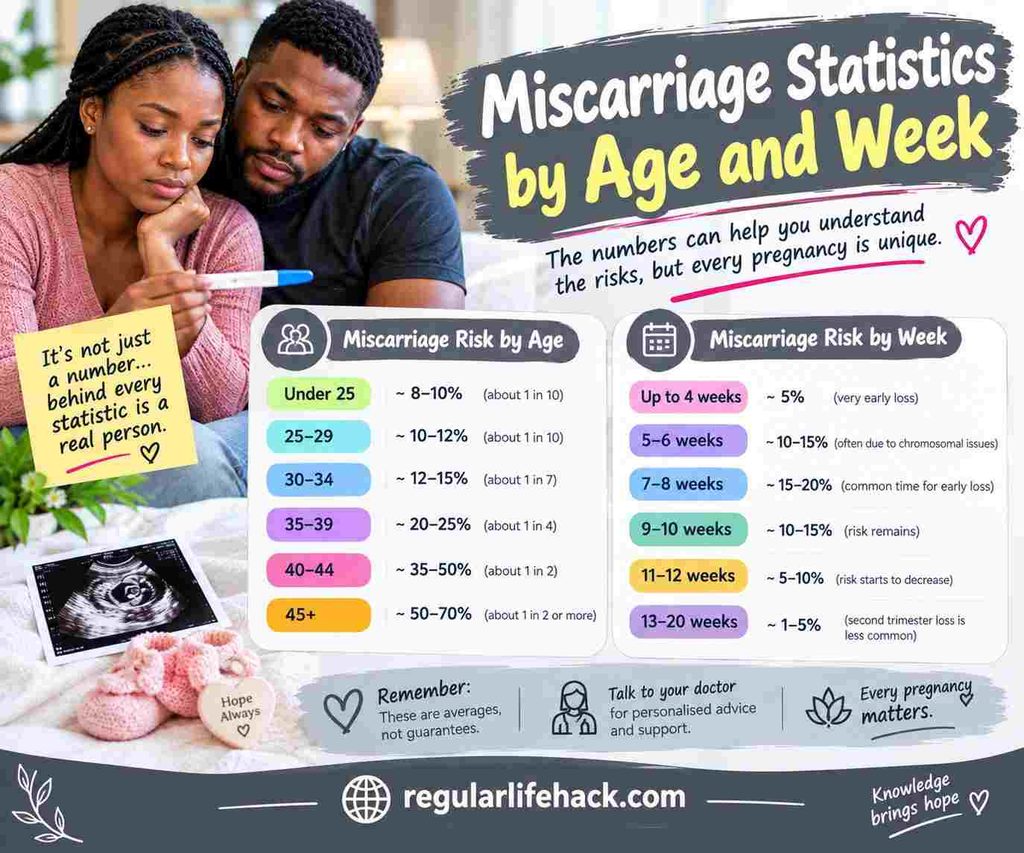
How common are miscarriages?
Miscarriage is fairly common, especially in early pregnancy. One systematic review of several studies estimated the cumulative risk of miscarriage between weeks 5 and 20 to be between about 11% and 22%, depending on the population and the methods of the study.
Studies differ because researchers may use different definitions of pregnancy loss and may start following pregnancies at different stages.
Miscarriage Statistics by Age
Maternal age is related to the risk of miscarriage. Risk in large population studies is lowest in the late 20s and increases with increasing age. A single Norwegian study of over 400,000 pregnancies found an overall risk of miscarriage of 12.8%, with the lowest risk in women aged 25-29 years and substantially increased risk in women aged 45 years and over.
A large population-based study also found a significant increase in the risk of foetal loss after the age of 35.
Age is only one aspect however. A healthy pregnancy is possible for someone in their 30s or 40s just as a younger person can have a miscarriage.
Miscarriage Risks by Week of Pregnancy
The risk of miscarriage generally decreases as a healthy pregnancy progresses, especially in the first few weeks.
Pregnancy tracking studies from early pregnancy found the weekly miscarriage rates to be highest in the first weeks and to decline with increasing gestational age.
For example, a prospective study of women with an ultrasound-confirmed heartbeat found miscarriage risks of around:
- 6 weeks: 9.4%
- 7 weeks: 4.2%
- 8 weeks: 1.5%
- 9 weeks: 0.5 %
- 10 weeks: 0,7%
These numbers are for women with no symptoms and a positive foetal heartbeat on their first ultrasound and do not reflect all pregnancies.
Recommended Reading
How Long Does a Miscarriage Last Naturally?
Plant Based Foods that Help with Weight Gain
Church Leaders And Moral Scandals
Ten Ways To Tame Your Tongue
Why Does Risk Change With Age and Week?
A major contributor to the increased risk of miscarriage with advancing maternal age is the increased incidence of chromosomal abnormalities in the developing pregnancy. Most early miscarriages are caused by the inability of the pregnancy to develop normally.
Gestational age is also important, because pregnancies that continue normally through the early weeks have already passed through some of the period when early pregnancy losses are most common.
What Do These Stats Mean for You?
Miscarriage statistics are useful to get an overview, but they can’t predict what will happen in any individual pregnancy. Individual factors including history of previous miscarriage, medical conditions, ultrasound findings and symptoms may alter risk assessment.
If you have vaginal bleeding, severe abdominal pain, dizziness or other symptoms that trouble you during your pregnancy, see a health care professional for appropriate evaluation.
Conclusion
The risk of miscarriage generally decreases as pregnancy progresses, but population risk tends to increase with maternal age, particularly after age 35. But statistics are about groups, not individual outcomes.
Some context can be gained from learning about miscarriage statistics, but personalised medical advice is the best way to understand risk in a given pregnancy.