Week 1 of pregnancy can be confusing because technically you may not be pregnant yet. Healthcare providers usually count pregnancy from the first day of your last menstrual period (LMP), so the first two weeks include your period as well as the time before ovulation.
Knowing what’s happening this week can help you prepare for conception and the weeks ahead.
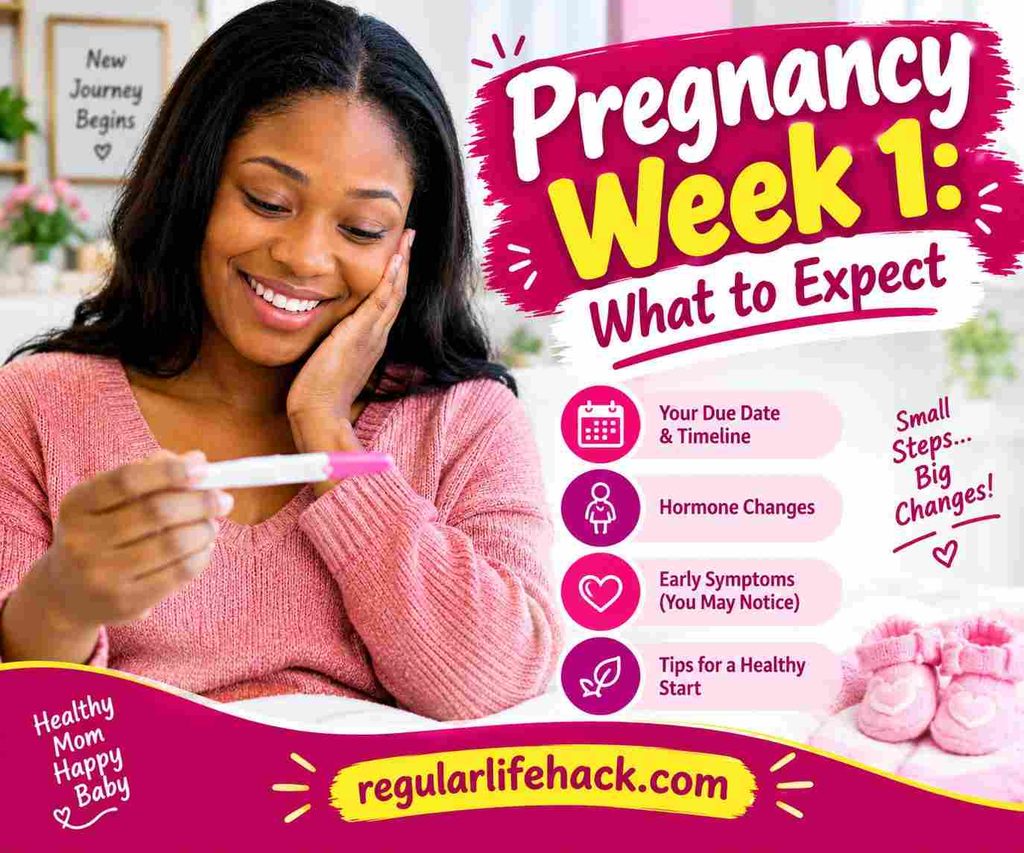
What Happens in Week 1 of Pregnancy?
Week 1: Your body is starting a new menstrual cycle. Your period is the shedding of the lining of your uterus. This week is included in pregnancy dating although conception has not usually occurred yet because it is often difficult to know the exact date of conception.
Your body is also getting ready for ovulation, when an egg will be released from an ovary at a later date.
Symptoms of Pregnancy Week 1
This week you are unlikely to experience any symptoms from pregnancy hormones because pregnancy has usually not yet occurred.
Instead, you might have your typical period symptoms, such as:
- Menstrual cycle bleeding
- Stomach cramps (mild)
- Swelling
- Low back pain
- Fatigue
- Changes in mood
- Soft breasts
These symptoms vary from person to person and may resemble symptoms you have experienced in previous menstrual cycles.
What Is Going On In Your Body?
At this stage, as your cycle progresses, your hormone levels are fluctuating. Follicle stimulating hormone (FSH) helps to stimulate the growth of ovarian follicles. Usually, a single follicle becomes dominant and releases an egg during ovulation.
Ovulation times vary from one person to another, and can even change from cycle to cycle.
If you are thinking about getting pregnant, week 1 is a good time to concentrate on preconception health. Schedule a consultation with a medical professional to review medications, medical history, immunisations, and pregnancy issues.
Folic acid is also recommended before pregnancy to help reduce the risk of certain birth defects of the brain and spinal cord. A healthcare professional can advise you on the right amount for your circumstances.
Other helpful steps include eating a well-rounded diet, avoiding smoking and alcohol, getting regular physical activity and maintaining healthy sleep habits.
Recommended Reading
Early Signs of Pregnancy
Church Leaders And Moral Scandals
Ten Marks Of A Mature Christian
THE SCHOOL CALLED MARRIAGE
When does conception typically occur?
Pregnancy week 1 Normally you are not able to conceive. Ovulation occurs later on in the menstrual cycle, but when that is varies from person to person.
If sperm are present when an egg is released, it may be fertilised. The fertilised egg then begins to grow and may finally implant in the uterus.
Am I Allowed to Take a Pregnancy Test in Week 1?
In week 1 of pregnancy, pregnancy testing generally will not be helpful because fertilisation has not generally occurred and the pregnancy hormone human chorionic gonadotropin (hCG) has not yet increased to a detectable level.
Pregnancy tests measure hCG after implantation so if you test too early you may get a negative test and still be pregnant later in your cycle.
Conclusion
Week 1 of pregnancy is mostly starting the menstrual cycle and preparing for ovulation. At this point pregnancy has oftentimes not yet occurred, but this is your opportunity to get your body ready for a healthy pregnancy with good nutrition, appropriate supplements, healthy habits and preconception care.