Being 6 weeks pregnant is an exciting time in early pregnancy. The embryo is still very small, but rapid and important development is happening. Pregnancy hormones are also increasing, so you may experience some symptoms such as nausea, a tired feeling, and tenderness in your breasts.
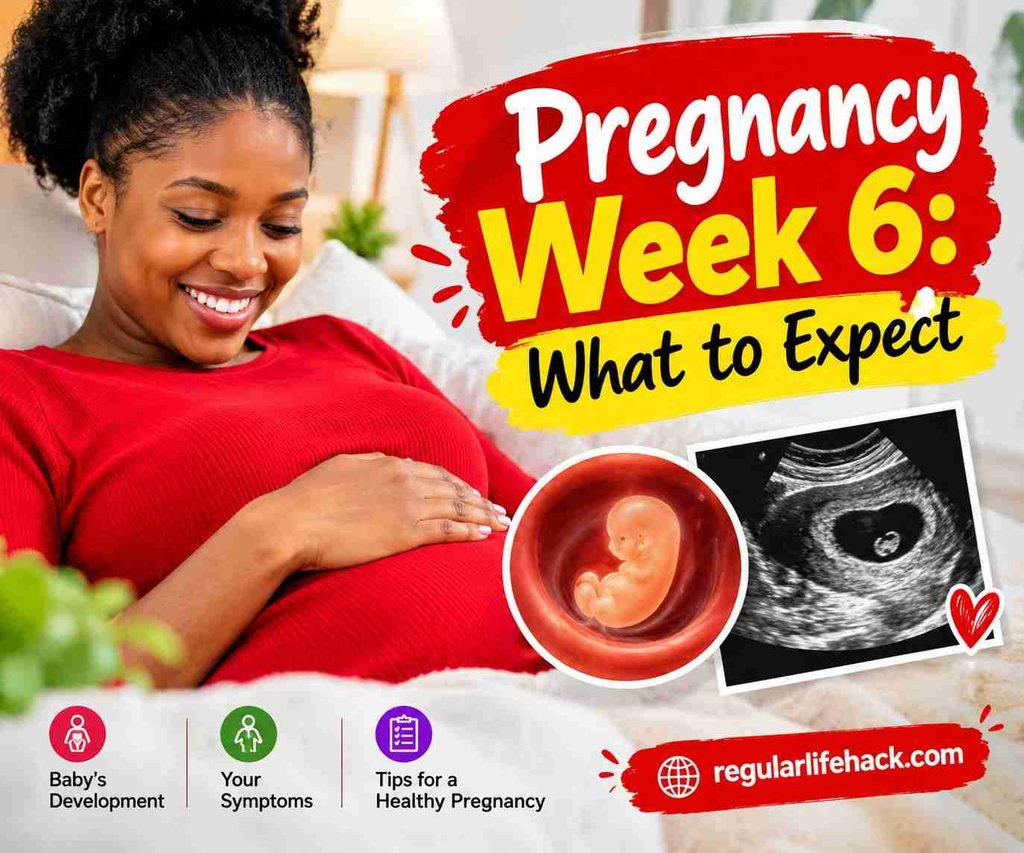
What Happens at 6 Weeks Pregnant?
By week 6, the embryo is developing primitive structures that will eventually become the brain and spinal cord. The neural tube is continuing to develop. The beginnings of the heart and other organs are forming.
Also developing to support the growth of the pregnancy are the placenta and umbilical cord.
Symptoms of 6 Weeks Pregnant
Symptoms of pregnancy vary from woman to woman. Some people have major symptoms, others mild changes.
Common symptoms at 6 weeks pregnant are:
- Nausea/Vomiting
- Extreme fatigue
- Swollen or tender breasts
- need to urinate more often
- Bloating
- mild cramping
- Increased sensitivity to odours
- Food cravings or dislikes
- Changes in mood
- More vaginal discharge
Many of these symptoms are due to hormonal changes – particularly rising levels of progesterone and human chorionic gonadotropin (hCG).
Morning Sickness
Nausea and vomiting might become more pronounced around week 6. It’s often called morning sickness, but it can happen at any time of day.
Eating small meals frequently, drinking fluids, and avoiding foods or odours that trigger nausea can be helpful. If you are throwing up a lot or can’t keep fluids down, talk to a health care professional.
Baby Development at Week 6
The embryo is still very small but development is proceeding apace. Early facial characteristics and limb buds are now visible. Your heart and circulatory system are growing too.
Depending on the timing of the pregnancy and what type of ultrasound is done, cardiac activity may sometimes be detected at this stage. However, it may not be visible in every pregnancy at this stage, which means that an early scan without the presence of cardiac activity is not a cause for concern for sure.
Can You Have An Ultrasound At 6 Weeks?
An ultrasound may be performed at this time, especially if there are concerns about bleeding, pain, location of the pregnancy, or dating.
A transvaginal ultrasound can provide a better view early in pregnancy. The healthcare professional may look for gestational sac, yolk sac, embryo and heartbeat.
6 weeks pregnant: what to do
Arrange prenatal care if you haven’t already. Take the recommended dose of folic acid. Eat a healthy diet with a variety of nutritious foods.
Avoid alcohol and smoking. Before taking any medication or supplement, consult a healthcare professional. Getting plenty of rest and drinking enough fluids may also help to relieve early pregnancy symptoms.
Recommended Reading:
Miscarriage Statistics by Age and Week
The Prayer Life of Elijah: Moving the Hand of God
Twenty Guidelines For A Happy Marriage
MONEY, MARRIAGE AND MISTAKES
When to See a Doctor
Get prompt medical advice if you have heavy bleeding, severe abdominal or pelvic pain, faint, feel very dizzy or have significant shoulder pain. These symptoms may sometimes be related to complications of pregnancy and should be evaluated.
Conclusion
6 Weeks Pregnant: You are entering a period of rapid development in your pregnancy. The embryo is starting to form key organs and body structures, and hormonal changes can trigger recognisable symptoms like nausea, fatigue, and breast tenderness.
Every pregnancy is different and symptoms can vary in intensity and timing. Regular prenatal care can help keep track of your health and pregnancy progress.