A semen analysis is a laboratory test used to assess male reproductive health. It examines a semen sample to evaluate sperm concentration, movement, shape and other characteristics that may influence fertility.
Understanding how semen analysis results explained can help men make sense of their laboratory reports and know when further medical assessment may be necessary.
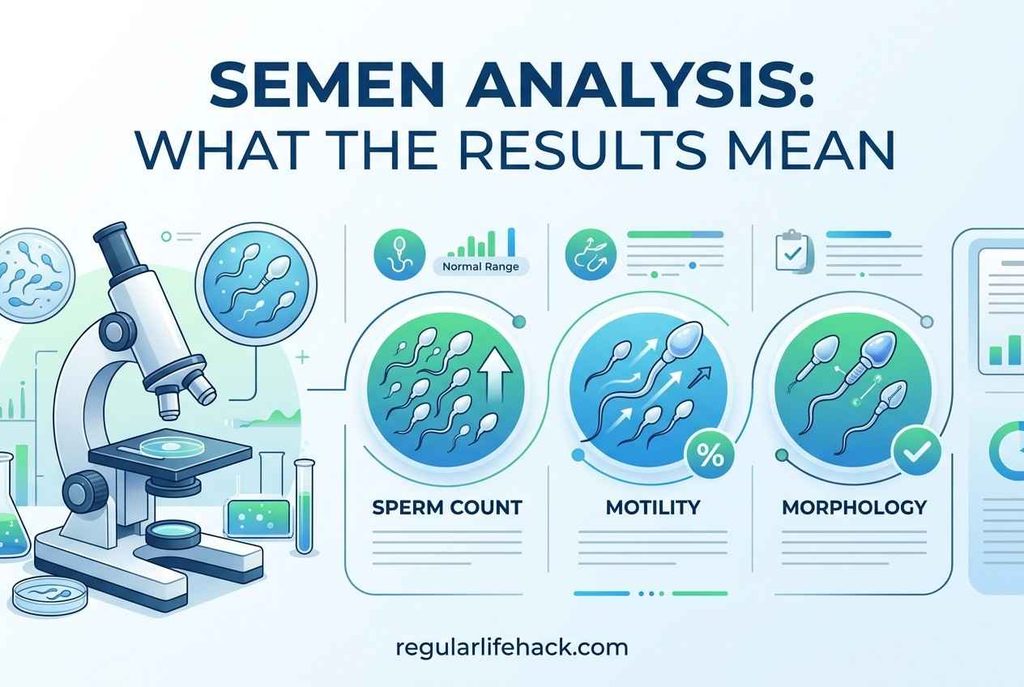
What Is a Semen Analysis?
A semen analysis measures several features of semen, the fluid released during ejaculation. It is one of the main tests used when investigating possible male fertility problems.
The test usually evaluates:
- Semen volume.
- Sperm concentration.
- Total sperm number.
- Sperm motility (movement).
- Sperm morphology (shape).
- Sperm vitality (whether sperm are alive).
Results are compared with laboratory reference ranges, which are based on population studies. These ranges are not strict boundaries between fertile and infertile men.
Understanding Common Semen Analysis Results
1. Semen Volume
This measures the amount of semen in the sample.
A low volume may sometimes be associated with incomplete sample collection, hormonal problems or blockages in the reproductive tract. A higher volume does not automatically indicate better fertility.
2. Sperm Concentration
Sperm concentration refers to the number of sperm in each millilitre of semen.
A low concentration is known as oligozoospermia. It may reduce the likelihood of conception, although it does not necessarily mean pregnancy is impossible.
3. Total Sperm Count
This measures the total number of sperm in the entire sample.
A result below the laboratory reference range may indicate a reduced sperm count. The result should be considered alongside semen volume and concentration.
4. Sperm Motility
Motility describes how well sperm move.
Progressive motility refers to sperm moving forward effectively. Reduced motility, sometimes called asthenozoospermia, may make it more difficult for sperm to reach an egg.
5. Sperm Morphology
Morphology assesses the shape and structure of sperm cells.
A laboratory may report the percentage of sperm with a normal shape. A lower percentage does not automatically mean infertility because sperm morphology is only one part of the overall assessment.
6. Sperm Vitality
Vitality measures the percentage of living sperm in a sample. It is particularly useful when many sperm show poor movement, as it helps distinguish living but immotile sperm from dead sperm.
What Are Normal Semen Analysis Results?
The World Health Organization’s sixth-edition laboratory manual (2021) provides commonly used lower reference limits for semen parameters, including:
| Parameter | Lower reference limit |
| Semen volume | 1.4 mL |
| Sperm concentration | 16 million/mL |
| Total sperm number | 39 million |
| Total motility | 42% |
| Progressive motility | 30% |
| Normal morphology | 4% |
| Vitality | 54% |
These values are reference points, not a guarantee of fertility or infertility. Individual laboratories may use different reporting methods.
Recommended Readings
Miscarriage at 10 Weeks: Signs and Treatment
The First Commandment with a Promise
Tips and Tricks to Stop Arguing in Your Relationship
How to Make Money by Selling Pictures Online
What Happens If Results Are Abnormal?
An abnormal result does not automatically mean a man is infertile. Sperm quality can vary because of illness, fever, medications, lifestyle factors and incomplete sample collection.
A healthcare professional may recommend repeating the test, often after approximately three months, depending on the findings.
Further investigations may include hormone blood tests, physical examination or other specialist assessments.
Conclusion
Having semen analysis results explained can make it easier to understand important measures of male reproductive health. Sperm count, movement, shape and vitality all contribute to the overall picture.
If results fall outside laboratory reference ranges, consult a qualified healthcare professional for proper interpretation and guidance. A single semen analysis cannot determine fertility with complete certainty.