Nutrition plays an important role in overall health, including male reproductive health. Certain nutrients help support normal sperm production, hormone function and protection of cells from oxidative stress.
Although no single food can guarantee improved fertility or pregnancy, eating a balanced diet can support the body’s normal reproductive functions. Understanding the best foods for male fertility can help men make healthier everyday food choices.
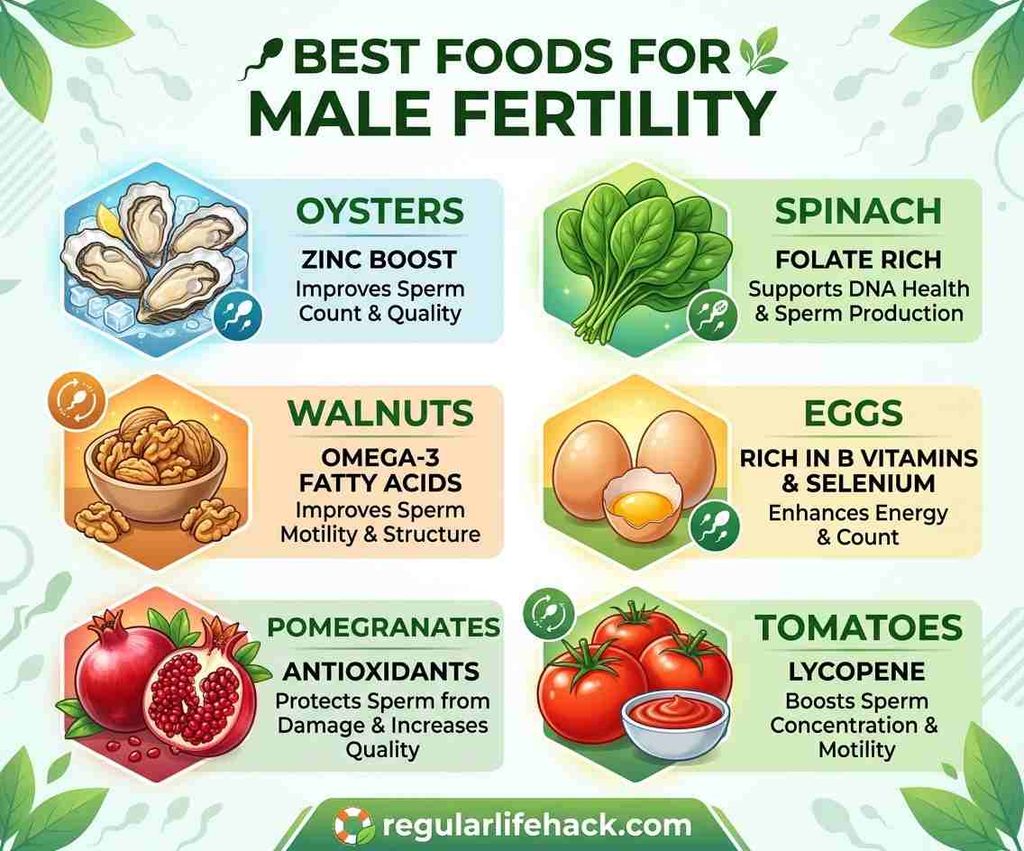
1. Fatty Fish
Fish such as salmon, sardines and mackerel contain omega-3 fatty acids, which support normal cell function and general health.
Omega-3 fats are important components of cell membranes and may be associated with healthy sperm function. Include fish as part of a varied diet, while choosing options that are low in mercury.
2. Nuts and Seeds
Almonds, walnuts, pumpkin seeds and sunflower seeds provide nutrients such as zinc, vitamin E, healthy fats and antioxidants.
Zinc plays a role in normal reproductive function, while vitamin E helps protect cells from oxidative damage.
A small handful of unsalted nuts or seeds can make a nutritious snack.
3. Fruits Rich in Antioxidants
Fruits such as oranges, berries, watermelon and guava provide vitamins, minerals and antioxidants.
Vitamin C, in particular, helps protect cells from oxidative stress. Eating a variety of colourful fruits is a simple way to include these nutrients in everyday meals.
4. Leafy Green Vegetables
Vegetables such as spinach, kale and broccoli contain folate, vitamin C and other important nutrients.
Folate supports normal cell division and DNA production. Including leafy vegetables in meals contributes to a balanced eating pattern and supports general health.
5. Eggs
Eggs provide high-quality protein, vitamin B12, selenium and other nutrients needed for normal body functions.
Selenium is an antioxidant mineral that contributes to normal sperm production. Eggs can be included in a balanced diet alongside vegetables and whole grains.
6. Whole Grains
Oats, brown rice, whole-wheat bread and millet provide fibre, B vitamins and minerals.
Choosing whole grains instead of relying mainly on highly refined carbohydrates can support better overall nutrition and metabolic health.
7. Beans and Legumes
Beans, lentils, chickpeas and peas provide plant-based protein, folate, zinc and fibre.
They are affordable, versatile foods that can be added to soups, salads and main meals. Regularly including legumes helps create a varied and nutritious diet.
8. Tomatoes
Tomatoes contain lycopene, a natural antioxidant that gives them their red colour. Lycopene has been studied for its possible relationship with sperm health, although more research is needed to establish clear benefits.
Fresh tomatoes and properly prepared tomato-based meals can both be part of a healthy diet.
Recommende Reading
Early Signs of Pregnancy
Healthy Relationships In Christian Homes
The Prayer Life of Elijah: Moving the Hand of God
Tips for Rebuilding Trust After Betrayal
Other Habits That Support Male Reproductive Health
Food is only one part of reproductive wellbeing. Other helpful habits include:
- Avoiding smoking and recreational drugs.
- Limiting or avoiding alcohol.
- Staying physically active.
- Getting enough sleep.
- Maintaining a balanced diet.
- Seeking medical advice about persistent health concerns.
Avoid taking high-dose fertility supplements without professional guidance. More vitamins do not necessarily mean better reproductive health.
Conclusion
The best foods for male fertility include fatty fish, nuts, seeds, fruits, leafy vegetables, eggs, whole grains, beans and tomatoes. These foods provide nutrients that support general health and normal reproductive functions.
However, no diet can cure every fertility problem or guarantee pregnancy. Men concerned about sperm health should consult a qualified healthcare professional for appropriate assessment and advice.