Miscarriage can be a physically and emotionally difficult experience. One of the most common questions women ask is “how long will miscarriage bleeding last?” Every woman’s experience is different, but knowing what to expect can ease anxiety and give you a sense of when to seek medical care.
The amount and length of bleeding vary depending on several factors, including how far into the pregnancy the miscarriage took place, whether the miscarriage was spontaneous or if medical treatment or surgery was needed.
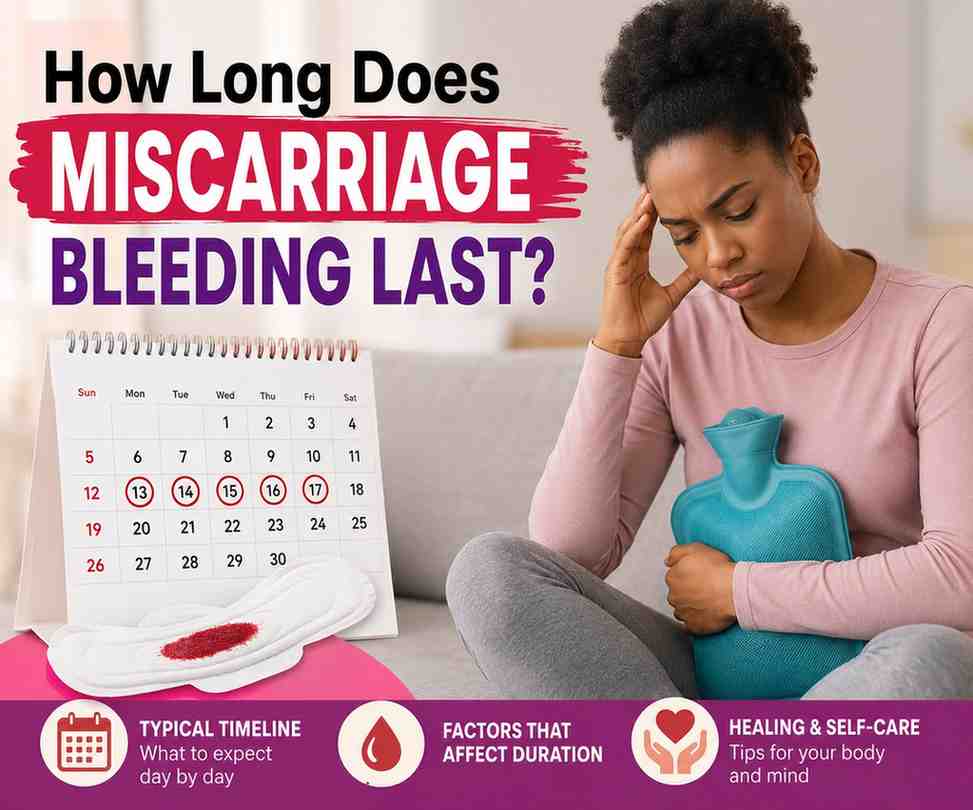
What is a miscarriage bleed?
Miscarriage bleeding is vaginal bleeding that happens when a pregnancy ends before the 20th week of pregnancy. This is because the uterus expels the tissue of the pregnancy and returns to its non-pregnant size.
Bleeding can be light spotting, or it can be heavy bleeding with clots. Some women may experience mild cramping, while others experience more severe pain.
How long is miscarriage bleeding?
Most women have miscarriage bleeding for one to two weeks. The heaviest bleeding is in the first few days, especially when the pregnancy tissue is passed.
Many women experience lighter bleeding or spotting for several more days after the heavy bleeding has stopped. Sometimes spotting can last for as long as three weeks.
Everyone recovers at different speeds, so it’s important to follow your healthcare provider’s advice.
What Determines the Length of Bleeding?
There are a few factors that affect how long miscarriage bleeding may last:
1. Pregnancy stage
Early miscarriages tend to involve less bleeding than later ones, such as those that occur later in the first trimester or later.
2. Type of Miscarriage
If it’s a complete miscarriage, meaning all the pregnancy tissue passes naturally, you could have a shorter recovery. An incomplete miscarriage may require medication or a procedure to remove remaining tissue and this can influence the length of time the bleeding lasts.
3. Medical Treatment
When medication is used to help the uterus empty the bleeding may be heavier for a short period of time before gradually decreasing. Bleeding after a dilation and curettage (D&C) is normal and is usually lighter and shorter than a period, lasting from a few days up to two weeks.
Normal miscarriage bleeding can appear as:
- Bright red bleeding that gradually lightens
- Blood clots that are small or medium
- Light to moderate cramping
- Slow decline of spotting over several days
Many women notice the bleeding change from red to pink, brown or light spotting before it stops completely.
Recommended Reading
Foods to Avoid After a Miscarriage
Finding Time for Your Partner in a Busy Schedule
When to Seek Help
Expect some bleeding, but call a doctor for certain symptoms.
Call your health care provider or go to emergency. If you have:
- Bleeding that soaks two or more sanitary pads in one hour for two hours in a row
- Severe belly pain that is not getting better
- A temperature of 100.4°F (38°C) or above
- Flu-like symptoms or chills
- Vaginal discharge with bad smell
- Large clots that persist for several hours
- Bleeding that is heavy and lasts longer than two weeks
These symptoms might be a sign of an infection, retained pregnancy tissue or heavy bleeding.
Tips for Recovering
Miscarriage bleeding is a part of recovery and taking care of yourself is an important part of it.
Here are some tips to remember:
- Use sanitary pads instead of tampons, unless your healthcare provider says differently.
- Get plenty of rest and refrain from strenuous activity until you feel better.
- Stay hydrated by drinking lots of water
- Eat iron-rich foods like spinach, beans, lean meat and fortified cereals to help replace iron lost from bleeding.
- Attend all follow-up appointments to be sure your recovery is going well.
How long until your period returns?
You can usually expect to get your first period about four to six weeks after a miscarriage, but this depends on your hormone levels and whether all the tissue from the pregnancy has been passed.
If your period doesn’t come back in a few weeks, or if you have any concerns about your recovery, talk to your healthcare provider.
Don’t Forget About Emotional Recovery
Emotional recovery can take a lot longer than physical healing, which can often happen within a few weeks. It is normal to feel sad, bereaved, angry or anxious after pregnancy loss.
Getting help from your partner, trusted family members, friends, or a counsellor can help. You may also want to consider joining a pregnancy loss support group to meet others who have experienced a similar loss.
Conclusion
Most women will have miscarriage bleeding for one to two weeks. The heaviest bleeding will be in the first few days. There may be some continued light bleeding as the uterus heals. Each recovery is unique, so avoid comparing your experience to that of others.
Get medical help if you have heavy bleeding, fever, bad pain, signs of infection. The outcome is good for most women with proper medical follow-up, good nutrition, rest and emotional support. When ready they can discuss with their healthcare provider their plans for future pregnancies.