Symptoms of pregnancy and signs of miscarriage can differ between women. Knowing the miscarriage symptoms that can occur each week can help you know when you may need medical care. However, it’s important to remember that symptoms like light spotting or mild cramping don’t always mean that a miscarriage is taking place.
The majority of miscarriages happen in the first trimester, especially before 12 weeks of pregnancy. If you have any symptoms that concern you, call your health care provider for an evaluation.
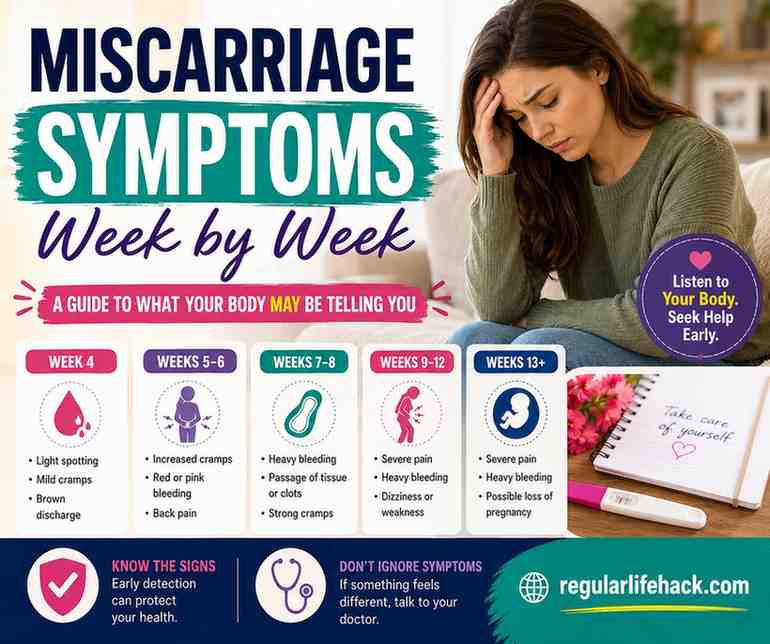
Weeks 4 to 5: Early Pregnancy
Miscarriage may look like a heavy period in the very earliest weeks, because the pregnancy is still very tiny.
The possible symptoms of miscarriage include:
- Vaginal bleeding, from light to heavy
- Mild to moderately bad cramps.
- Back pain (*lower back*)
- Passing little clots of blood
- A sudden improvement in pregnancy symptoms
If a miscarriage happens this early, some women may not even know they were pregnant.
Weeks 6-7: Common Time for Miscarriage in Early Pregnancy
By weeks six and seven pregnancy hormones are rising and you may notice increased symptoms like nausea and breast tenderness.
Warning signs of possible miscarriage at this stage include:
- Heavy red vaginal bleeding
- More abdominal cramping
- Bloodclots passed
- Urinary frequency
- Pain in the lower back
- Rapid disappearance of pregnancy symptoms like nausea or breast tenderness
Light bleeding can be scary, but some women will have a little bit of spotting for normal pregnancy. The cause can only be ascertained by medical examination.
Weeks 8-9: Symptoms Could Get Worse
By this time, the pregnancy has progressed and the symptoms of a miscarriage may become more apparent.
Symptoms can include:
- Heavy bleeding from the vagina
- Passing larger clots of blood
- passing pink or grey tissue
- Moderate to severe cramps
- *Persistent lower back pain
- Fewer pregnancy symptoms
Some women may also feel tired and emotionally upset as they cope with uncertainty.
Weeks 10-12: End of First Trimester
The risk of miscarriage does go down as pregnancy progresses, but it can happen during weeks 10 through 12.
Symptoms of miscarriage may include:
Profuse bleeding
- Intense cramps
- Passing tissue from a pregnancy
- Pain in the pelvis
- Pain in the back
- Some instances of fluid leakage
Prompt medical evaluation is especially important at this point to confirm that all of the pregnancy tissue has passed and to avoid complications.
Missed Miscarriage
Some miscarriages do not involve immediate bleeding or pain. A missed miscarriage is when the embryo has stopped developing, but remains in the uterus.
Possible missed miscarriage warning signs include:
- Sudden disappearance of pregnancy symptoms
- Brown spots
- No foetal heartbeat was found on ultrasound
- Initial bleeding minimal or absent
Tragically, many women find out they have a missed miscarriage at a routine prenatal appointment.# Symptoms That Need Urgent Medical Attention
If you have: Call your healthcare provider or get emergency care:
- Heavy bleeding that saturates two or more sanitary pads per hour
- Intense belly pain
- Passing large blood clots
- 4° F (38° C) or higher
- Shivering or feeling cold
- Vaginal discharge with a foul smell
- Feeling faint or passing out
These symptoms may mean you have lost too much blood or have an infection that needs urgent treatment.
Are These Symptoms Always Signs of Miscarriage?
No. Many women have light spotting, mild cramping, or temporary changes in the symptoms of pregnancy that can still produce healthy pregnancies.
Sometimes symptoms such as miscarriage can be caused by other conditions such as implantation bleeding, cervical irritation or hormonal changes. Only a professional can tell you what it is after examination, blood tests and an ultrasound.
Recommended Reading
Early Signs Of Miscarriage Every Woman Should Know
Finding Time for Your Partner in a Busy Schedule
What to do if you see symptoms
If you are showing signs of miscarriage, try to remain calm and call your healthcare provider right away. They might suggest:
- Physical examination
- Sonography
- Blood tests to see how much pregnancy hormone you have.
- Follow-up appointments to keep track of your condition
Do not put anything in the vagina unless told to do so by your healthcare provider. Follow the instructions of your healthcare provider carefully.
Why You Need to Recover Emotionally
You may be scared that you are having the symptoms of a possible miscarriage even though the pregnancy is proceeding normally. If you experience a miscarriage, give yourself time to grieve and seek support from loved ones or a mental health professional if necessary.
Keep in mind that most miscarriages are caused by chromosomal abnormalities or other medical factors outside of your control.
Conclusion
Knowing miscarriage symptoms week by week can help you know when to seek medical attention. The most common warning signs in the first trimester are vaginal bleeding, cramping and lower back pain, passing blood clots or tissue and sudden loss of pregnancy symptoms.
These symptoms are not always a sign of a miscarriage taking place, but they should always be taken seriously. Early medical assessment is your best chance to assess your pregnancy, manage complications as they arise, and to get the care and support you need.