Miscarriage at 8 weeks is very common, since it falls within the first trimester when pregnancy loss is most frequent. Recognizing the signs early can help you know when to seek medical care — and understanding what’s normal versus concerning can ease some of the anxiety that comes with early pregnancy.
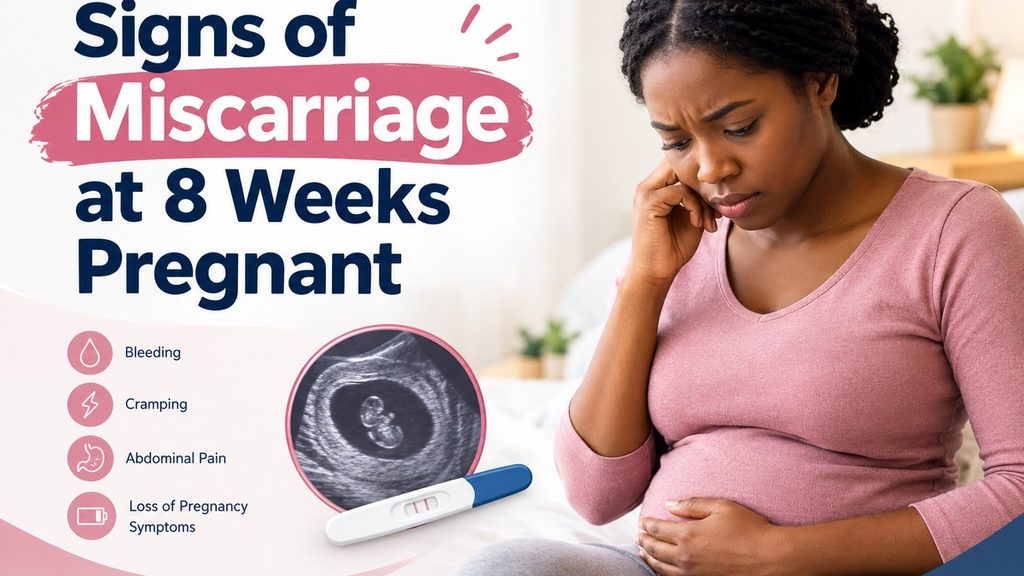
Common Signs of Miscarriage at 8 Weeks
1. Vaginal bleeding Bleeding is the most common warning sign. It can range from light spotting to heavy bleeding with clots. Not all bleeding means miscarriage — many pregnancies with early spotting continue normally — but bleeding that becomes heavier, bright red, or is accompanied by clots warrants a call to your doctor.
2. Cramping and abdominal pain Mild cramping can be a normal part of pregnancy as the uterus stretches. However, a healthcare provider should evaluate cramping that is severe, persistent, or feels similar to strong menstrual cramps — especially when paired with bleeding.
3. Lower back pain A dull or sharp ache in the lower back, sometimes radiating from the abdomen, can accompany miscarriage. This is often described as more intense than typical pregnancy discomfort.
4. Sudden loss of pregnancy symptoms A noticeable and sudden disappearance of symptoms like nausea, breast tenderness, or fatigue can sometimes signal that hormone levels are dropping. This isn’t definitive on its own, since symptoms naturally fluctuate, but combined with other signs it’s worth mentioning to your provider.
5. Passing tissue Passing grayish or pink tissue, sometimes described as clot-like material, is a more direct sign of pregnancy loss in progress.
Further Reading
Morning anxiety: Causes and Prevention
Signs of an Incomplete Miscarriage
Miscarriage Recovery Timeline
6. No symptoms at all (missed miscarriage) A routine ultrasound only discovers some miscarriages at this stage, with no bleeding or pain beforehand. Medical professionals call this a missed miscarriage, where the pregnancy has stopped developing but the body hasn’t yet recognized the loss
When to Contact Your Doctor
Call your healthcare provider promptly if you experience:
- Heavy bleeding (soaking through a pad in an hour)
- Severe or worsening abdominal pain
- Passing tissue
- Dizziness, fainting, or fever
Your provider will likely confirm what’s happening through an ultrasound and, if needed, blood tests to check hormone levels like hCG.
What Happens Next
If a miscarriage is confirmed at 8 weeks, there are generally three paths depending on your body and preference: waiting for the tissue to pass naturally, taking medication to help the process along, or a minor surgical procedure called a D&C (dilation and curettage). Your doctor can walk you through which option best fits your situation.
Physical recovery — including bleeding, cramping, and the return of a normal period — often takes a few weeks, though timelines vary. Emotional recovery has no set timeline, and it’s common to need support from a partner, counselor, or support group well beyond the physical healing.
The Bottom Line
Signs of miscarriage at 8 weeks can include bleeding, cramping, back pain, or a sudden loss of pregnancy symptoms — but sometimes there are no warning signs at all. If you notice any concerning symptoms, reach out to your healthcare provider rather than waiting to see if things resolve on their own. Early evaluation gives you clarity and, where possible, the right care.