Breastfeeding is an important part of caring for a newborn, providing essential nutrients that support healthy growth and development. Breast milk contains a unique combination of vitamins, proteins, fats and antibodies that help meet a baby’s nutritional needs.
Beyond nourishing babies, breastfeeding also offers several health benefits for mothers. Understanding the benefits of breastfeeding can help new mothers make informed decisions about feeding their babies and caring for their own health.
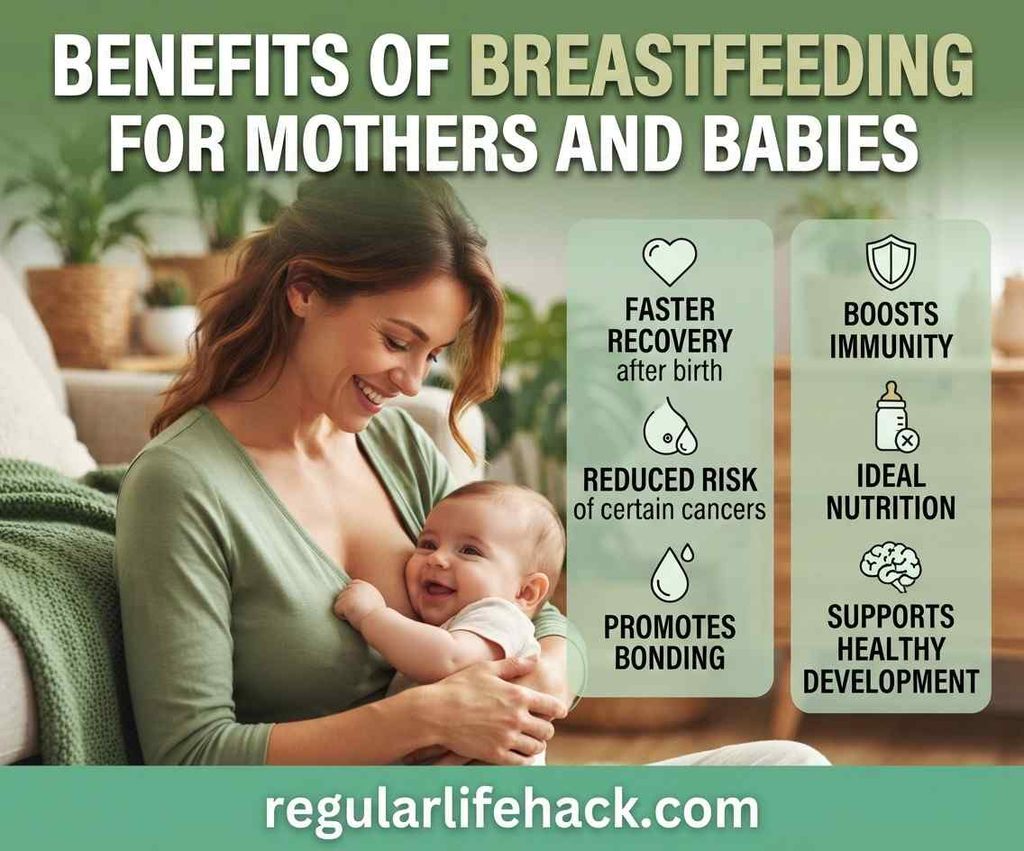
Benefits of Breastfeeding for Babies
Breast milk is specially designed to support a baby’s development. Here are some important benefits:
1. Provides Essential Nutrients
Breast milk contains the nutrients babies need during their early months. Its composition changes as babies grow, helping to meet their changing nutritional requirements.
2. Supports the Immune System
Breast milk contains antibodies and other protective substances that help babies fight infections. Breastfeeding is associated with a lower risk of certain illnesses, including ear infections and gastrointestinal infections.
3. Supports Healthy Brain Development
Breast milk provides important nutrients, including fats that contribute to brain and nervous system development. These nutrients support healthy growth during infancy.
4. Promotes Healthy Digestion
Breast milk is generally easy for babies to digest. It contains substances that support the development of healthy gut bacteria and digestive function.
5. May Reduce the Risk of Certain Health Conditions
Breastfeeding is associated with a reduced risk of certain childhood health conditions, including asthma, obesity and type 2 diabetes. However, breastfeeding does not guarantee that a child will avoid these conditions.
Benefits of Breastfeeding for Mothers
Breastfeeding does not only benefit babies. Mothers can also experience important physical and emotional benefits.
1. Helps the Uterus Return to Its Normal Size
Breastfeeding stimulates the release of oxytocin, a hormone that causes the uterus to contract after childbirth. This helps the uterus gradually return towards its pre-pregnancy size.
2. May Reduce the Risk of Certain Diseases
Research has associated breastfeeding with a lower risk of breast cancer, ovarian cancer and type 2 diabetes in mothers. Longer breastfeeding duration may provide additional health benefits.
3. Supports Mother-Baby Bonding
Breastfeeding provides opportunities for close physical contact between mother and baby. Skin-to-skin contact and feeding interactions can support emotional bonding and attachment.
4. Can Be Convenient and Economical
Breast milk is naturally available and does not require purchasing formula or preparing bottles for every feed. This can help families reduce some feeding expenses.
5. May Support Postpartum Recovery
Oxytocin released during breastfeeding helps the uterus contract after delivery. Breastfeeding also uses additional energy, although mothers should continue eating enough nutritious food to support recovery and milk production.
Recommended Reading
How to Track Ovulation for Pregnancy Planning
Morning anxiety: Causes and Prevention
Tips for Coping with the Challenges of Long-Distance Relationship
Dealing with Offenses: The Trap of Unforgiveness
How Long Should Mothers Breastfeed?
The World Health Organization (WHO) recommends exclusive breastfeeding for the first six months of life, meaning babies receive breast milk without other foods or drinks, including water, unless medically indicated.
From six months, appropriate complementary foods should be introduced while breastfeeding continues up to two years or beyond.
Tips for Successful Breastfeeding
New mothers can make breastfeeding easier by following these practical tips:
- Start breastfeeding as soon as possible after delivery.
- Learn how to position your baby and achieve a comfortable latch.
- Feed your baby according to their hunger cues.
- Eat balanced meals and drink enough water.
- Seek help from a midwife or lactation consultant when difficulties arise.
Conclusion
The benefits of breastfeeding extend beyond providing nutrition. Breastfeeding supports babies’ immune systems, digestion and development while offering mothers potential health benefits and opportunities for bonding.
Although breastfeeding is beneficial, every mother’s circumstances are different. Mothers who cannot breastfeed or need additional feeding support should speak with a healthcare professional about safe and appropriate alternatives.