Breastfeeding is an important part of caring for a newborn, providing essential nutrients and antibodies that support healthy growth and development. However, many first-time mothers find it difficult to know how to position their babies, achieve a proper latch and recognise when their little ones are feeding well.
Learning how to breastfeed a newborn correctly can make feeding more comfortable for both mother and baby. With patience, practice and the right guidance, breastfeeding can become a rewarding experience.
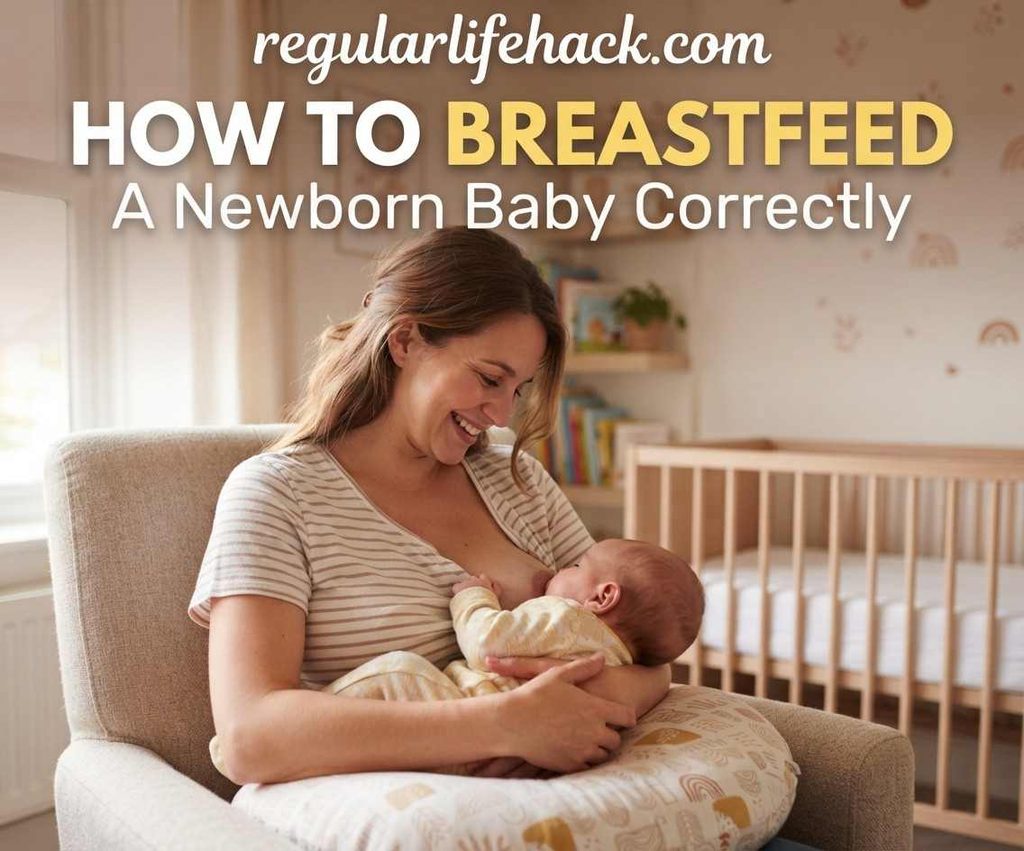
1. Start Breastfeeding Early
Whenever possible, begin breastfeeding within the first hour after birth. Early skin-to-skin contact helps your baby feel secure and encourages natural feeding instincts.
During the first few days, your breasts produce colostrum, a thick, yellowish first milk packed with nutrients and protective antibodies. Although it comes in small quantities, it is suitable for your newborn’s early needs.
2. Choose a Comfortable Breastfeeding Position
Your position plays an important role in successful breastfeeding. Choose a position that supports your back, arms and baby properly.
Some common breastfeeding positions include:
- Cradle hold: Rest your baby’s head in the bend of your arm while supporting their body.
- Cross-cradle hold: Use your opposite hand to support your baby’s head and guide them towards your breast.
- Football hold: Position your baby under your arm, with their feet pointing behind you.
- Side-lying position: Lie on your side facing your baby while keeping them close.
Whichever position you choose, ensure your baby’s head, neck and body are aligned.
3. Help Your Baby Achieve a Proper Latch
A good latch helps your baby transfer milk effectively and reduces the risk of nipple soreness.
Follow these steps:
- Hold your baby close, with their nose level with your nipple.
- Gently touch your nipple against their upper lip to encourage them to open their mouth.
- Wait for a wide-open mouth.
- Bring your baby towards your breast, aiming their chin towards the breast first.
- Make sure your baby takes in a good portion of the areola, not just the nipple.
A comfortable latch should not cause persistent pain. If feeding hurts, gently break the suction with a clean finger and try again.
4. Feed Your Baby Whenever They Show Hunger Signs
Newborns generally need breastfeeding 8–12 times within 24 hours, although some may feed more frequently.
Watch for early hunger signs such as:
- Turning their head towards your breast.
- Opening their mouth.
- Sucking their fingers or hands.
- Making sucking movements.
Do not wait until your baby starts crying before offering a feed, as crying is often a late hunger sign.
5. Know When Your Baby Is Getting Enough Milk
One common concern among new mothers is whether their babies are receiving enough breast milk.
Signs of adequate feeding include:
- Regular wet and dirty nappies appropriate for the baby’s age.
- Audible swallowing during breastfeeding.
- Your baby appearing satisfied after some feeds.
- Steady weight gain after the initial newborn weight loss.
Your healthcare professional can monitor your baby’s weight and feeding progress.
Recommended Reading
When Should You See a Fertility Specialist?
Miscarriage Recovery Timeline
The God of the Second Chance: Restoration After a Fall
Tips For Keeping Romance Alive After Having Kids
6. Take Care of Yourself While Breastfeeding
Good maternal health supports your breastfeeding journey. Eat balanced meals, drink enough water and rest whenever possible.
Avoid putting unnecessary pressure on yourself. Breastfeeding can take time to establish, especially during the first few weeks.
If you experience persistent nipple pain, fever, breast redness or difficulty feeding your baby, seek advice from a midwife, doctor or qualified lactation consultant.
Conclusion
Learning how to breastfeed a newborn correctly involves proper positioning, a comfortable latch and recognising your baby’s hunger cues. Although breastfeeding may feel challenging at first, patience and professional support can make the experience easier.
Every mother and baby learns at their own pace. Focus on your baby’s feeding needs, look after your health and do not hesitate to seek help when necessary.